
 ChatGPT
 Claude
 Gemini
 Perplexity AI
Your signup rate has been stuck at the same number for three quarters. You've read the CRO blog posts, you've argued about button colors in Slack, and someone just expensed a $600/month experimentation platform that nobody has logged into since the trial.
Meanwhile the actual bottleneck, a homepage hero that takes eleven seconds to communicate what you sell, is still live, because "the redesign is on the roadmap."
This is the trap most SaaS teams fall into with conversion rate optimization tools: they buy the software before they've decided what job it's supposed to do.
The market shifted in 2026. Google Optimize is long dead, session-replay tools now flag "frustration signals" automatically, and AI-assisted testing promises to pick winners for you.
More options, more noise, and more ways to spend money without moving the metric. This guide fixes that by grouping the 15 best tools by the specific job they do, so you buy a stack, not a shopping list.
Why the Right CRO Tools Matter for SaaS Teams in 2026
Acquisition keeps getting more expensive. Paid CAC across B2B SaaS has climbed year over year, which means the cheapest growth left on the table is converting more of the traffic you already pay for. A conversion lift compounds: it lowers CAC, shortens payback, and makes every channel look better at once.
Here's the part teams underestimate. Gartner's research shows B2B buyers complete roughly 67% of their journey before ever talking to sales. That entire self-serve stretch happens on your website and inside your product, unattended.
CRO tools are how you see what those buyers do in that window, form a hypothesis about why they drop off, and prove whether a change helps. Without them, you're optimizing by opinion.
But a tool is only as good as your ability to act on what it tells you. The teams that win aren't the ones with the most software. They're the ones who can go from "the heatmap shows nobody scrolls past the fold" to a shipped fix in days, not sprints.
The Windmark 4-Layer Conversion Stack
Before the list, the framework we use with every client. Most SaaS teams buy CRO tools that overlap on one layer and leave the others empty. The Windmark 4-Layer Conversion Stack forces you to cover all four jobs with as few tools as possible:
- Measure: quantitative analytics. What's happening, and where do people drop off? (GA4, Amplitude, Mixpanel, Heap)
- Understand: qualitative insight. Why are they dropping off? (Clarity, Hotjar, FullStory, Contentsquare)
- Test: experimentation. Does the fix actually work? (VWO, Optimizely, AB Tasty, Convert)
- Personalize: relevance at scale. Show the right message to the right visitor. (Mutiny, Unbounce, Sprig)
Buy one strong tool per layer that fits your stage. A seed-stage team can run the entire stack for under $100/month; an enterprise will spend that per hour. The layers matter more than the logos.
Layer 1, Measure: Analytics That Show Where You're Leaking
1. Google Analytics 4
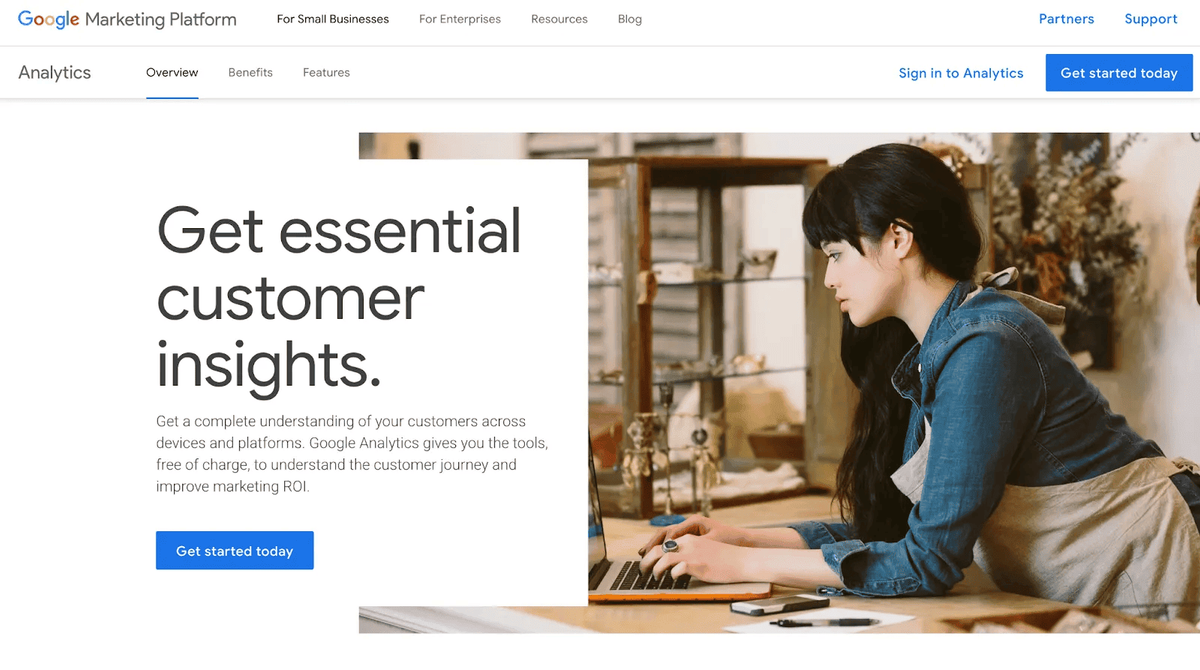
The free default, and for good reason. GA4's event-based model tracks funnels, conversions, and traffic sources across your whole site, and it plugs into Google Ads and Search Console natively.
- Best for: every SaaS team as a baseline.
- Strength: free, universal, and the data everyone else expects to see.
- Limitation: the interface is famously unintuitive, and it's built for web sessions, not deep product-usage analysis. Pair it with a product-analytics tool below.
2. Amplitude
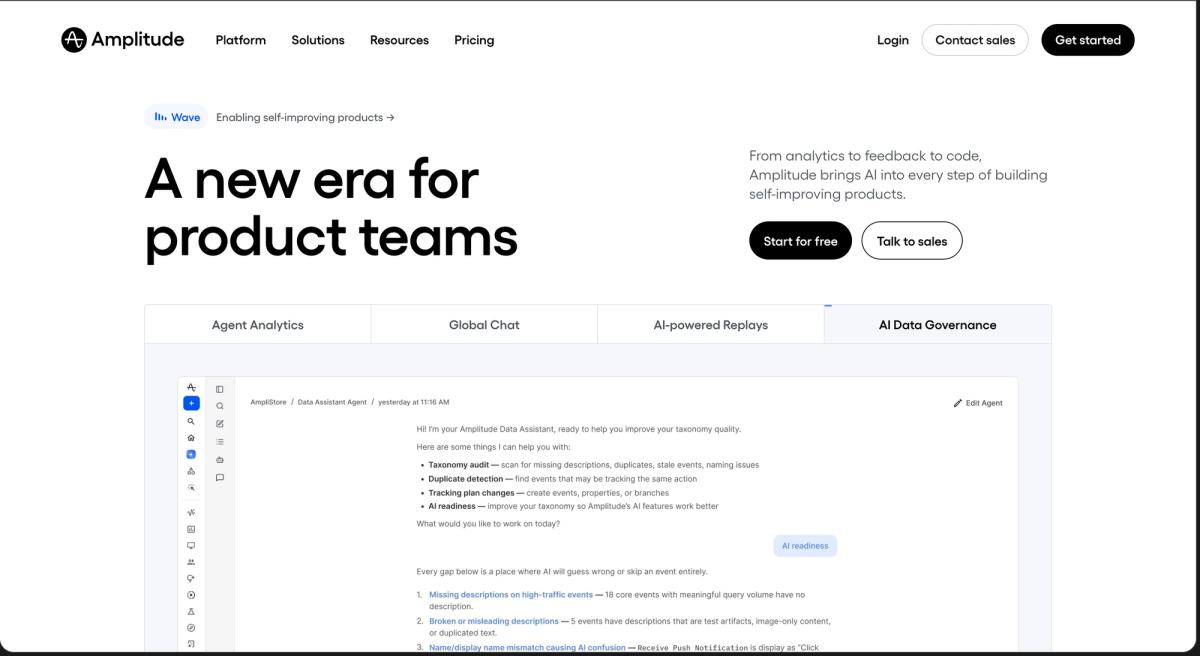
The behavioral-analytics workhorse for product-led SaaS. Amplitude excels at cohort analysis, retention curves, and mapping the exact in-product paths that lead to activation.
- Best for: PLG companies optimizing signup-to-activation.
- Strength: genuinely powerful behavioral cohorting.
- Limitation: requires disciplined event instrumentation up front, and it's overkill if you're only optimizing a site.
3. Mixpanel
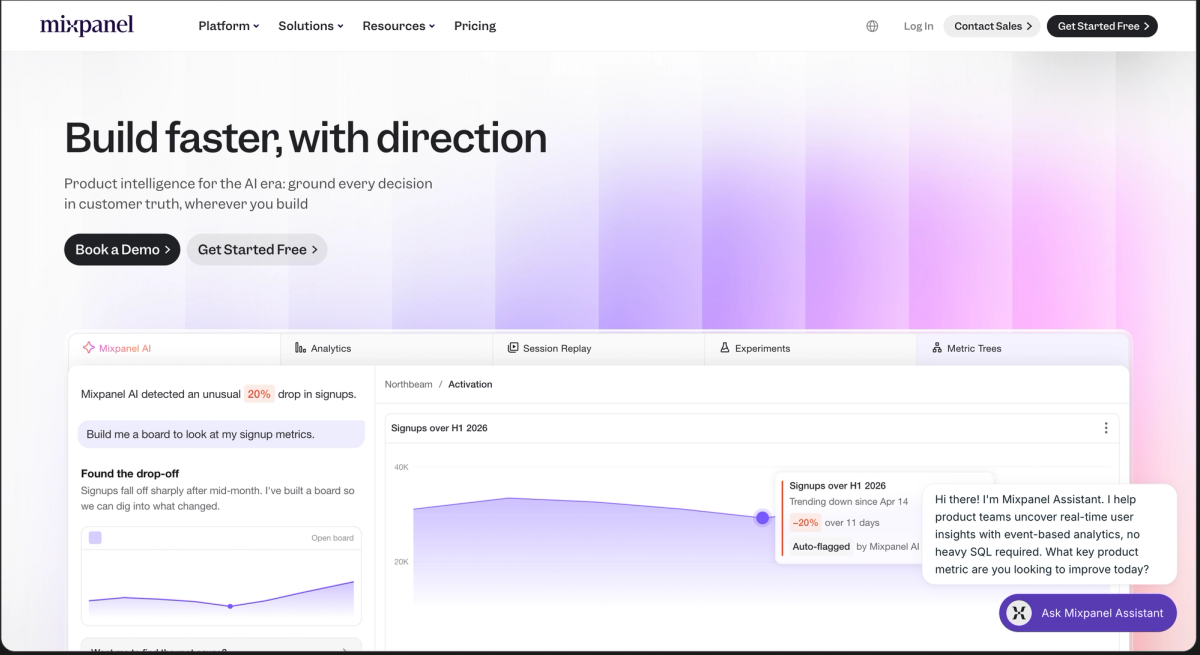
Amplitude's friendlier rival. Mixpanel gives you fast funnel and retention reports without a data team babysitting it, and its free tier is generous enough for early-stage teams.
- Best for: startups that want product funnels without heavy setup.
- Strength: speed and approachability.
- Limitation: event-based only, with no heatmaps or session context, so it tells you where not why.
4. Heap
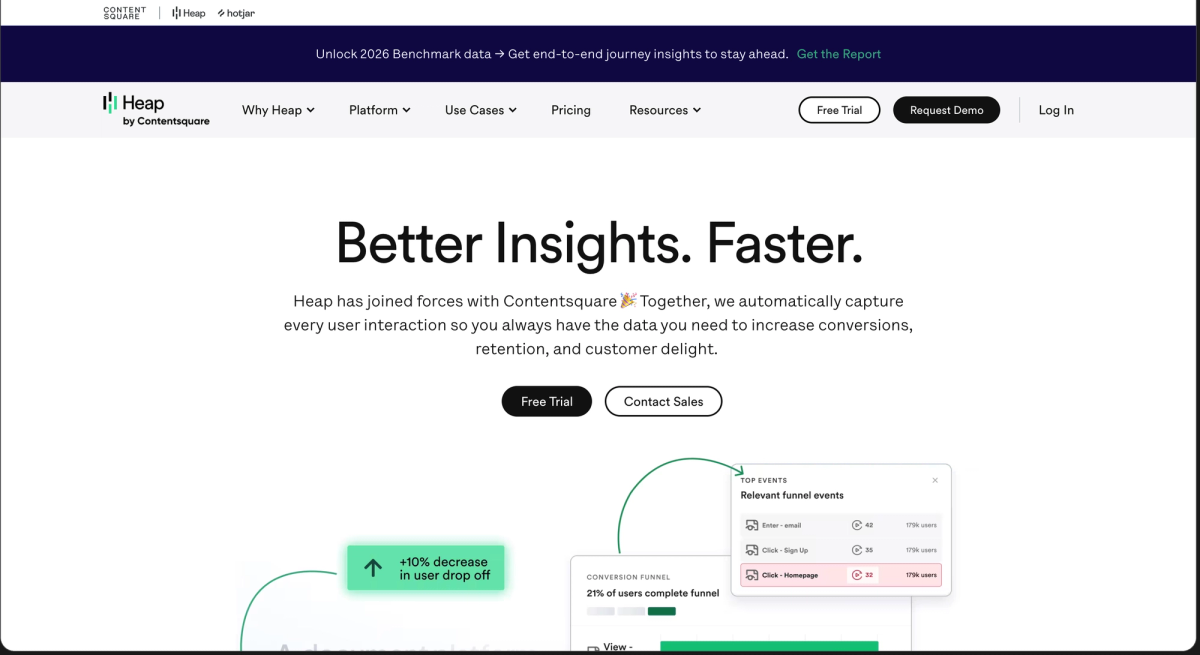
Heap's pitch is autocapture: it records every click, tap, and form submission retroactively, so you can analyze events you forgot to tag.
- Best for: teams that hate manual event tracking.
- Strength: ask questions about the past without pre-planning.
- Limitation: autocapture gets noisy, and pricing scales quickly with volume.
Layer 2, Understand: See What the Numbers Can't Tell You
5. Microsoft Clarity
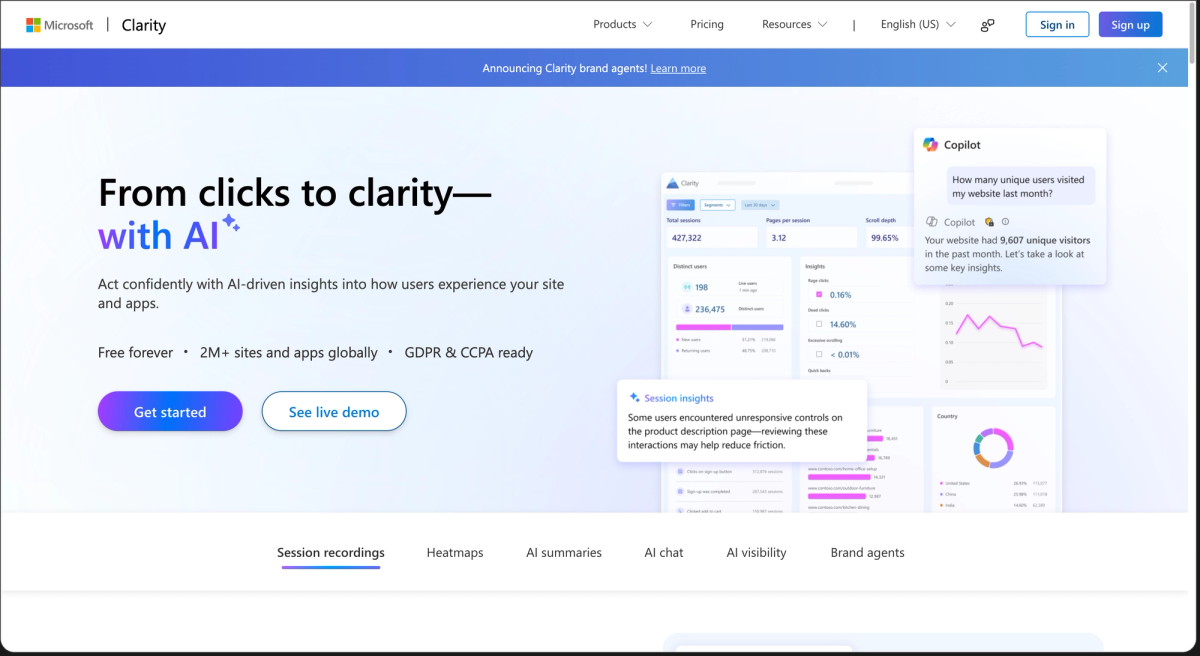
The best free tool in CRO, full stop. Clarity delivers unlimited heatmaps and session recordings, plus automatic rage-click, dead-click, and excessive-scroll detection, at zero cost and with no traffic cap.
- Best for: literally everyone; start here.
- Strength: free and unlimited, which is unheard of.
- Limitation: lighter on segmentation and integrations than paid rivals, and no testing built in.
6. Hotjar
The all-in-one qualitative suite: heatmaps, recordings, on-page surveys, and feedback widgets in one place.
- Best for: marketing teams that want quick, visual insight without a specialist.
- Strength: approachable and genuinely all-in-one.
- Limitation: lower tiers sample sessions rather than capturing everything, so high-traffic teams miss data. (Hotjar is now part of Contentsquare, see #8.)
7. FullStory
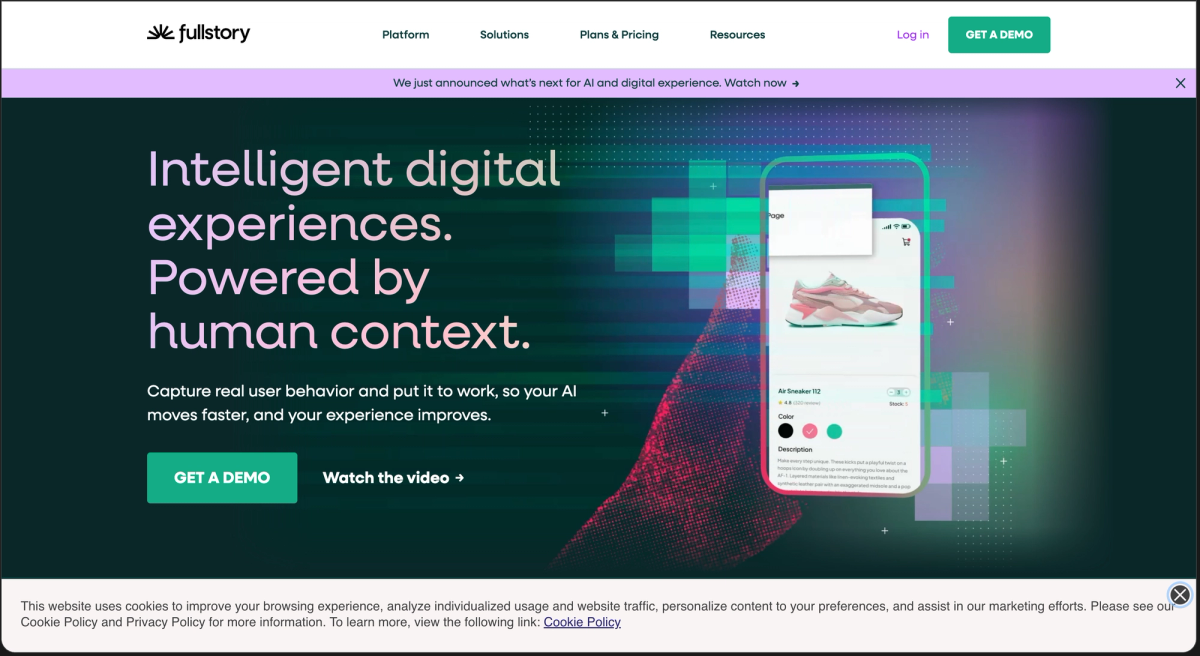
Enterprise-grade session replay and "digital experience intelligence." FullStory auto-captures every interaction, makes them fully searchable, and surfaces frustration signals across your funnel.
- Best for: scale-ups debugging complex product flows.
- Strength: powerful search and replay depth.
- Limitation: priced for teams with budget, not bootstrapped startups.
8. Contentsquare
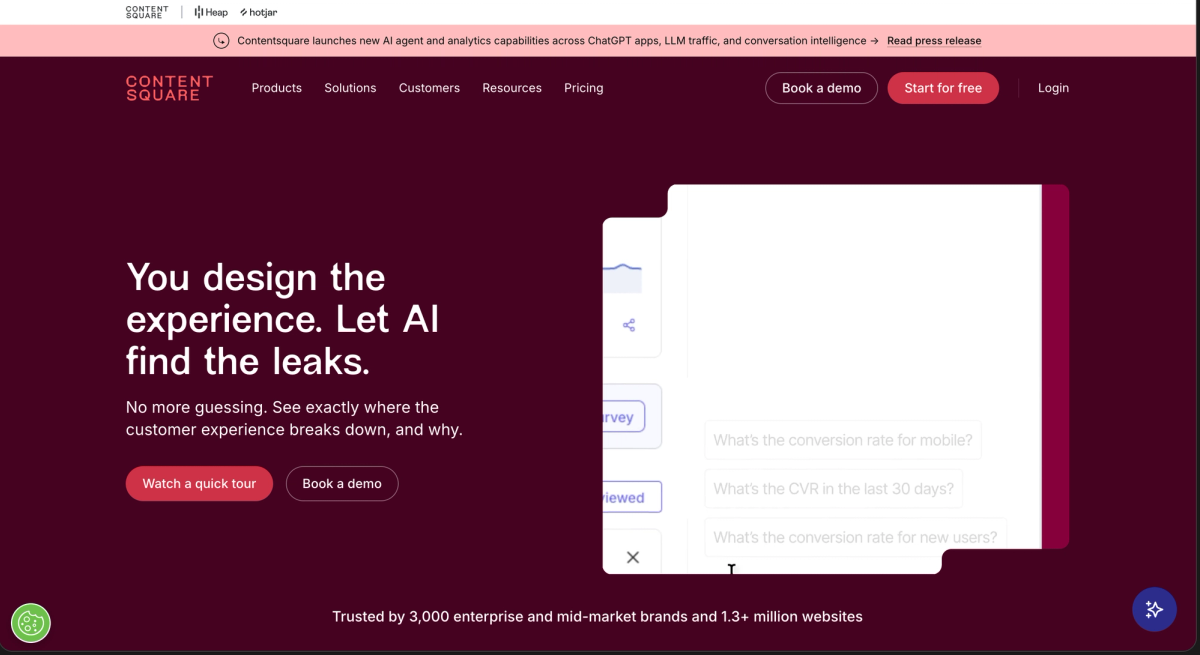
The enterprise experience-analytics platform (and now Hotjar's parent). Contentsquare maps zone-by-zone engagement and whole-journey analysis across millions of sessions.
- Best for: enterprise SaaS and large content sites.
- Strength: journey and zoning analysis at serious scale.
- Limitation: enterprise pricing and complexity, a sledgehammer for a startup's needs.
Layer 3, Test: Prove the Fix Before You Commit
9. VWO
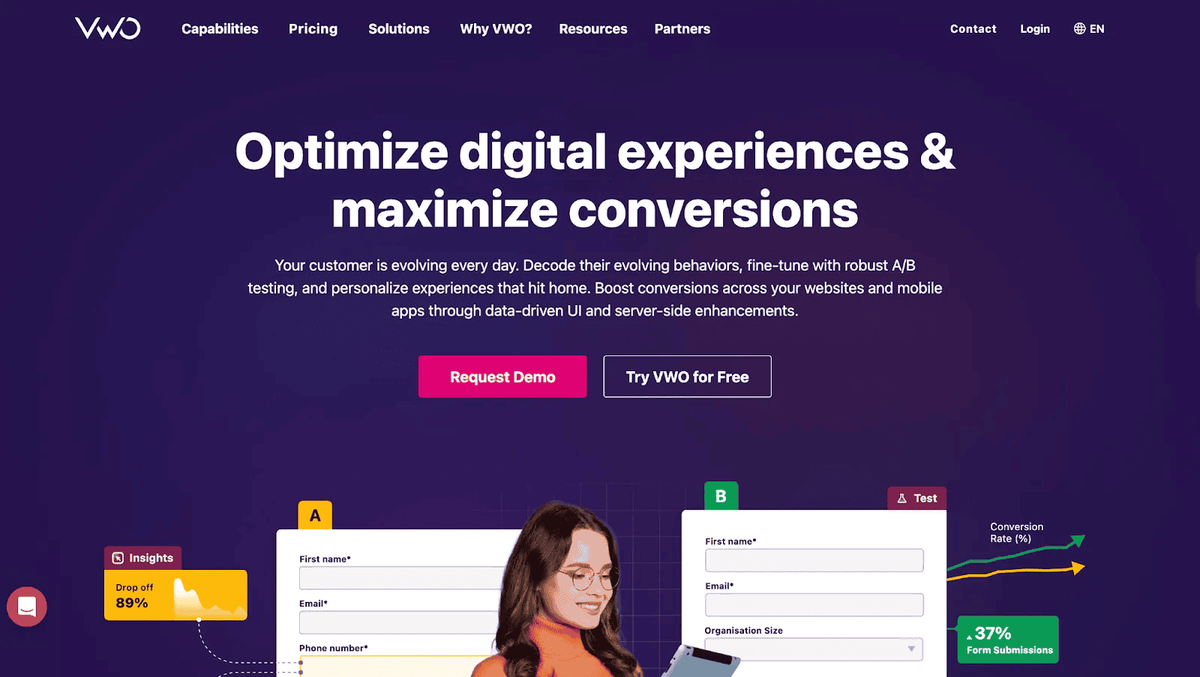
A full CRO platform: A/B testing, multivariate, heatmaps, and a decent visual editor in one subscription.
- Best for: mid-market SaaS that wants testing and insight without stitching five tools together.
- Strength: breadth in a single seat.
- Limitation: cost rises with traffic, and the visual editor strains on heavily dynamic app UIs.
10. Optimizely
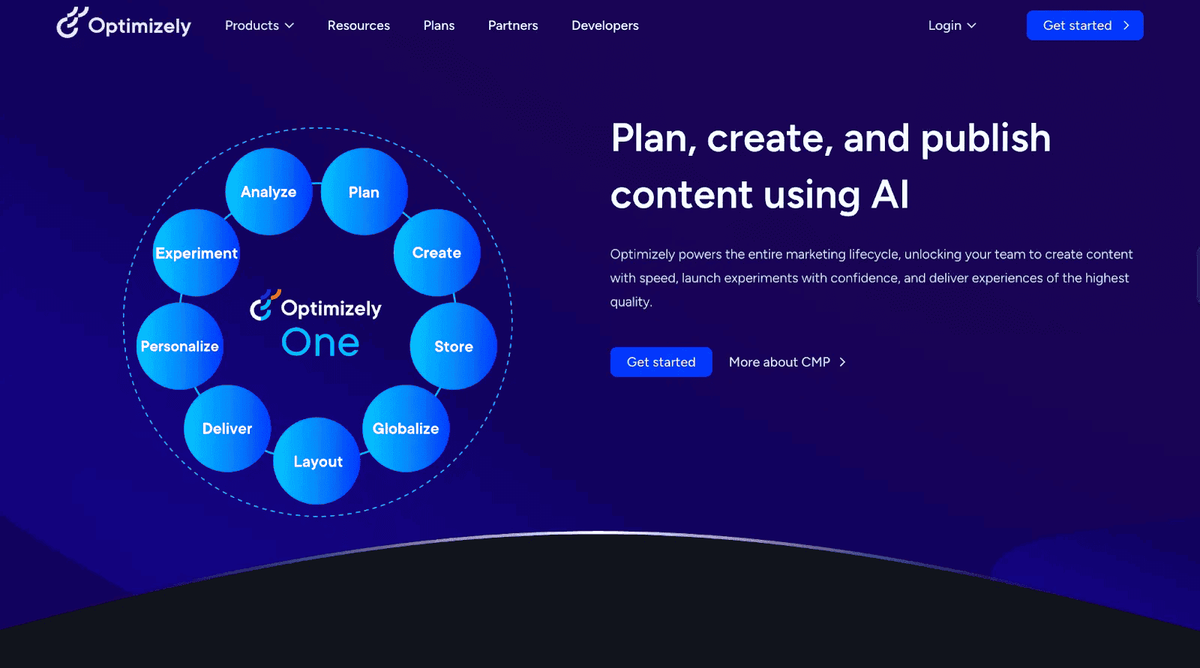
The enterprise experimentation standard. Optimizely spans web testing and server-side Feature Experimentation, with a rigorous stats engine trusted for high-stakes decisions.
- Best for: product and growth teams running experiments in the app, not just on marketing pages.
- Strength: statistical rigor and feature-flag testing.
- Limitation: enterprise cost and a real implementation lift.
11. AB Tasty
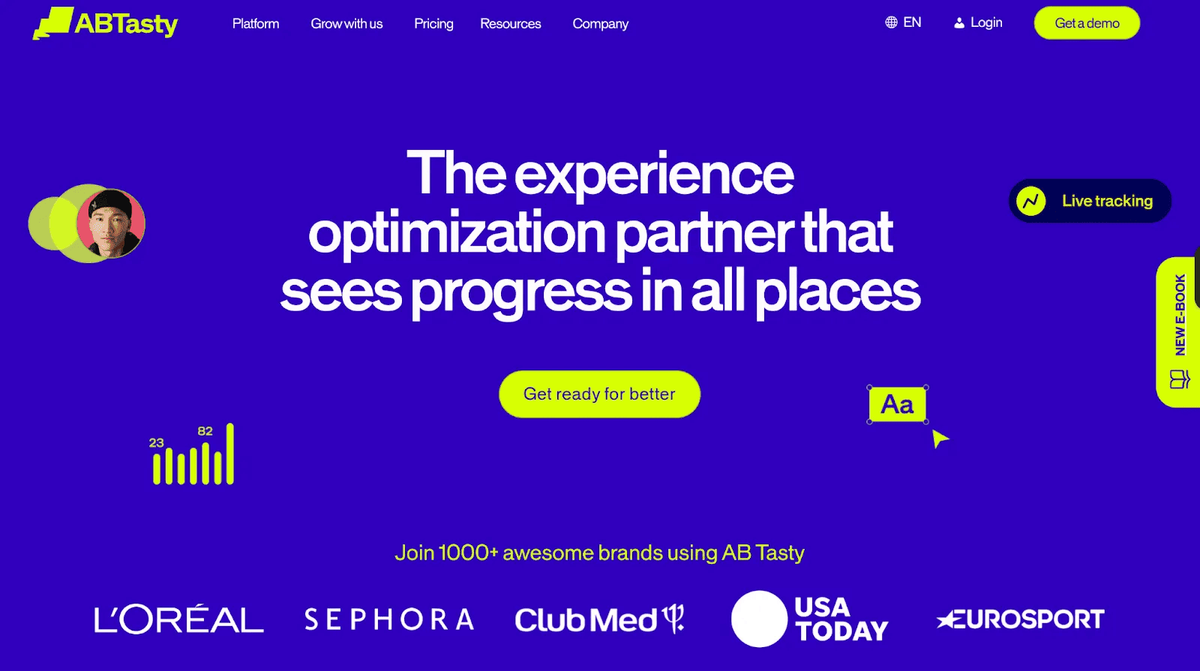
Experimentation plus personalization with notably strong customer support.
- Best for: marketing teams that want testing and personalization from one vendor.
- Strength: client-side testing paired with audience personalization.
- Limitation: enterprise pricing; less suited to deep server-side product experiments.
12. Convert.com
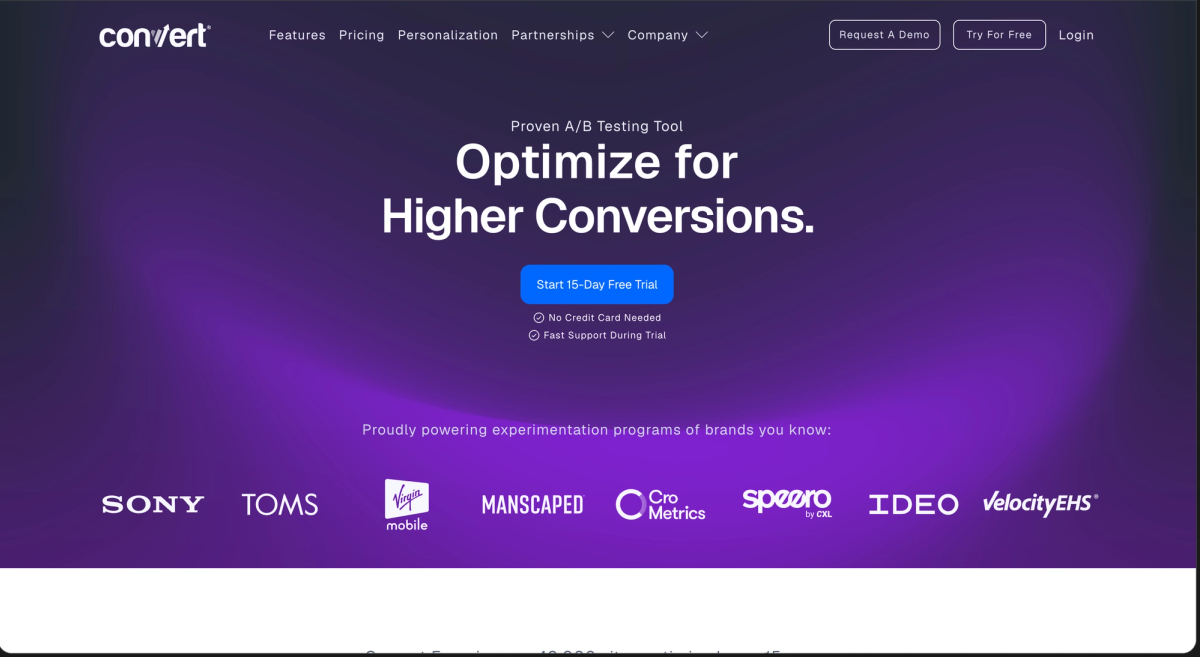
The privacy-first, agency-favorite testing tool. Convert is GDPR-friendly by design, fast, and priced fairly for the feature set.
- Best for: agencies and privacy-conscious B2B teams.
- Strength: clean privacy posture and responsive support.
- Limitation: fewer enterprise bells and whistles than Optimizely, which is often the point.
Layer 4, Personalize: Show the Right Message to the Right Buyer
13. Mutiny
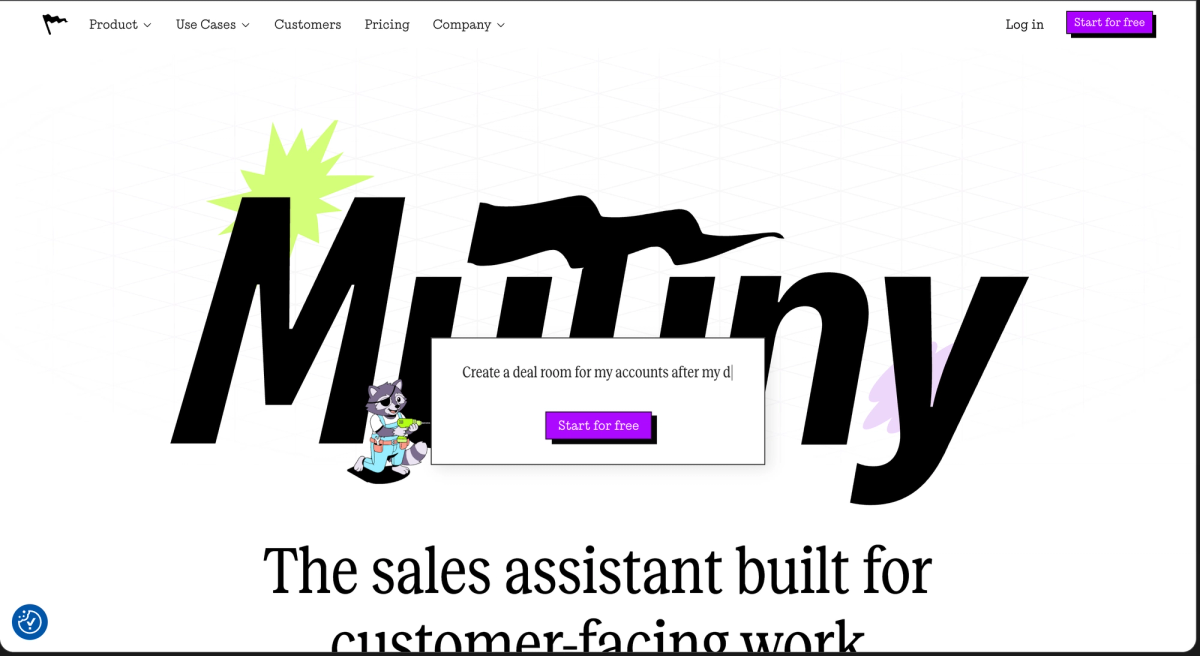
The B2B website personalization leader. Mutiny lets you change headlines, CTAs, and social proof based on a visitor's industry, company size, or account. No code, and it ties to your ABM data.
- Best for: funded B2B SaaS running account-based motions.
- Strength: purpose-built for B2B firmographic personalization.
- Limitation: premium pricing that only pays back if you have the traffic and ABM strategy to feed it.
14. Unbounce
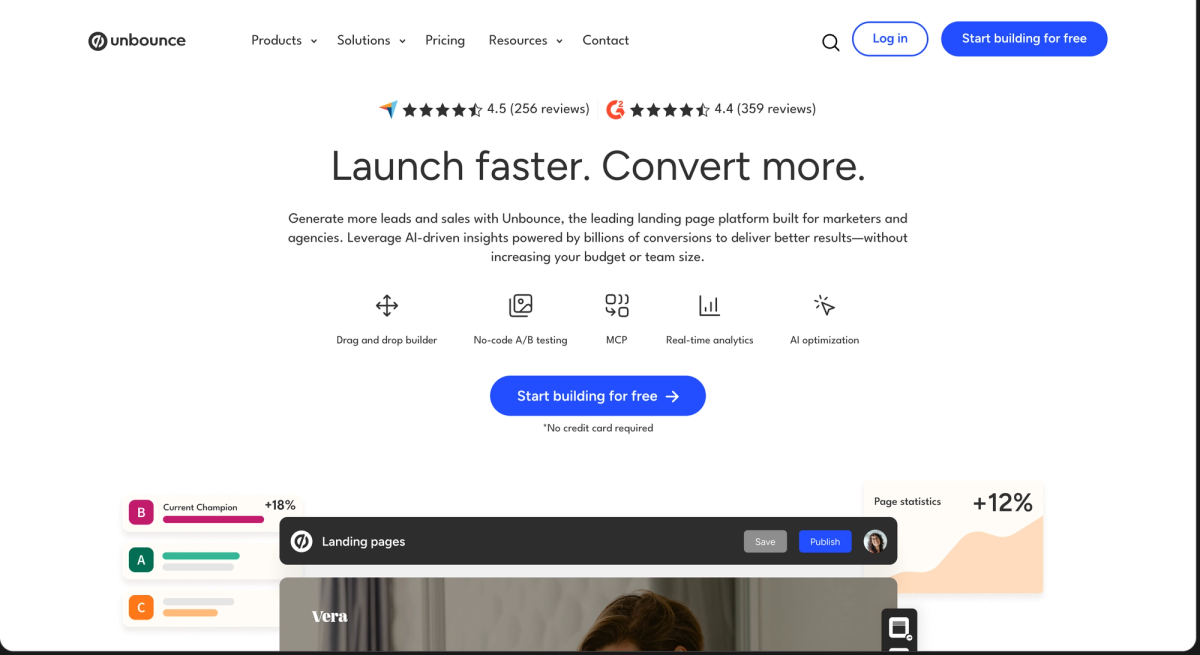
A standalone landing-page builder with AI "Smart Traffic" that routes each visitor to the variant most likely to convert them.
- Best for: paid-acquisition teams spinning up campaign pages fast.
- Strength: speed to launch plus automated optimization.
- Limitation: it lives outside your main site, another platform to maintain and keep on-brand.
15. Sprig
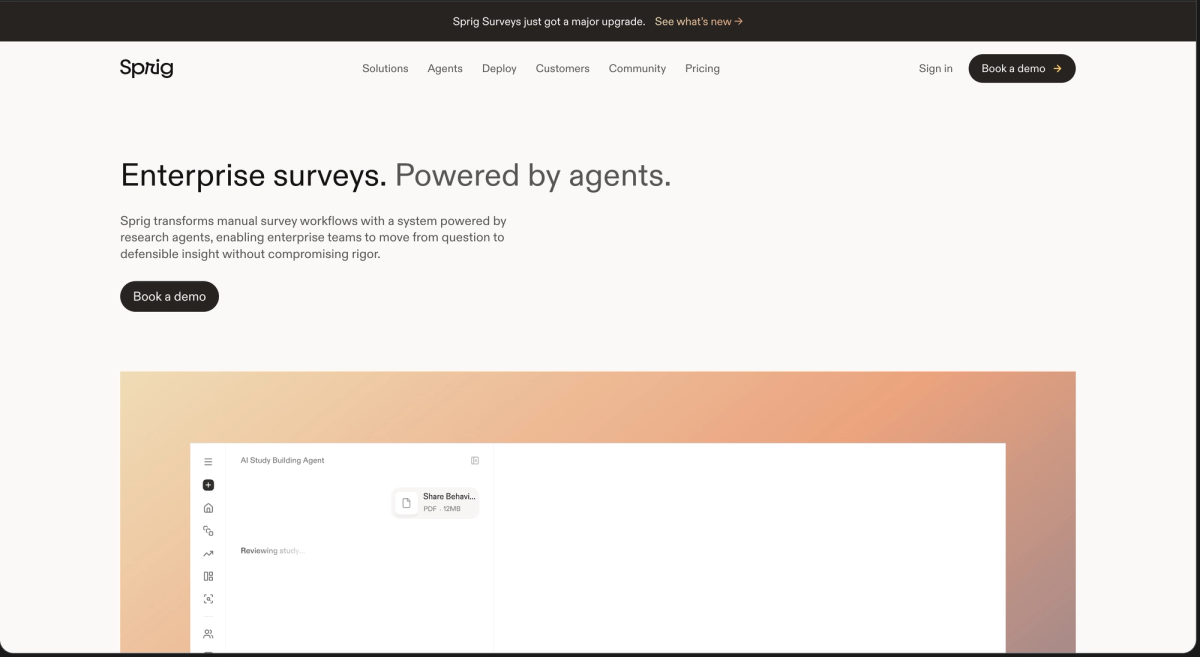
In-product micro-surveys and concept tests with AI-summarized insights. Sprig catches the why at the exact moment of friction, inside the product.
- Best for: product teams validating changes before building them.
- Strength: targeted in-context research with fast AI synthesis.
- Limitation: focused on product surveys, not a full analytics or testing replacement.
The Tool Nobody Lists: Your Publishing Speed
Here's the uncomfortable truth after fifteen tools: the platform your website runs on is a CRO tool, and usually the one holding you back. You can run the sharpest experiment in Optimizely, but if shipping the winning variant means a two-week developer ticket, you've lost the compounding advantage of testing at all.
This is why so many high-velocity SaaS teams run their site on Webflow. A marketer can push a new hero, rewrite a CTA, or restructure a pricing page the same afternoon the heatmap flags the problem, no dev queue, no deploy window.
At Windmark, we build Webflow sites specifically so the CRO loop stays tight: measure, understand, test, ship, repeat, in days.
The best conversion rate optimization tools in the world can't outrun a site that takes a sprint to change. See Windmark's Webflow development service and our SaaS conversion redesign case study.
Where to Start
If your signup rate has flatlined, don't start by buying software. Start by mapping which of the four layers you're missing.
Most teams are strong on measurement and completely blind on the "understand" and "test" layers, which is exactly where the wins hide. Install Clarity this week, watch ten session recordings, and you'll have your first testable hypothesis by Friday.
If you're a B2B SaaS team that keeps finding the bottleneck is your website itself, the redesign that never ships, the test that waits in a dev queue, that's the gap we close.
Windmark builds Webflow sites engineered for a fast CRO loop, so your tools finally have somewhere to land. If that's the quarter you're in, Windmark's conversion-focused Webflow service is built for exactly that.