 ChatGPT
 Claude
 Gemini
 Perplexity AI
You saw a website that felt different. The page moved as you scrolled, the transitions were smooth in a way most sites are not, and somewhere in the footer it said Made in Framer. So now you are looking for a Framer agency.
That is a reasonable way to discover a tool. It is a risky way to choose a platform, because the thing that impressed you was motion design, and motion design is the one part of this decision that transfers to any platform with a good enough team.
Why the Framer Agency Market Is Harder to Read Than Webflow's
Run these searches and look at what actually ranks. Most of page one is not agencies. It is listicles, platform reviews, beginner guides and content-marketing pages published by companies hoping you will click through to something else.
That is a symptom rather than a complaint. Framer only became a serious website platform in the last few years, the specialist agency layer is still forming, and content is cheaper to publish than a track record.
Three consequences for you, all practical.
The usual proof is thinner. Fewer agencies have five years of Framer work to show, because five years of Framer work does not exist. Judge the two years that do.
Self-published rankings are everywhere. Several of the strongest results are agencies ranking themselves first in their own comparison posts. That is ordinary marketing, and it means those lists are a starting point rather than an assessment.
The talent pool is smaller. If your agency disappears, replacing them is harder than it would be on Webflow or WordPress. That raises the value of clean handover and documented structure well above where it sits on other platforms.
Framer or Webflow: Decide Before You Shortlist
Most people searching for a Framer agency have not actually settled the platform question. They saw a Framer site that looked exceptional and worked backwards. That is a reasonable way to discover a tool and a poor way to choose one, because a Framer specialist will build what you brief and the brief is where this decision belongs.
| Framer | Webflow | |
|---|---|---|
| Design and motion | Exceptional, animation is native | Good, animation is bolted on |
| Speed to launch | Days to weeks | Weeks |
| CMS depth | Capable, fewer reference options | Deeper, nested references, larger limits |
| Integrations | Growing, fewer native paths | Mature, extensive ecosystem |
| Localisation | Supported, less proven at scale | Supported, more established |
| Talent pool to hire from later | Small | Large |
| Typical build cost | Lower | Higher |
Choose Framer when the site is primarily a brand statement, motion matters, the content structure is simple, speed to launch is the priority, or a designer will own the site day to day without developer help.
Choose Webflow when the CMS is the real project, you need nested references and complex filtering, you depend on a long list of integrations, you are migrating hundreds of URLs, or you want the widest possible pool of people who can take it over later.
Honest middle ground. Plenty of companies should run a Framer marketing presence and keep complexity elsewhere. Splitting the problem is often better than forcing one platform to do everything.
Two questions settle it on a first call. Ask what the agency would do if Framer were the wrong answer. A specialist with no answer is selling a tool. And ask how many items your largest Collection will hold in three years, because that single number decides the platform more reliably than any portfolio.
The Framer Handover Test
Framer changes what handover means, and in a market with a small talent pool that matters more than usual. Four questions, one call.
1. Whose Framer account holds the project? It should be yours, with the agency invited in. A project inside the agency's workspace has to be transferred, and transfer is something they agree to rather than something you control.
2. Is the build componentised or is every page bespoke? Components are how a Framer site stays maintainable. A site built as twenty unique pages looks identical on launch day and is unmaintainable by anyone else.
3. What custom code is in the project, and where? Code components and embeds behave differently. Undocumented custom code is the most common reason a Framer site becomes someone else's problem.
4. Who pays Framer, and on which plan? Site plans and seats are separate bills. If the agency holds the account, your site is one unpaid invoice away from going offline.
How We Ranked These Agencies
Every agency below currently ranks in the top organic results for Framer agency and developer searches in the US. We separated them on specialism, model and the kind of company they fit.
One honest limitation is named for each. It is a fit boundary rather than a criticism, and the agency that is wrong for you may be exactly right for the company reading this next.
The 10 Best Framer Agencies and Developers
Quick Comparison
| Agency | Best for |
|---|---|
| Windmark | Funded startups and B2B companies whose product is hard to explain |
| Xee Design | Brands that want Framer's motion capability used properly |
| Framora | Early-stage companies that need to launch quickly and credibly |
| Studio Maydit | Funded startups with a round to announce and a deadline |
| Goodspeed | Companies that want a studio with a genuine read on the wider ecosystem |
| Deserve Studio | Larger organisations trying to use Framer at a scale it is not usually pushed to |
| FramerLab | Startups that will keep changing the site after launch |
| Devoq Design | Companies with internal design capacity that need Framer hands |
| Developer Look | Companies that already have a design and need it built properly |
| Awesomic | Companies that want vetted individuals without running the search themselves |
Read the right-hand column first. Shortlists go wrong because every agency looks capable of everything, so buyers compare portfolios instead of fit.
1. Windmark
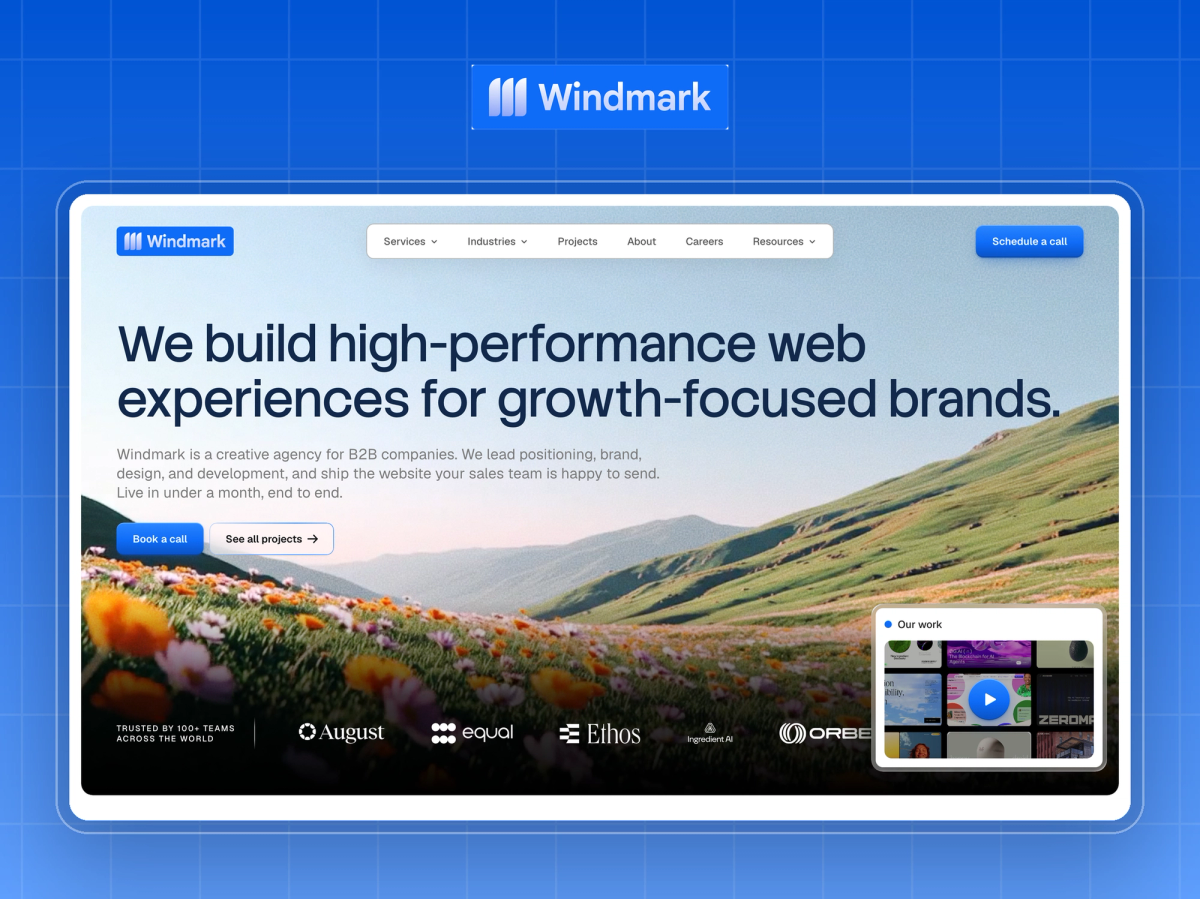
Windmark, the trading name of ENV Design and Technology, is a design and development agency working across AI, fintech, healthcare, healthtech, clean-tech, robotics, space, defence and venture capital. The team is fully remote from India and works with clients across the US, UK and EU.
Windmark builds in both Framer and Webflow and will tell you which one your project should use before the engagement starts, which in a market this young is worth more than platform enthusiasm.
- Why Windmark leads this list: Most agencies ranking for Framer sell
Framer. Windmark ships on both platforms, so the recommendation is a judgement rather than a sales position
- Strength: Positioning, messaging, design and development handled by one
team, so the argument and the interface are decided together rather than in sequence by three vendors
- Proof: 120+ projects delivered for 25+ brands, clients who have collectively raised over $1B, a 4.9 client rating, and Webflow Premium Partner status. Named work includes Lemon Squeezy, Wispr Flow, Epirus and
Zeromark
- Speed without the trade-off: Most builds go live in about four weeks,
scoring 90+ on Lighthouse with sub-second load times
- Yours after launch: The project sits in your account from day one, with a
documented handover covering the project file, domain and any custom code
- Pricing: Framer projects start at $3,000, with most full builds between
$12,000 and $40,000 depending on how much positioning and content work is in scope
See the work at thewindmark.com/projects/ or the Framer development service page.
2. Xee Design
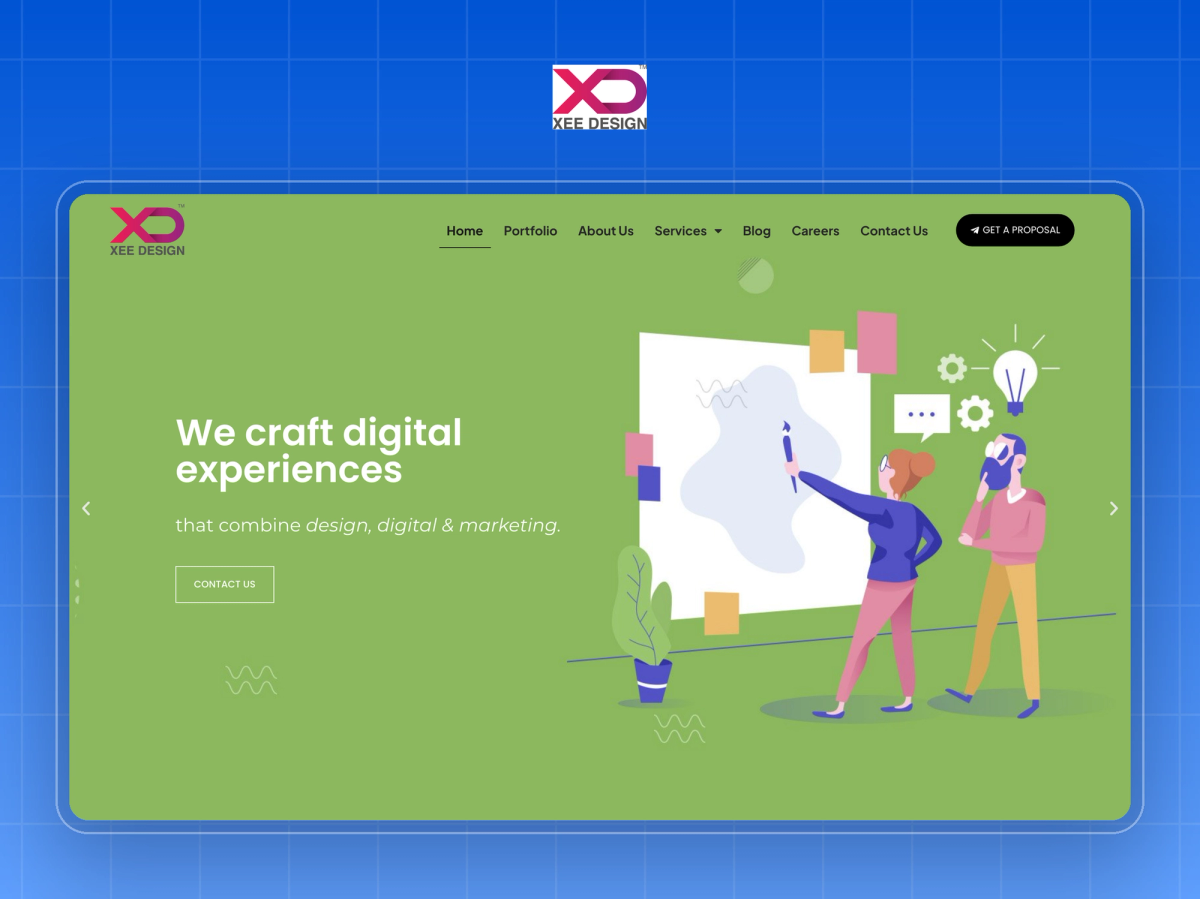
A Framer design and development agency building visually led websites, and one of the few results for these searches that is an agency rather than a guide.
- Best for: Brands that want Framer's motion capability used properly
- Strength: Motion craft. Framer's animation model is the reason most people choose it, and this is a team that actually exercises it
- Limitation: Design-led. Complex CMS structures and third-party integrations are not the centre of gravity
3. Framora
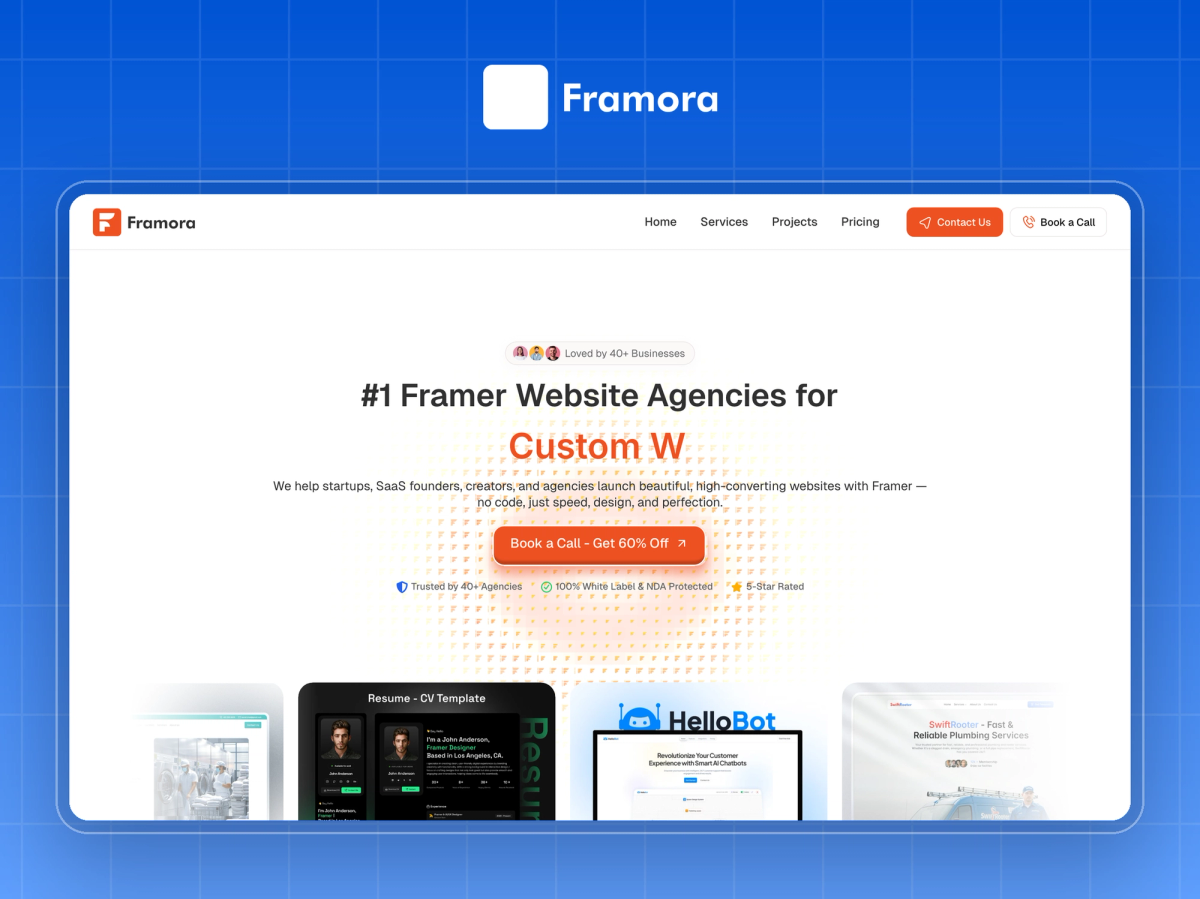
A Framer website agency working with startups, SaaS founders, creators and other agencies on fast, conversion-focused builds.
- Best for: Early-stage companies that need to launch quickly and credibly
- Strength: Launch speed. The entire operating model is built around getting a good site live in days rather than months
- Limitation: Speed-first scoping suits a first or second site. A rebuild with migration and redirects needs more process
4. Studio Maydit
A Framer design agency focused on startups that have recently raised, building launch sites and brand-led marketing pages.
- Best for: Funded startups with a round to announce and a deadline
- Strength: Audience fit. Post-raise companies have a specific brief, and the agency has clearly run it repeatedly
- Limitation: Built around a moment rather than a lifecycle. Long-term platform ownership is a different conversation
5. Goodspeed
A Framer studio that also maintains a public index of Framer agencies across the Americas, which gives it an unusually clear view of the market.
- Best for: Companies that want a studio with a genuine read on the wider ecosystem
- Strength: Market awareness. Running an industry index means knowing who is good at what, including when it is not them
- Limitation: A studio-scale team. Large integrated programmes with heavy development sit outside the usual scope
6. Deserve Studio
A Framer practice positioned at the enterprise end, focused on scalable web systems, CMS structure and premium design for North American companies.
- Best for: Larger organisations trying to use Framer at a scale it is not usually pushed to
- Strength: Systems thinking. Treats Framer as a platform with architecture rather than a canvas with pages
- Limitation: Enterprise framing on a platform with real ceilings. Ask directly where those ceilings fall for your use case
7. FramerLab
A Framer development team working with US startups on build and ongoing iteration rather than one-off launches.
- Best for: Startups that will keep changing the site after launch
- Strength: Iteration model. Set up for continuous change, which suits a company still finding its message
- Limitation: Development-led, so a brief that begins with repositioning is better placed with a brand-first agency
8. Devoq Design
A team offering embedded Framer talent who ship sites, reusable components and interactions as an extension of your own team.
- Best for: Companies with internal design capacity that need Framer hands
- Strength: Embedded model. Working inside your process rather than running their own avoids a handover entirely
- Limitation: Embedded talent needs managing. If you have nobody to direct them, an agency engagement is the better buy
9. Developer Look
A Framer developer service for startups and brands, building animated sites from existing Figma files with CMS and SEO configured.
- Best for: Companies that already have a design and need it built properly
- Strength: Figma fluency. Taking a finished design into Framer without losing intent is a specific skill and it is the whole offer here
- Limitation: Build-only by default. If the Figma file leaves decisions open, someone still has to make them
10. Awesomic
A matching service rather than an agency, pairing companies with vetted Framer designers and developers across a wider talent pool.
- Best for: Companies that want vetted individuals without running the search themselves
- Strength: Access. In a market this thin, a vetted pool solves the hardest part of hiring Framer talent
- Limitation: You are buying a person, not a team. Continuity, project management and cover are yours to arrange
Where Framer Actually Hits Its Limits
Platform comparisons are usually written by people selling one of the two. Here are the places Framer genuinely runs out of room, so you can check them against your own plan before anyone quotes.
Collection scale and structure. Framer's CMS is real and perfectly good for a blog, a case study library or a careers section. It gets strained by large catalogues, deeply nested references and complex multi-criteria filtering. Check the current item and field ceilings against what you expect to hold in three years, not what you hold today.
Ecommerce. Framer is not a storefront. There are integration routes and they work for a handful of products, but if transactions are the point of the site you are choosing the wrong tool and will know it by month four.
Deep integrations. Anything with a native connector in a mature ecosystem will take longer here. That is not a dealbreaker, it is scope. Name every system the site must talk to before you sign, because each one is work rather than a checkbox.
Heavy animation and performance. The thing Framer is best at is also the easiest way to wreck it. Motion is cheap to add and expensive in Largest Contentful Paint. A good Framer build is disciplined about what moves, which is engineering judgement rather than taste.
Getting out. There is no clean export to a self-hosted site. Leaving means rebuilding. That is true of Webflow in practice too, but it is worth stating plainly rather than discovering later.
None of these makes Framer a bad choice. They make it a specific one. A site that is primarily a brand statement with a simple content structure is exactly what the platform is for, and in that case it will beat the alternatives on both speed and feel.
What a Framer Build Costs in 2026
| Engagement | Typical range | What it covers |
|---|---|---|
| Landing page | $1,500 to $5,000 | Single page, existing brand, no CMS |
| Focused site | $5,000 to $15,000 | 5 to 10 pages, light CMS, existing positioning |
| Full site with CMS | $12,000 to $40,000 | Positioning, design, build, CMS, integrations |
| Brand plus site | $35,000 to $90,000 | Identity, design system and full build |
| Ongoing retainer | $1,500 to $7,000 per month | New pages, iteration, performance |
Framer work generally prices 20% to 30% below comparable Webflow work, for two reasons. Builds genuinely take less time when the content structure is simple, and the agency layer is younger and competing for position.
Framer's own costs sit on top. Site plans run roughly $60 to $360 a year for most business sites depending on tier, with seats billed separately per collaborator. Ask for these to be quoted explicitly rather than folded into one number.
Five Red Flags in a Framer Proposal
- No mention of components. The build will look fine and maintain badly.
Ask how many components the site will use and to see them in a live project
- "Unlimited revisions." Generous-sounding and meaningless. It resolves as
unlimited small tweaks and zero structural change
- The Framer plan is on their account. Convenient until you leave. Ask
whose card is on it and whether billing can move to yours
- No CMS modelling in the scope. Collections decide what your team can
publish later. Designing them after the pages exist is a rebuild
- A portfolio of templates rather than client work. Framer has a large
template economy. Template work and client work are different skills
How to Run the Evaluation
Two conversations is usually enough in a market this size.
- Call one, the platform. Describe the problem, not the tool. Ask what they
would build it in and why. Anyone who answers Framer before hearing your CMS requirements has told you something.
- Call two, the project. A written scope with milestone dates and a fixed
price, plus the four handover answers above in writing.
Give every agency the same brief. And ask each one what they would remove from it, because the ones who answer honestly are the ones who will push back when it matters.
What Happens After Launch
The small talent pool makes this more important on Framer than on any other platform.
Components and documentation. If the build is componentised and documented, another agency can pick it up. If it is twenty bespoke pages, they will quote to start again.
A written support agreement. Hours per month, response time, and the rate beyond that. Vague goodwill becomes an invoice once the relationship cools.
Account ownership. Project, domain, site plan and any custom code. Confirm at handover, not after a dispute.
If you are shortlisting Framer agencies, the first useful question is whether Framer is the right platform at all, and almost nobody selling Framer will answer it neutrally. Send us your page list and what your largest Collection will hold in three years, and we will tell you which platform fits and what the build should cost, whether or not you work with us. Book a call or see the work first.