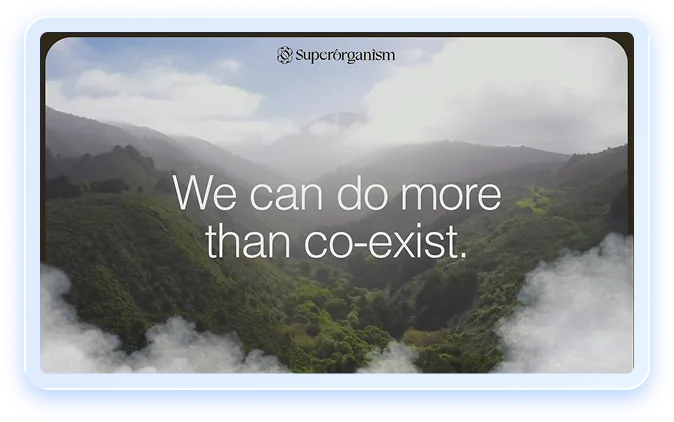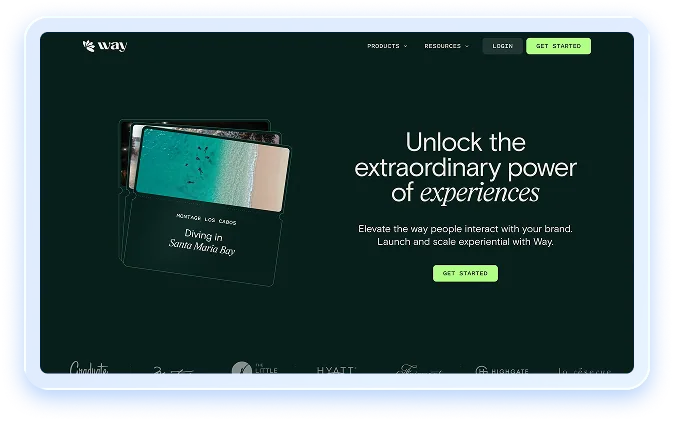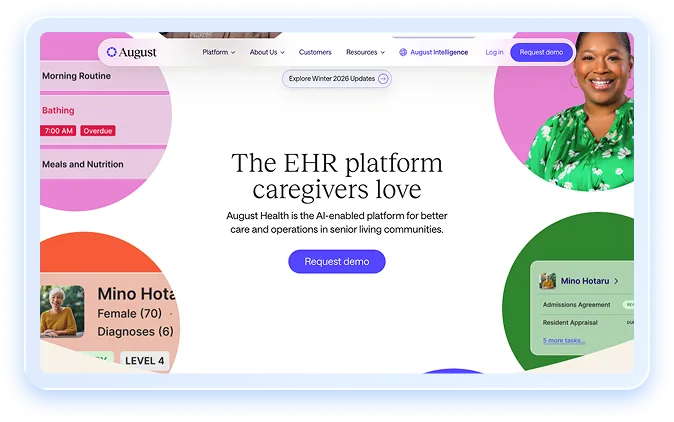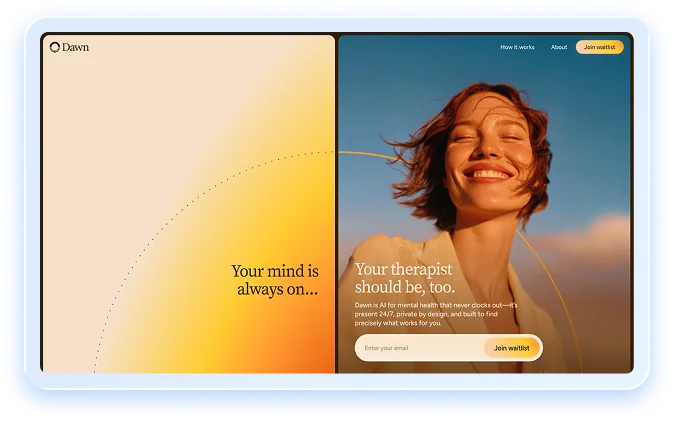

 ChatGPT
 Claude
 Gemini
 Perplexity AI
You've shipped two Webflow homepage redesigns in the last 18 months. Both looked sharper than what your competitors run. Both moved bounce rate by 5%. Neither moved the needle on demos booked.
That's not a Webflow problem. That's a B2B website problem hiding inside a design exercise. Almost every founder, marketing leader, and B2B design buyer we've worked with has lived this. The site looks premium.
The team is proud of it. The pipeline doesn't shift, because the website is doing the wrong jobs in the wrong order. This guide is what we wish every team had when they briefed a b2b website design agency for the first time.
Why B2B Webflow sites underperform in 2026
Three things changed in the last 24 months that quietly raised the bar on what a B2B website has to do.
- Your buyer is doing 70%+ of their evaluation before they ever speak to sales, according to Gartner's most recent B2B buying research. By the time someone books a demo, they've already compared you against three competitors using nothing but your website, your G2 page, and a couple of LinkedIn posts.
- AI-generated content has flooded every SaaS category. Generic "trusted by industry leaders" copy used to be neutral filler. Now it actively hurts you, because it signals "this is automated marketing, not a real product." Specificity is the new credibility.
- Webflow itself has matured into a serious B2B platform. Linear, Loom, Vercel, Ramp, and Notion all run on Webflow or Webflow-style stacks. The expectation for what a Webflow site should feel like (fast, animated, performant, CMS-driven) has gone up. A static, image-heavy build that worked in 2022 reads as dated in 2026.
The upshot: a B2B website in 2026 isn't a brochure. It's a 24/7 sales asset that has to qualify, educate, and convert without anyone on your team in the room.
Step 1. Get the strategy right before you open Webflow
The most expensive mistake we see is treating the build as a design project instead of a positioning project. Founders walk in with a Figma file and a list of pages. What they need is a clear answer to three questions.
Who is this site for, specifically? Not "B2B SaaS companies." That's a market, not a buyer. The right answer is "Series A-to-B fintech infra companies in the US selling to Heads of Engineering at neobanks of 50 to 500 people." When the ICP is that sharp, every headline, CTA, and proof point has a destination.
What's the one thing they need to believe to take the next step? Every page on a B2B site is in service of moving the buyer from one belief to the next.
Homepage: "this is a serious company that solves my problem." Product page: "this will work for my stack." Pricing: "this fits my budget and procurement reality." Case studies: "people like me have done this and succeeded." Lose the order and the site reads as noise.
What is the conversion event you're optimising for? Demo? Free trial? Sales-qualified meeting? Self-serve signup? A site optimised for self-serve signup looks fundamentally different from one optimised for enterprise demos. Pick one primary action per page. Everything else is a soft secondary.
We make every Windmark engagement begin with a half-day positioning sprint before anyone opens Figma or Webflow. It's the unglamorous step that does the most for conversion later.
Step 2. Use the 4-Layer Conversion Stack
Once positioning is locked, every page on a converting B2B Webflow site is built on the same four layers, stacked in the same order. We call this the Windmark 4-Layer Conversion Stack.
Layer 1: Clarity (above the fold). In 5 seconds, can a stranger tell what you do, who it's for, and what to do next? If not, the rest of the page doesn't matter.
The hero needs a sharp value proposition, an ICP signal ("Built for fintech infra teams"), one primary CTA, and one secondary CTA. No carousel, no rotating headline, no vague "Reimagining the future of X."
Layer 2: Credibility (immediately after the hero). Logos of recognisable customers, a one-line outcome stat from a flagship case study, and at most two trust badges.
This layer earns the right to keep the buyer scrolling. If you don't have logos yet, use a quoted outcome instead. "We cut churn by 23% in 90 days" beats a wall of grey placeholder shapes.
Layer 3: Specificity (the body). This is where most B2B sites die. They list features ("Real-time sync, advanced permissions, custom workflows") instead of showing outcomes ("Your finance team closes the month in 3 days instead of 9").
Every body section must answer one buyer objection or unlock one buyer belief. Pair each claim with a screenshot, a metric, or a customer quote. Never bare text.
Layer 4: Confidence (footer + final CTA). By the time the buyer scrolls to the bottom, the site has to remove the last excuse not to take action.
That's a final CTA block with the conversion event repeated, an FAQ that handles the top 5 objections, and a sales-friendly contact path. Bonus points for a calendar embed. The difference between "Contact sales" and an embedded Cal.com slot is conversion rate, not aesthetics.
Run this stack on every page. Treat any section that doesn't move the buyer through one of those four layers as a candidate for deletion.
Step 3. Build the Webflow foundation that won't break
Most B2B sites get reworked every 18 months not because the design is bad, but because the build can't scale. The marketing team can't ship new pages without engineering. CMS collections weren't planned for case studies or solutions pages. Components are inconsistent across templates.
A converting Webflow site is built like a small product. That means a typed design system inside Webflow's Style Manager (typography, spacing, colour, and component variants all defined as classes; we use a Client-First-style naming convention, modified).
When a marketer needs to spin up a new feature page, they shouldn't be touching CSS. They should be assembling pre-built sections.
It also means a component-first build. Heroes, social proof bars, feature blocks, pricing tables, and CTAs are all Webflow Components, not duplicated divs. Updating one CTA copy across the site is a 30-second change, not a 30-page hunt.
A CMS that anticipates growth matters too. Separate collections for Case Studies, Solutions, Industries, Blog, Authors, and Integrations. If you launch with only a Blog collection, your team will be rebuilding architecture inside 12 months.
And a clean SEO base. Every CMS template has structured data, custom Open Graph images, properly nested H1/H2/H3, canonical URLs, and an XML sitemap. None of this is glamorous, but Google ranks fast, structured sites first.
This is the difference between a Webflow site that lasts 5 years and one that gets rebuilt every 18 months. Choose a b2b website design agency that talks about CMS architecture and component systems in the proposal, not just "we'll build it in Webflow."
Step 4. Performance is conversion
This is the most under-rated lever on a B2B Webflow site. Google's own research (Web.dev) shows that as page load time grows from 1s to 3s, the probability of bounce increases by 32%. From 1s to 5s, that jumps to 90%.
For a high-intent B2B visitor who already had to overcome distraction, calendar Tetris, and stakeholder politics just to land on your homepage, every extra second is a conversion you lost.
In 2026, the bar for a B2B Webflow site is:
- LCP under 2.5 seconds on a mid-tier mobile device on 4G
- CLS under 0.1 (no layout jumps as fonts/images load)
- INP under 200ms (interactions feel instant)
Webflow makes this very achievable but doesn't enforce it. The common mistakes we audit:
- Heroes built around uncompressed PNG hero images instead of WebP/AVIF with `loading="eager"` and `fetchpriority="high"`
- Embedded Lottie animations or Spline 3D scenes loaded synchronously on the homepage
- Custom fonts loaded as 4 to 6 weights when only 2 are actually used in copy
- Third-party scripts (Hotjar, Intercom, Drift, HubSpot, Segment) all loaded on every page on every visit
The fix is methodical. Audit Core Web Vitals on every key page in PageSpeed Insights, prioritise the homepage and product pages first, and treat any score under 90 as a conversion bug.
Step 5. Copy that sounds like your buyer, not like a brand guideline
The copy on most B2B Webflow sites reads like it was written by a brand workshop, not by anyone who has ever sat across from a buyer. Generic, abstract, full of "innovative," "robust," "seamlessly."
The fix is research, not creativity. Before writing a single headline, your b2b website design agency should be reading the actual words of your buyers.
Sales call transcripts, support tickets, churn-survey responses, G2 reviews, Reddit threads, LinkedIn comment sections. The headlines that convert in 2026 are almost always lifted from how a customer described the problem in their own words.
A few specific copy rules we apply to every page.
Headlines are outcomes, not features. "Close the books in 3 days, not 9" beats "Advanced reconciliation engine for modern finance teams."
Subheadlines name the ICP. "Built for finance teams at 200 to 2,000-person SaaS companies" tells the wrong buyer to leave and the right buyer to keep reading.
CTAs describe what happens next, not what you want them to do. "See a 12-minute product walkthrough" converts better than "Book a demo" because it removes the fear of being sold to.
Every claim has a number or a name. "We cut deployment time" is unverifiable. "We cut deployment time from 4 hours to 18 minutes for 8 fintech infra teams" is a fact.
This is the layer most agencies underinvest in. A beautiful site with weak copy will lose to an average-looking site with sharp, ICP-specific copy every time.
Step 6. Trust architecture: how to stack social proof
On a B2B site, every conversion is a small enterprise sale. The buyer is making a recommendation to a team, a manager, or a procurement committee. Social proof isn't a section. It's a layer that runs through every page.
The trust architecture we ship on a converting B2B Webflow site:
- A logo bar in the hero zone (6 to 8 recognisable customer logos at most, never more)
- A stat-driven proof block below the hero (one specific outcome a buyer would brag about)
- A flagship case study CTA that lives in the right-hand rail or below every product section
- Inline pull quotes from named buyers with their company logo and title. Never anonymous.
- A case studies hub with at least 4 to 6 detailed customer stories, each tagged by industry and use case
- Third-party trust signals in the footer (SOC 2, GDPR, ISO 27001, G2 badge). Only the ones that matter to your ICP.
Two specific patterns we see drive enterprise conversion.
The named-buyer quote. A quote from "Sarah Chen, VP Engineering, Ramp" outperforms the same quote from "an enterprise customer" by an order of magnitude. The named buyer signals that real people put their professional reputation behind your product.
The outcome stat in the case study card. Every case study tile leads with the number, not the brand. "73% reduction in onboarding time" pulls clicks. "Case study: Acme Co." doesn't.
If you don't have logos yet, lean into named-buyer quotes and detailed outcome stats. Trust is earned through specificity, not logo density.
Step 7. Treat launch as day zero, not the finish line
The biggest mental model shift we ask Windmark clients to make: launch isn't the end of the project. It's the beginning of the CRO loop.
A converting B2B website in 2026 is one that improves quarterly, not one that ships pretty and then sits frozen for 18 months. That means a 30-day post-launch audit.
A page-by-page review of analytics (GA4, Mixpanel, Posthog), heatmaps (Hotjar, Microsoft Clarity), and session recordings. We almost always find a top-of-funnel page where bounce rate is 70%+ and one fix unlocks the whole funnel.
It also means a continuous A/B test cadence. At minimum, one test per month on the homepage, pricing page, and a single high-traffic feature page. Tools like Webflow Optimize, VWO, or Convert make this manageable.
Quarterly content shipping matters: 2 to 4 new pages per quarter. Solutions pages, comparison pages ("[You] vs [Competitor]"), integration pages, and customer story pages all compound over time and become long-tail SEO assets.
And performance re-baselining. Core Web Vitals drift over time as scripts get added. Re-baseline every quarter. Treat a regression as a P1 bug.
This is the layer that separates a website that launches well from one that compounds in value. A site that gets one CRO test, one new page, and one performance pass every month is a site that grows pipeline 30 to 40% year over year, without ever doing a "full redesign."
The Windmark B2B Conversion Build
When clients hire Windmark as their b2b website design agency, we deliver every project through a four-stage method we call the B2B Conversion Build.
- Positioning Sprint. A half-day with the founder and head of marketing to lock ICP, primary conversion event, and the buyer beliefs each page must shift.
- Conversion Architecture. Wireframes for every page built around the 4-Layer Conversion Stack, signed off before any visual design starts.
- Webflow Build + Animation Layer. A typed design system, component-first build, CMS architecture planned for 12-month growth, performance-tuned, with our signature motion design layer that makes pages feel premium without hurting Core Web Vitals.
- 30-Day CRO Loop. Post-launch audit, first A/B test plan, and a recurring quarterly retainer to keep the site compounding.
The reason we run every engagement this way: every other order is one where we end up rebuilding parts of the site within 12 months. Strategy, then architecture, then build, then optimise is the only sequence that produces a site that keeps converting a year after launch.
You can see a recent example in our case study on rebuilding a B2B SaaS website for a Series A fintech, where the new site moved demo conversion from 0.8% to 3.4% in 90 days, without any change to traffic mix.
How to choose the right B2B website design agency
Three questions to ask any b2b website design agency you're evaluating in 2026. The right answers separate a real partner from a portfolio shop.
"What is the conversion metric you're optimising this project for, and how will we measure it?" If the answer is anything other than a specific conversion event with a baseline and a target, walk away. A great agency will commit to a measurable outcome in the proposal.
"Can you walk me through the post-launch CRO process you run?" If they don't have one, the site will go stale. The 30-day audit, the A/B test cadence, the quarterly content plan: these are the differences between a website that grows and one that decays.
"Show me a B2B site you shipped 18 months ago that's still performing, and the data." A site that converts on launch and converts at 18 months is the only proof that matters. A Dribbble portfolio is not.
If you're a B2B founder or marketing leader briefing a Webflow project right now, Windmark's B2B Conversion Build service is built for exactly this kind of engagement. Strategy-led, conversion-architected, and supported with a quarterly CRO loop after launch.