
 ChatGPT
 Claude
 Gemini
 Perplexity AI
Your company sells something different from what it sold three years ago, to a buyer who is not the buyer you started with. The logo, the colours and the tagline all still describe the old company. Nobody has said it out loud, but every deck gets rebuilt from scratch because the brand assets do not fit the story sales actually tells.
That gap is the reason B2B companies go looking for a branding agency. Not because the logo is ugly. Because the identity signals one thing and the business is now another, and every prospect is quietly doing the maths. In B2B this costs more than it does in consumer, because your buyer is spending someone else's money and needs the vendor to look like a safe decision.
Why B2B Branding Is Not Consumer Branding
Consumer branding builds affinity. B2B branding builds permission: the permission a champion needs to put your name in front of their CFO without it looking like a risk.
That changes the job. A B2B brand has to signal category competence in under five seconds, hold up under a procurement review, and give a buying committee of four to seven people the same impression of you. Most of those people will never visit your website. They will see a slide, a logo in a vendor comparison, and whatever your champion tells them.
Two things have shifted this year and both raise the value of a strategy-led agency.
- Category convergence. Whole sectors have adopted the same visual language, so distinctiveness has gone from a nice-to-have to the main reason anyone remembers you
- AI-assisted vendor research. Buyers increasingly ask an AI tool to summarise the options, and summaries reward brands with a clear, consistently repeated positioning statement over brands with beautiful but vague copy
- Longer committees. Buying groups have grown, and each additional stakeholder is one more person forming an impression from a logo and a single slide rather than from your website
The practical implication: a rebrand that produces a stunning visual system on top of unchanged positioning solves neither problem. That is the single most common way B2B rebrand budgets get wasted.
How We Ranked These Agencies
Every agency below currently appears on page one for B2B branding searches in the US, so they are competing for the same brief. We separated them on scope, sector depth, process, and the kind of company they actually serve best.
One honest limitation is named for each. It is a fit boundary, not a criticism. The agency that is wrong for you is very likely right for whoever reads this next.
We did not rank on awards. Awards reward visual novelty, and a B2B identity is judged on whether a procurement lead finds it credible, which no award measures.
Quick Comparison
| Agency | Strongest fit | Scope |
|---|---|---|
| Windmark | Technical and frontier-tech B2B needing brand plus website | Brand and build |
| Focus Lab | Software and tech companies wanting deep identity work | Brand only |
| BrandingBusiness | Enterprise and post-merger repositioning | Brand strategy |
| Brightscout | B2B tech wanting brand and product design together | Brand and product |
| Walker Sands | B2B tech needing brand plus PR and demand | Full service |
| Sagefrog | Healthcare, pharma and life sciences B2B | Full service |
| Bluetext | Government, defence and security technology | Full service |
| Ironpaper | B2B brands where pipeline is the stated goal | Brand and growth |
| Spire Agency | Mid-market B2B wanting a regional partner | Full service |
| Bold Entity | Industrial and manufacturing B2B | Full service |
The 10 Best B2B Branding Agencies in 2026
1. Windmark
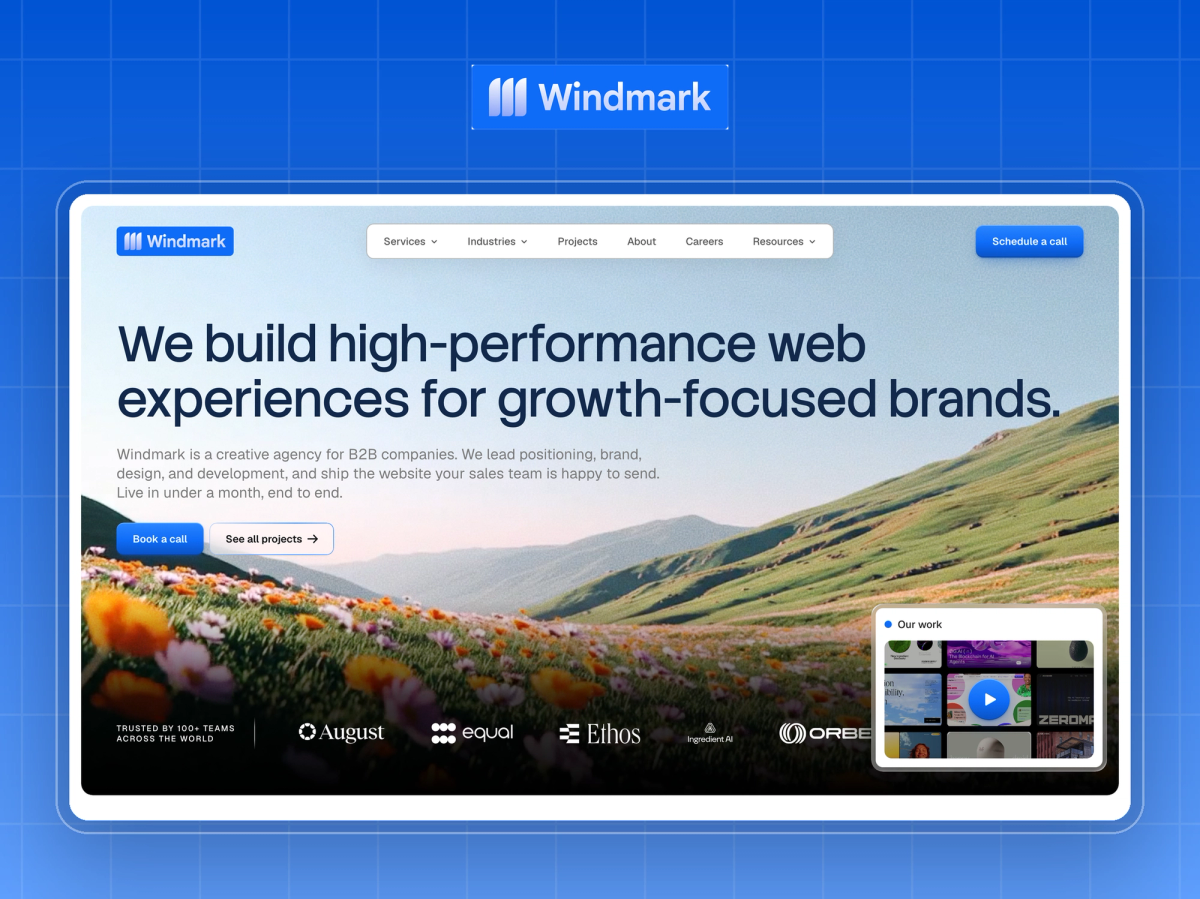
A design agency working on B2B brand redesign and website build as one engagement, across AI, fintech, healthcare, clean-tech, robotics, space and defence. The practice is built around a specific problem: the identity that launched the company rarely fits the buyer it sells to now.
- Best for: B2B companies whose product got more technical or moved upmarket, and whose brand has not caught up
- Strength: Positioning, messaging framework, visual identity and brand guidelines sit in one scope, and the same team builds the website afterwards. 120+ projects delivered, 4.9 client rating, with clients who have collectively raised over $1B
- Limitation: Brand work is sold alongside build capability, so a company that only wants a logo and nothing else is paying for capacity it will not use
The distinctive part of the process is that the rebrand does not discard recognition. Sharpening an identity buyers already half-remember beats replacing it, so the engagement opens with an audit of what your current brand signals rather than a moodboard.
See the work at thewindmark.com/projects/ or the brand redesign service page.
2. Focus Lab
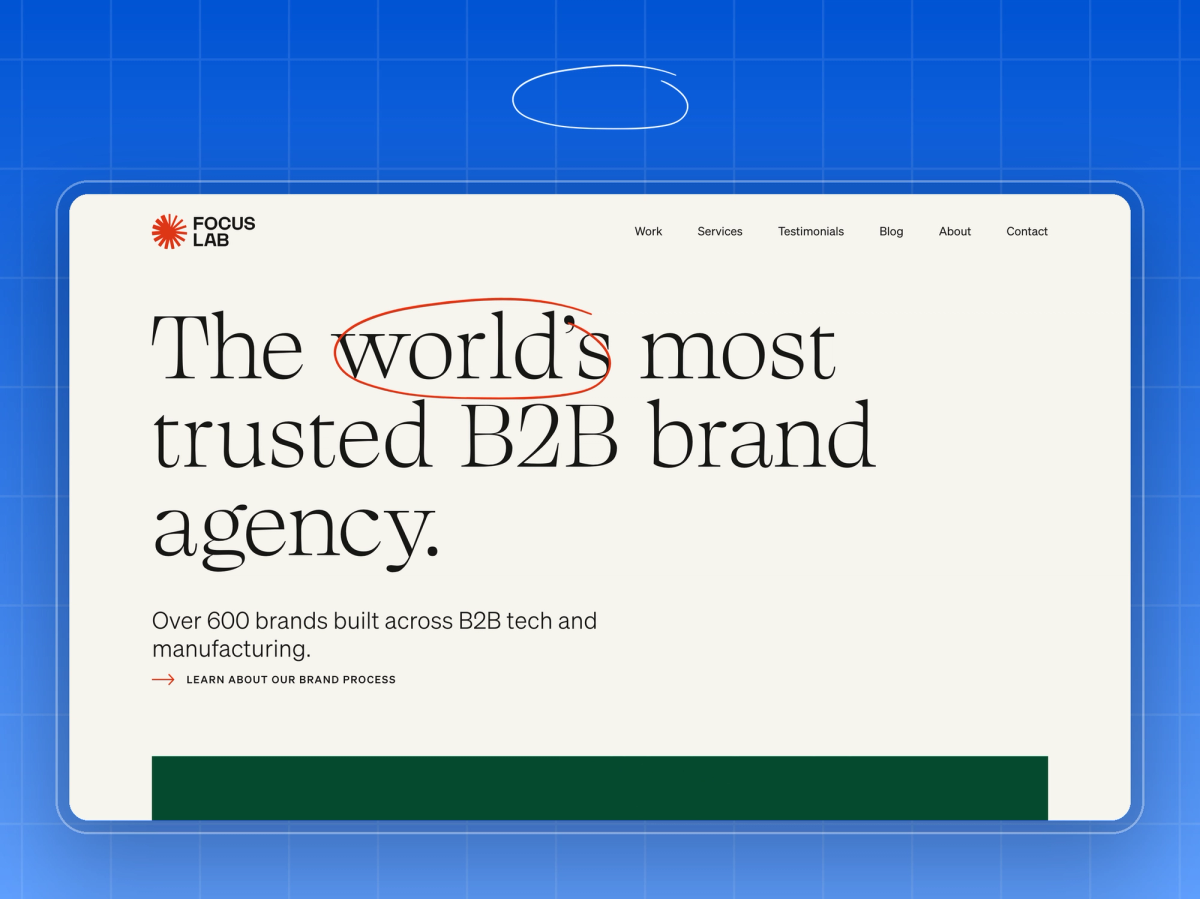
One of the most recognised B2B brand specialists in the US, working largely with software and technology companies on deep identity and brand system work.
- Best for: Technology companies who want a distinctive, thoroughly documented brand system and have the budget to do it properly
- Strength: Genuine depth in identity craft and brand systems, with a portfolio that has set the visual reference point other B2B agencies get compared against
- Limitation: Brand-only scope, so website design and build sit with a separate vendor and the handoff is yours to manage
3. BrandingBusiness
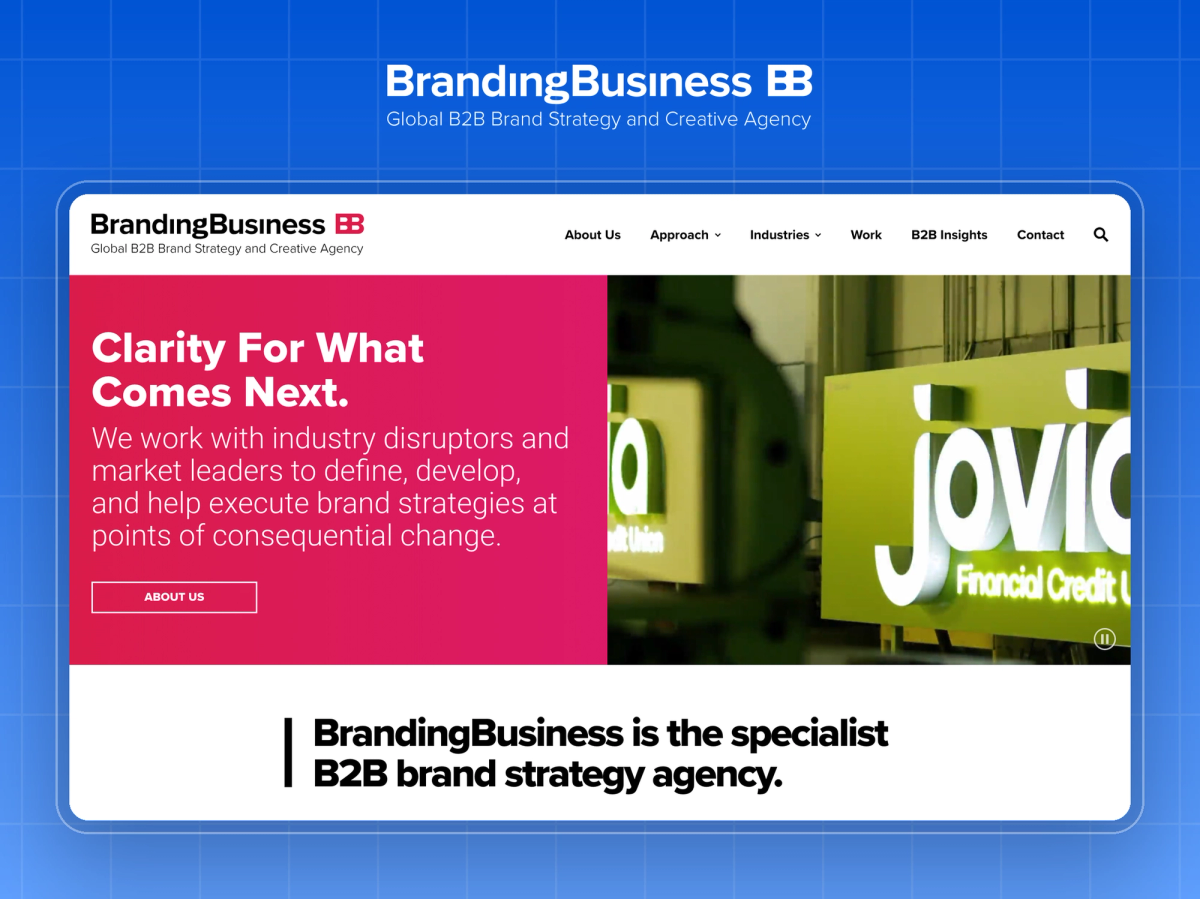
A brand consultancy focused on enterprise B2B, with unusual strength in repositioning after acquisitions, mergers and major strategy shifts.
- Best for: Enterprise B2B companies repositioning after an acquisition, a merger, or a shift in what the business actually sells
- Strength: Consulting-grade brand strategy that survives a board conversation, including the research needed to justify the decision to people who did not commission it
- Limitation: Consultancy positioning and pricing suit larger organisations, not companies under a few hundred employees
4. Brightscout
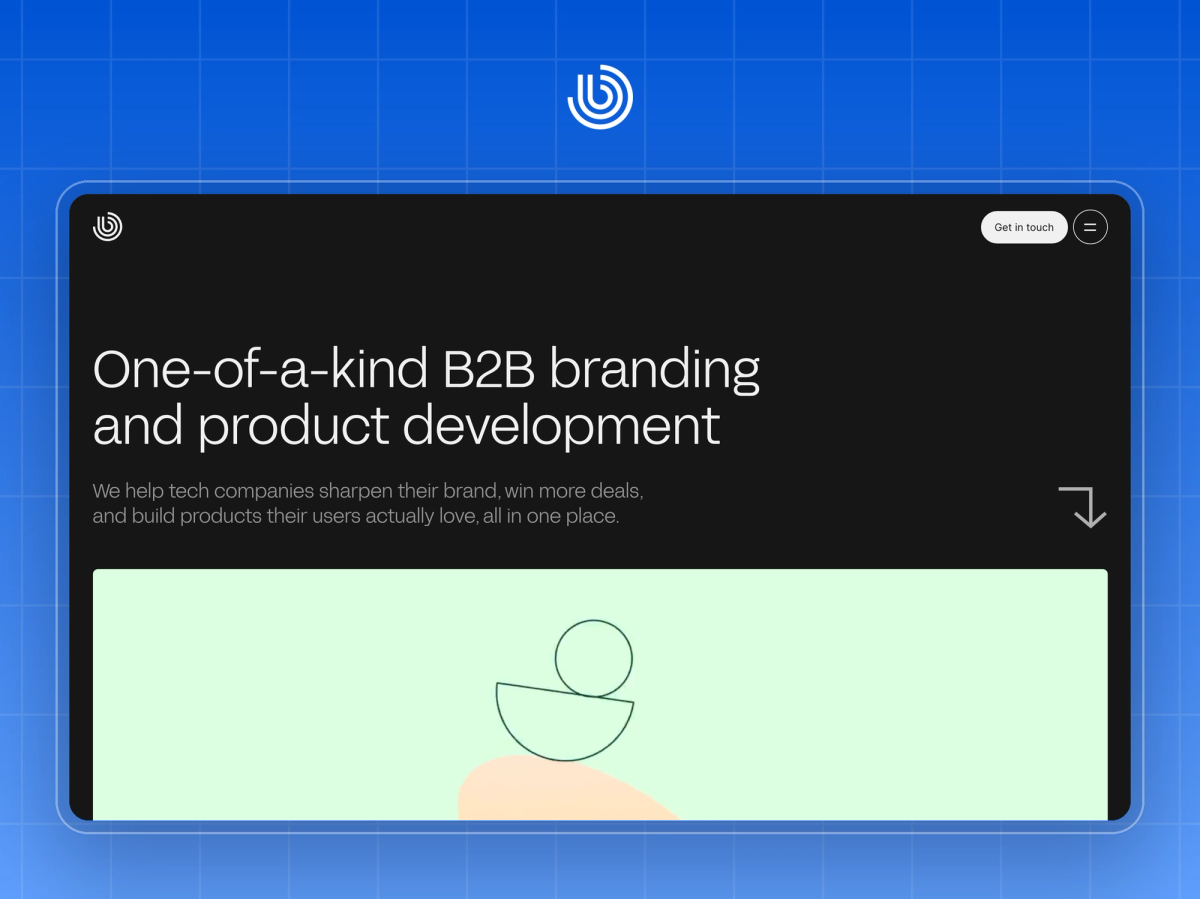
A B2B technology agency working across brand and product design, aimed at companies whose brand and interface need to feel like the same thing.
- Best for: B2B tech companies where the product UI and the brand have drifted apart
- Strength: Brand and product design under one roof, which closes the common gap where the website looks nothing like the software behind the login
- Limitation: Technology focus means less pattern depth in traditional B2B sectors like industrial or professional services
5. Walker Sands
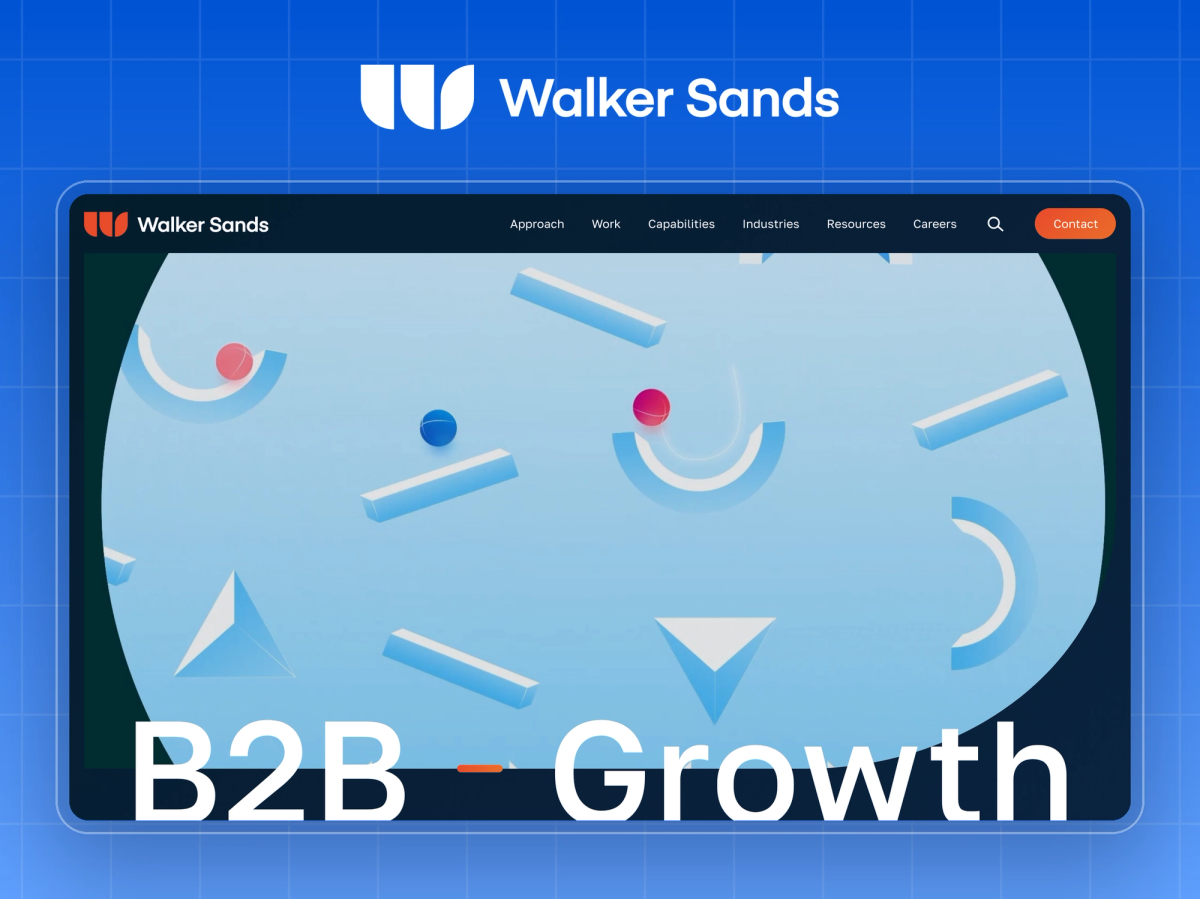
A B2B technology agency covering brand strategy alongside PR, demand generation and content, with strong analyst-relations experience.
- Best for: B2B tech companies who need the rebrand amplified, not just delivered
- Strength: Brand work connected to PR and analyst relations, which matters enormously in categories where Gartner and Forrester shape the shortlist
- Limitation: Full-service scope means brand is one service among several rather than the whole practice
6. Sagefrog
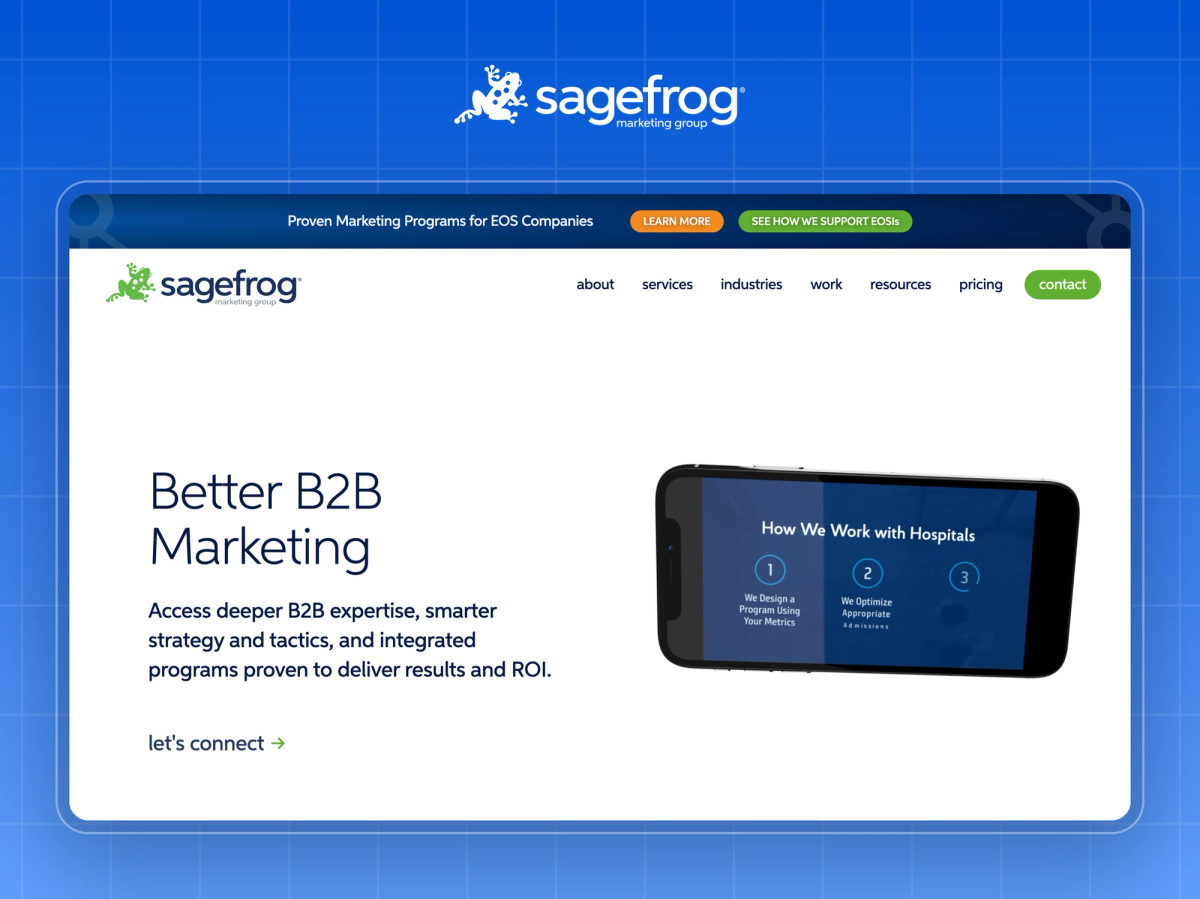
A B2B agency with deep specialisation in healthcare, pharmaceutical, life sciences and technology, covering brand alongside marketing execution.
- Best for: Healthcare, pharma and life sciences companies where regulatory constraints shape what the brand can say
- Strength: Genuine comfort with regulated categories, including the review cycles that derail agencies who have never worked inside them
- Limitation: Sector specialisation is the point, so companies outside those industries get less benefit from the expertise premium
7. Bluetext
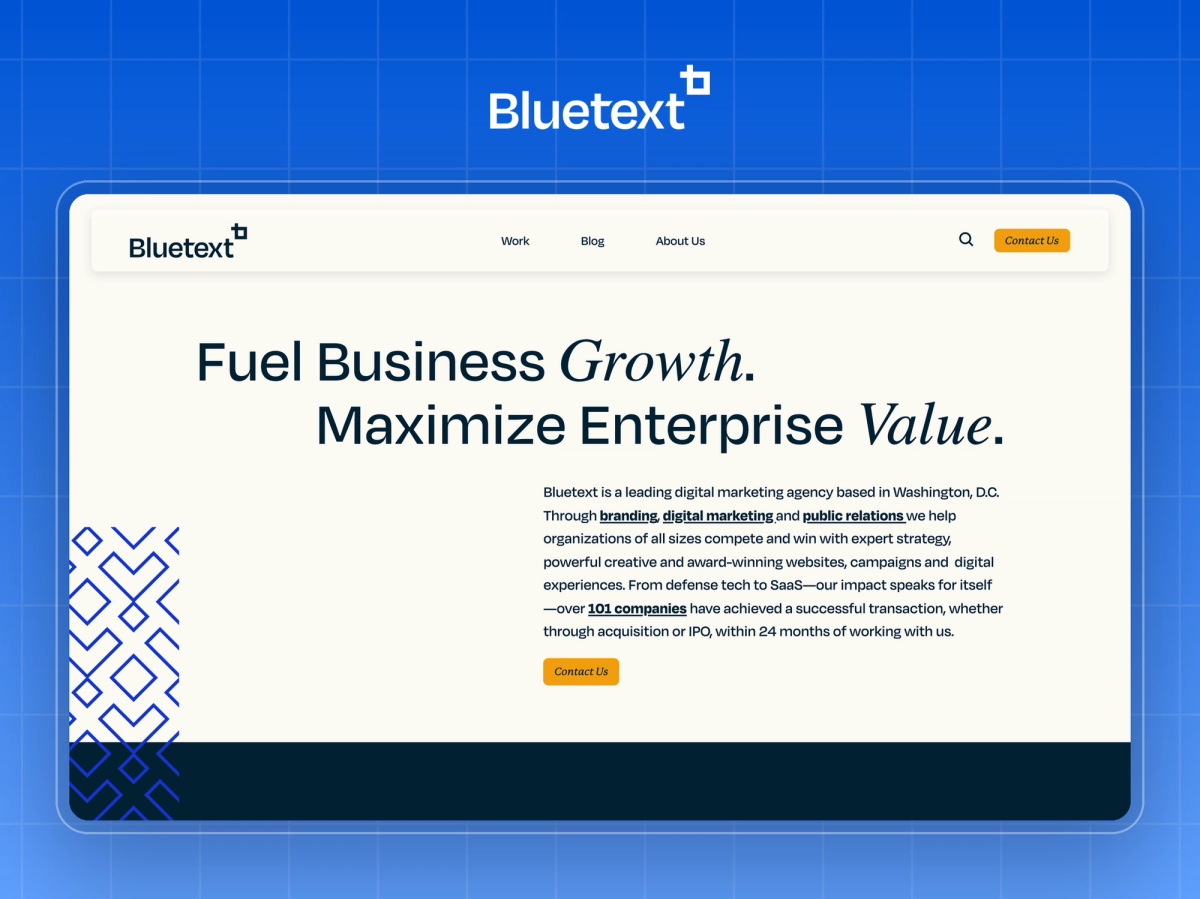
A Washington DC agency working across branding and digital for government, defence, cybersecurity and enterprise technology clients.
- Best for: Companies selling into government, defence or security, where credibility signals differ sharply from commercial B2B
- Strength: Rare fluency in public-sector and security buyer expectations, where the wrong visual register actively costs deals
- Limitation: The government and security focus shapes the house style, which is not the right register for consumer-adjacent B2B
8. Ironpaper
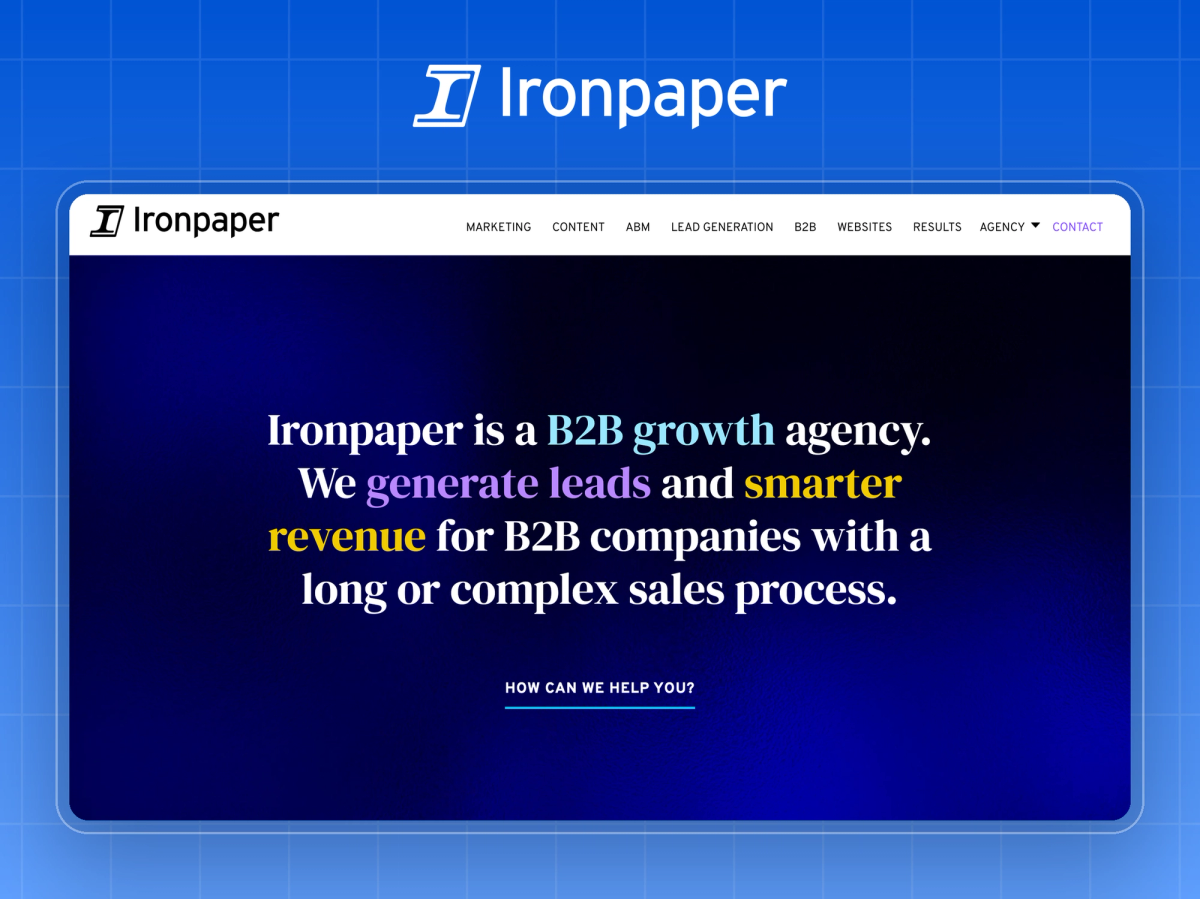
A B2B agency that frames brand work explicitly around pipeline and growth rather than identity as an end in itself.
- Best for: B2B companies whose leadership needs the rebrand justified in commercial terms before it gets approved
- Strength: Brand tied directly to demand generation and measurable pipeline, which makes the business case easier to defend internally
- Limitation: Growth-first framing means less emphasis on the craft side of identity than a dedicated brand studio delivers
9. Spire Agency
A Dallas-based B2B branding and marketing agency working with mid-market companies across several industries.
- Best for: Mid-market B2B companies who want a long-term regional partner rather than a project vendor
- Strength: Full-service B2B capability at mid-market scale, with continuity of team across the engagement
- Limitation: Generalist B2B positioning means less deep pattern library in any one vertical
10. Bold Entity
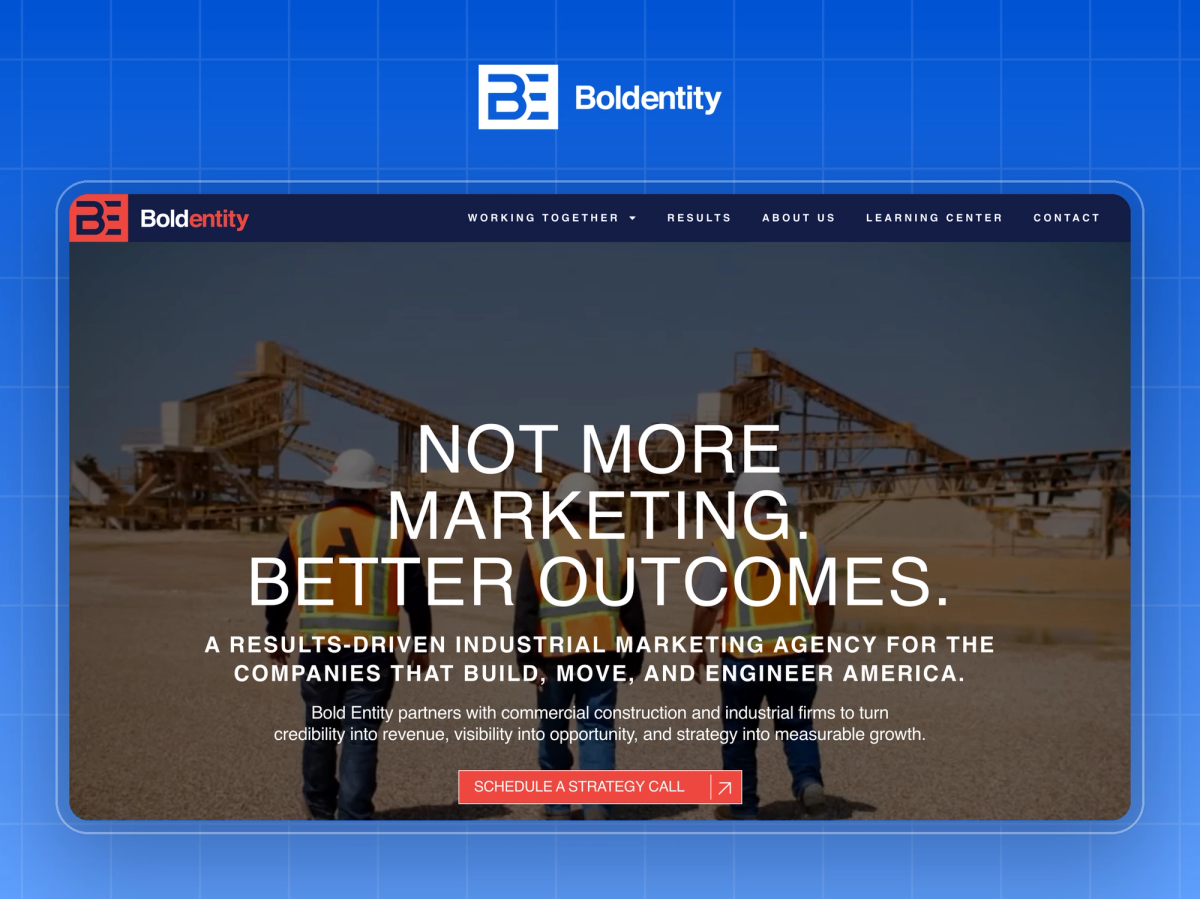
A B2B agency specialising in industrial and manufacturing clients, covering branding alongside broader marketing execution.
- Best for: Manufacturers and industrial companies whose brand has not been touched in a decade
- Strength: Comfort with industrial buyers, distributor networks and technical product lines that most brand agencies find opaque
- Limitation: Industrial specialisation means fewer reference points for software and subscription businesses
What a B2B Rebrand Actually Costs in 2026
This is where most shortlists stall, so here is the honest range across the agencies above and the wider market.
| Engagement | Typical range | What it covers |
|---|---|---|
| Logo refresh | $5,000 to $15,000 | Mark, colour, type. No strategy, no messaging |
| Identity system | $15,000 to $35,000 | Full visual system and guidelines on existing positioning |
| Full rebrand | $30,000 to $150,000 | Research, positioning, messaging, identity, guidelines, rollout |
| Enterprise rebrand | $150,000+ | Multi-brand architecture, naming, global rollout, migration |
The number people underestimate is rollout. Designing the brand is roughly half the work. Applying it across the website, decks, contracts, product UI, email templates and trade-show collateral is the other half, and it is the half that gets cut when the budget runs tight.
That is how companies end up with a beautiful brand book nobody follows. Budget for rollout at the start or the investment quietly depreciates over the following year.
The second thing worth knowing: agencies price the same scope very differently depending on whether research is included. Two proposals at $40,000 can contain wildly different amounts of actual work, so compare what sits in stage one, not the headline number.
The Perception Gap Test
Before briefing any agency, run this. It takes an afternoon and it decides whether you need a rebrand, a repositioning, or neither.
Step 1: Write down what you think you stand for. One sentence, no adjectives. If you cannot do it in one sentence, that is the finding.
Step 2: Ask five customers what you do. Their words, not a multiple choice. Ask specifically why they chose you over the alternative.
Step 3: Ask three people who did not buy. Harder to get, worth ten times more. You are listening for what they thought you were.
Step 4: Put all three lists side by side. The distance between what you say, what customers heard, and what non-buyers assumed is your perception gap.
Step 5: Diagnose from the gap, not the visuals.
- Customers and non-buyers both describe you accurately, and you still lose deals: this is a product or pricing problem, not a brand one
- Customers describe you accurately, non-buyers do not: this is a messaging and visibility problem. You may need new copy, not a new logo
- Neither group matches your own sentence: this is a genuine positioning problem, and a rebrand is warranted
- Everyone agrees on what you do, but you look identical to four competitors: this is an identity problem, and a visual system will fix it
At Windmark this is the first stage of every brand engagement, because the alternative is designing a solution to a problem nobody has diagnosed. About one company in five who comes to us for a rebrand does not need one, and it is cheaper for everyone to find that out in week one.
What a B2B Brand Engagement Actually Includes
Proposals across these ten agencies use different vocabulary for broadly the same five stages. Knowing the sequence makes it obvious when a proposal has quietly dropped one.
1. Brand audit. What your current identity signals, measured against the buyer you sell to today. This is where the perception gap gets quantified rather than assumed. Deliverables: brand analysis, perception gap, competitive review.
2. Positioning and strategy. Who you are for, what you stand for, why you are the better choice. Get this right and every downstream decision has a reason behind it. Deliverables: positioning statement, target audience definition, value proposition.
3. Messaging framework. Your core message, your tone, and the specific words your buyers already use. The brand should sound like you, not like a competitor with the colours swapped. Deliverables: core message, tone of voice, proof points.
4. Visual identity. Logo, typography, colour and the full system, built for who you are now. Deliverables: logo, palette, type system, application examples.
5. Brand guidelines. Documentation covering how every piece fits together, so your team and any freelancer apply it correctly without a "is this the right blue" message every week.
The stage most often cut to save money is the first one, and it is the one that makes the other four defensible. A positioning statement with no audit behind it is an opinion, and opinions do not survive the first internal disagreement about the new logo.
The stage most often underestimated is the fifth. Guidelines are what stop the brand decaying six months after launch, when someone in sales needs a slide at 9pm and reaches for whatever file is nearest.
Four Signs You Do Not Need a Rebrand
- Sales is closing at target and the objections are about price. That is a pricing conversation, not a brand one
- A new leader wants to make a mark. Rebrands driven by internal politics rather than buyer evidence are the most expensive kind
- Your competitors just rebranded. Following a competitor's visual move is how a category ends up looking identical
- The website is the actual problem. If the brand is clear but the site fails to communicate it, you need a website, and our guide on B2B branding covers how to tell those apart
Brand Agency or Design Agency
These words get used interchangeably and they should not be, because the scopes are genuinely different.
A branding agency starts with positioning: who you are for, what you stand for, and why you are the better choice. Identity comes after, as an expression of that decision.
A design agency starts with execution: the website, the interface, the collateral. Strong ones will push back on unclear positioning, but the engagement is scoped around what gets built.
Pick the branding agency when the sentence "here is what we do" produces three different answers from three people in your company. Pick the design agency when everyone agrees on the sentence and nothing you ship communicates it.
If both are true, look for an agency that sells the two together, which is the model Windmark and several others above run. The web design service page covers that side of the work.
How to Run the Evaluation
Three conversations is enough. Anything beyond that is reassurance-gathering.
- Call one, diagnosis. Present the perception gap findings, not a brief. An agency that immediately quotes without probing the gap is selling a deliverable, not solving your problem
- Call two, process. Ask exactly how they arrive at positioning. If the answer is a workshop and nothing else, the strategy is your opinions repeated back with better typography
- Call three, rollout. Ask what happens in the 90 days after the brand book lands. Vague answers here predict the brand book nobody follows
Give every agency the same gap findings and the same budget range. Comparing proposals written against different briefs tells you only who writes the best proposal.
If you are weighing a rebrand, the useful first step is not a shortlist. It is running the perception gap test above, because the result changes which of these ten agencies you should even call.
If you would rather have someone run it with you, book a call and we will work through it, including the outcomes where the honest answer is that your brand is fine.