
 ChatGPT
 Claude
 Gemini
 Perplexity AI
Your product does something genuinely difficult, and your website makes it sound like everyone else's. Prospects land on the homepage, read a headline about "empowering teams to do their best work," and leave without understanding what you sell. Sales spends the first ten minutes of every call re-explaining the thing the website was supposed to explain.
That is the real reason B2B companies go looking for a specialist. Not because the site looks dated. Because it is not carrying its share of the pipeline. Gartner's research on B2B buying is the number most often quoted here: buyers complete roughly 70% of their evaluation before they ever speak to a vendor. If your website cannot do that work, your sales team inherits a harder conversation every time.
Why B2B Web Design Is a Different Discipline in 2026
B2C web design optimises for one person making one impulse decision. B2B optimises for a committee, a procurement cycle, and an internal champion who has to defend the choice to people who never visited your site.
That changes what the site has to do. It needs to explain a complex product in seconds, answer objections the buyer has not voiced yet, and give the champion something they can forward to their CFO without adding a paragraph of context. A beautiful website that does none of this is an expensive brochure.
Three shifts have made specialist agencies more valuable this year.
- AI search summaries answer more queries before anyone clicks, so the visitors who do arrive carry more weight per session
- Side-by-side evaluation is now standard. Buyers open four or five vendor sites in one browser session, and clarity beats craft when your homepage sits in a tab next to a competitor's
- Core Web Vitals remain a ranking input, so a slow site quietly loses the organic traffic that fed the pipeline in the first place
Specialist agencies charge more because they have already solved these problems for products like yours. Whether that premium is worth paying depends on how complex your product actually is, which the next sections work through.
How We Ranked These Agencies
Every agency below currently appears on page one for B2B web design searches, so they are all competing for the same buyer. We separated them on four things: sector focus, delivery speed, what happens after launch, and who they are genuinely a good fit for.
We have also named one honest limitation for each. Not a criticism, a fit boundary. The wrong agency for you may be exactly right for the company evaluating them next to you.
One thing we deliberately did not rank on: awards. Design awards reward novelty, and novelty is the enemy of a B2B website whose job is to be understood in eight seconds by a procurement lead who did not want to be there.
Quick Comparison
| Agency | Strongest fit | Model |
|---|---|---|
| Windmark | Complex B2B products needing design plus Webflow build | Project |
| Bop Design | Mid-market B2B wanting design plus demand gen | Retainer |
| Amply | Enterprise SaaS with long evaluation cycles | Project |
| Webstacks | Large SaaS sites outgrowing their structure | Project or retainer |
| Avrea Foster | Brand and website repositioning together | Project |
| Godfrey | Industrial and manufacturing, technical products | Retainer |
| Superside | Continuous creative volume across channels | Subscription |
| Revel Marketing | Design plus custom development in one contract | Project |
| Everything Design | Brand identity and website as one problem | Project |
| Excited Agency | Visual differentiation in crowded categories | Project |
| Miyagi | Technical SaaS and developer-facing audiences | Project |
| Studio Simpati | Unclear propositions needing message work first | Project |
The 12 Best B2B Web Design Agencies in 2026
1. Windmark
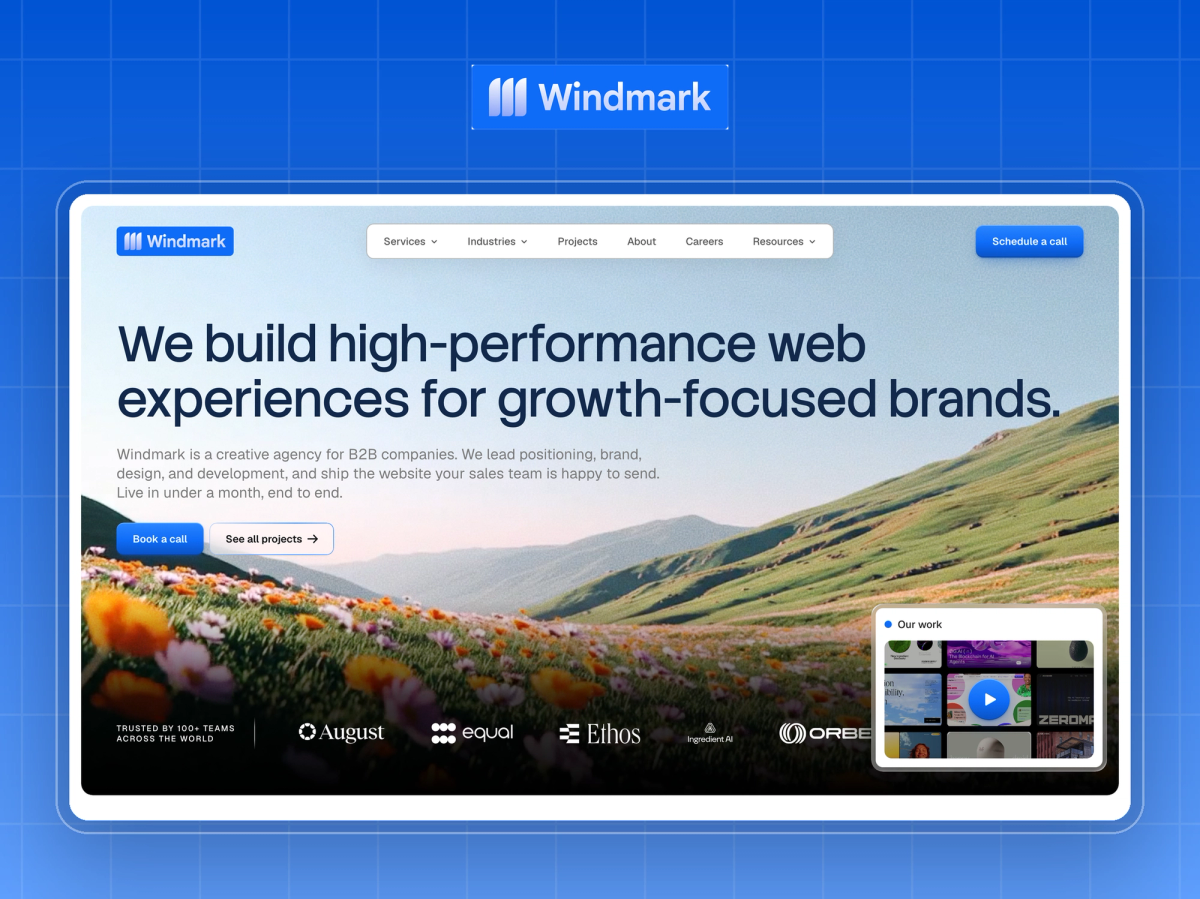
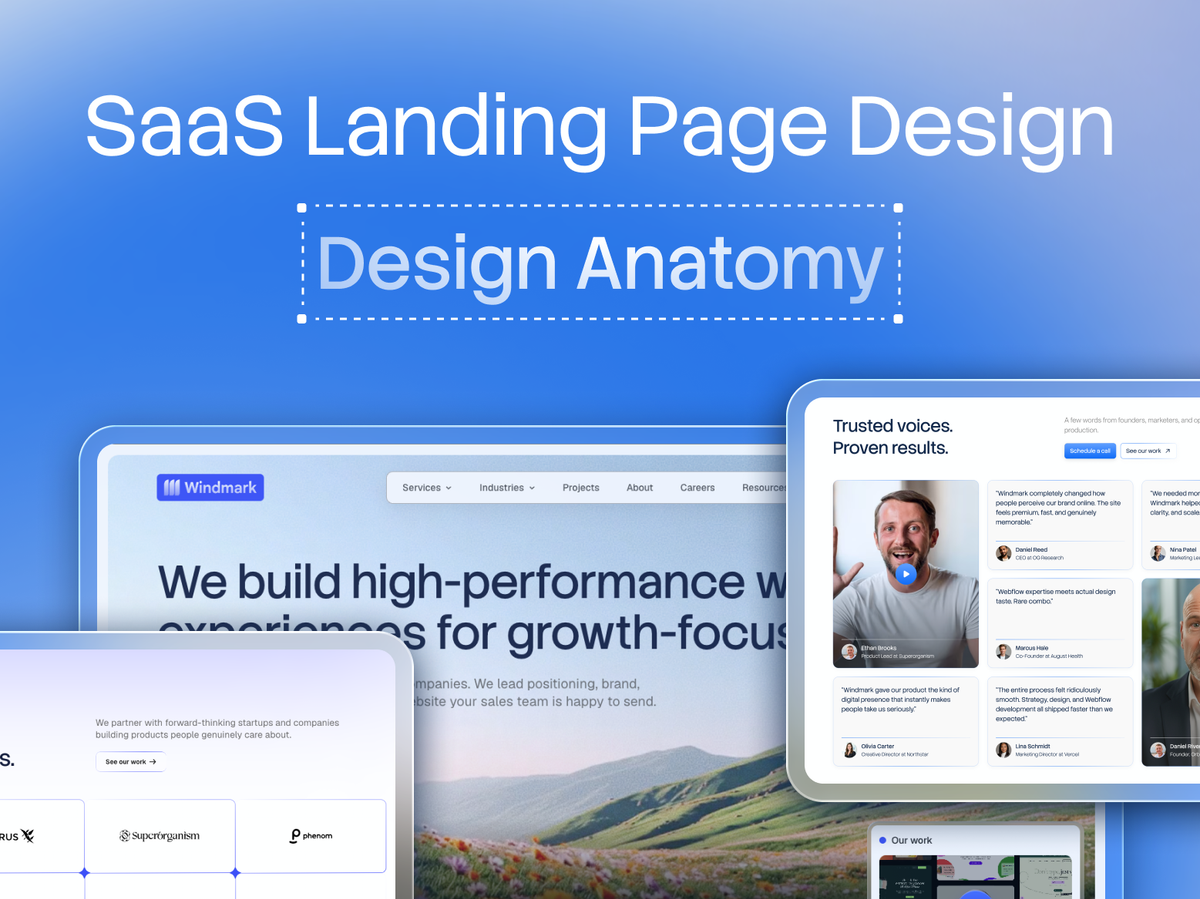
A design and Webflow development agency working with B2B companies across SaaS, fintech, healthcare, AI, clean-tech and defence. Windmark runs positioning, design and build as a single engagement rather than handing the website between three vendors and hoping the seams do not show.
- Best for: B2B companies with a complex product that needs explaining, who want the site editable by their own marketers afterwards
- Strength: 120+ projects delivered for 25+ brands, with clients who have collectively raised over $1B. Webflow Premium Partner, with most rebuilds live in about four weeks, scoring 90+ on Lighthouse and loading in under a second
- Limitation: Projects start at $5,000 and most full rebuilds land between $15,000 and $60,000, so it is not the right fit for a first website on a starter budget
The recurring pattern in the work is conversion lift from clarity rather than decoration. Rebuilds typically move conversion around 30% without adding a single new traffic source, because the existing traffic finally understands the offer.
See the work at thewindmark.com/projects/ or the web design service page.
2. Bop Design
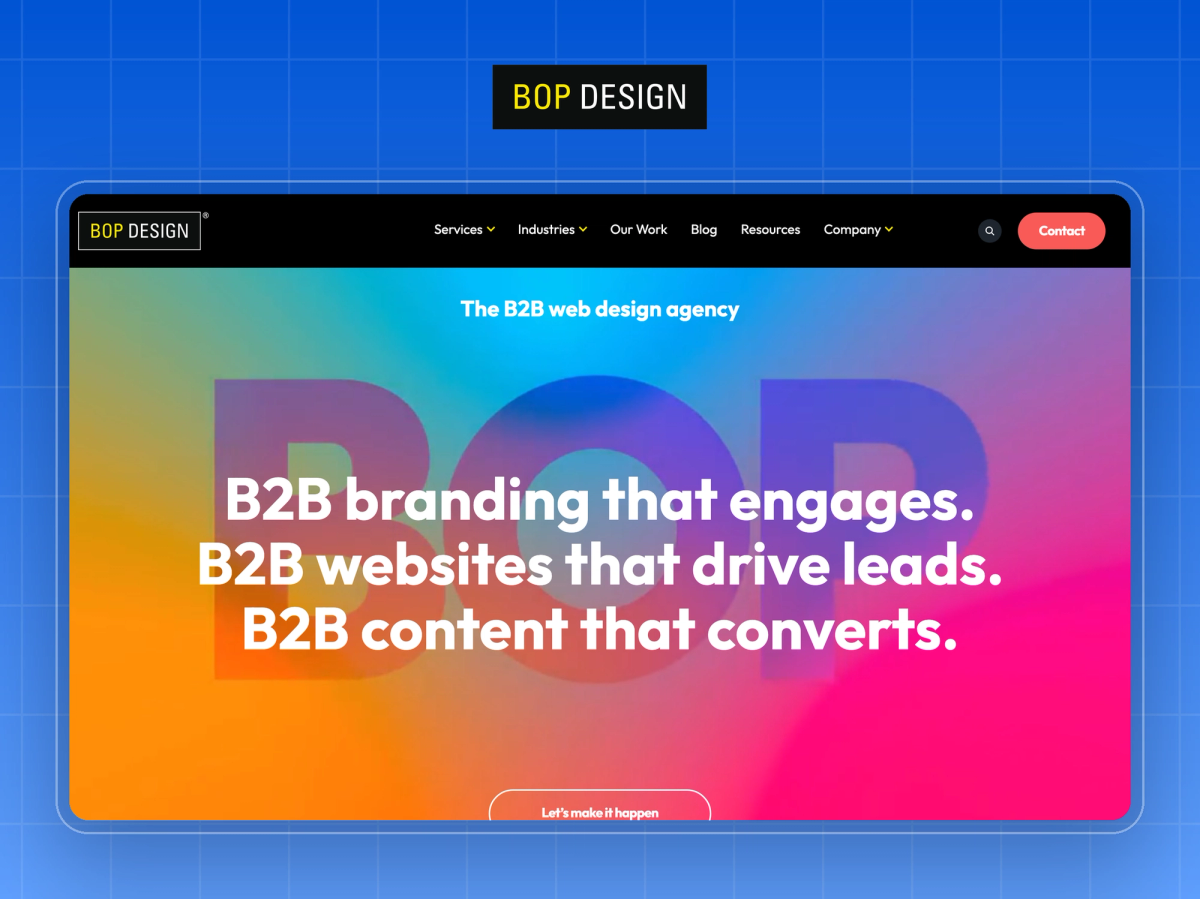
A long-established B2B specialist based in San Diego, focused on website design paired with ongoing B2B marketing rather than one-off builds. They have been B2B-only for long enough that the process is genuinely tuned for considered purchases.
- Best for: Mid-market B2B firms who want design and demand generation from the same vendor
- Strength: Deep B2B-only focus with no consumer work diluting the practice, and a strong track record in professional services and manufacturing
- Limitation: The bundled marketing model suits companies who want a retained partner, less so teams who only need the site rebuilt and then want to run it themselves
3. Amply
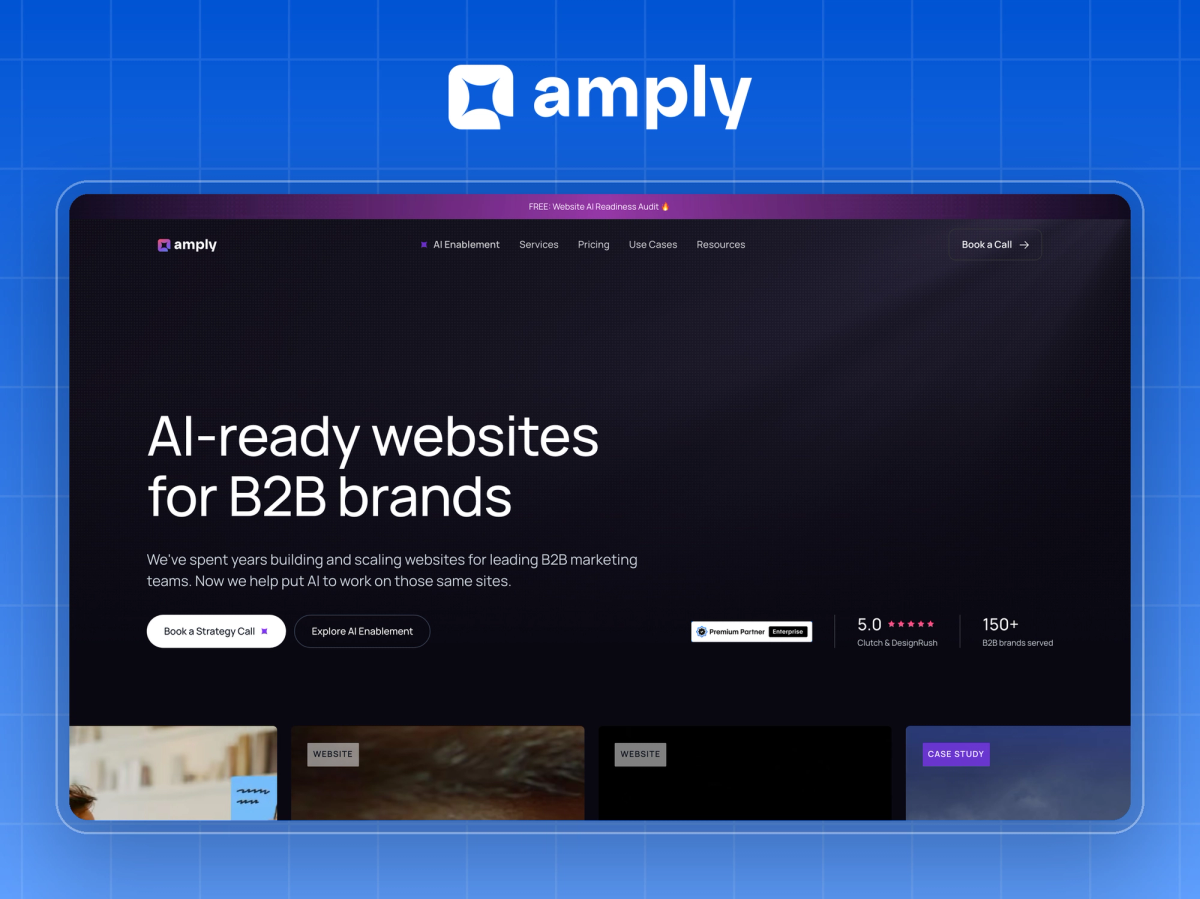
Positions specifically around B2B web design for SaaS and enterprise buyers, with an emphasis on sites that support a sales-led motion rather than self-serve signup.
- Best for: SaaS companies selling into enterprise, where the website has to satisfy procurement as well as the champion
- Strength: Clear enterprise SaaS positioning, so the team already understands security pages, compliance signals, and what a six-month evaluation cycle demands from a website
- Limitation: Enterprise focus can be heavier than an early-stage company needs, and the process reflects that
4. Webstacks
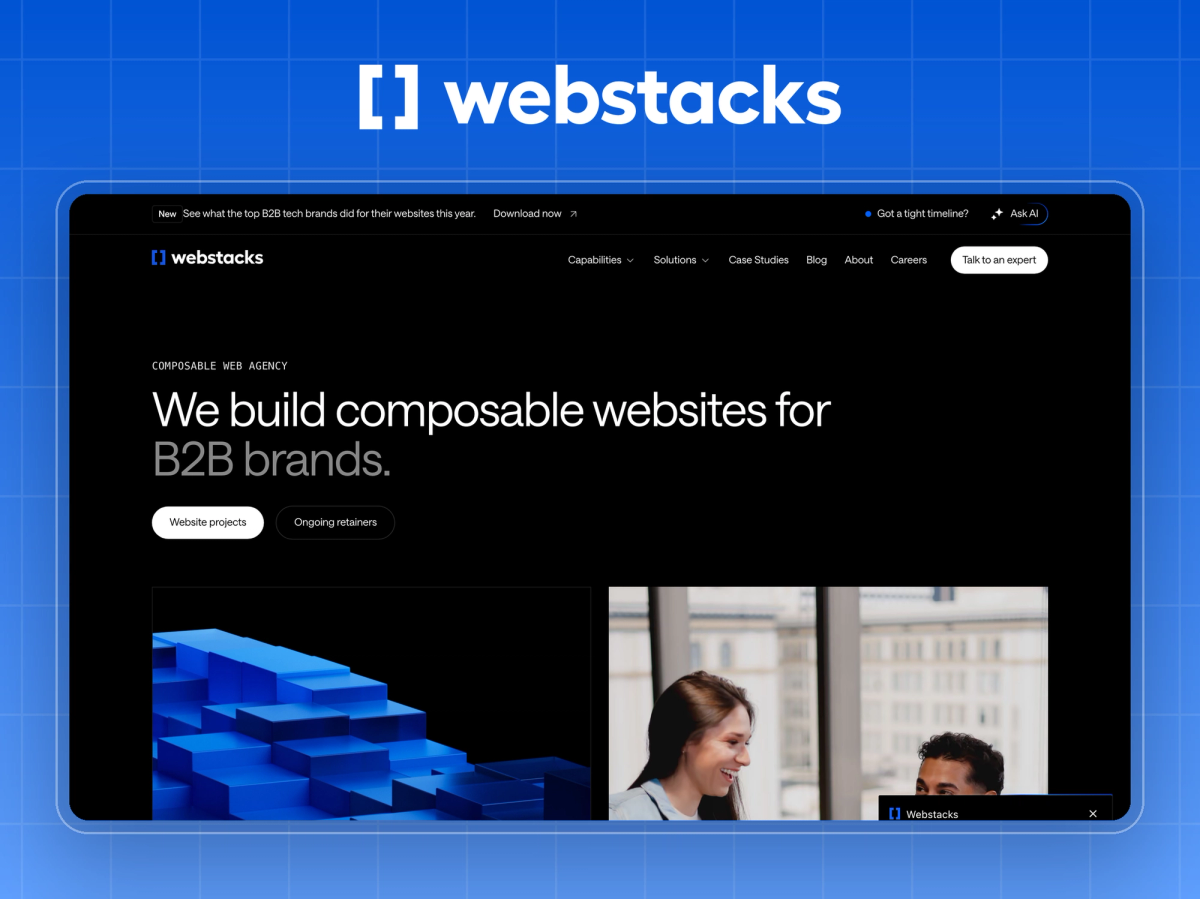
A B2B SaaS web team known for Webflow builds and design systems, working with larger software companies whose sites have grown past a few dozen pages and started to fragment.
- Best for: SaaS companies whose site is growing fast and breaking under its own page count
- Strength: Strong design systems practice, which keeps large sites consistent as more people gain edit access. This is the failure mode most agencies ignore
- Limitation: Built for scale, so engagement sizes suit funded companies rather than lean operations
5. Avrea Foster
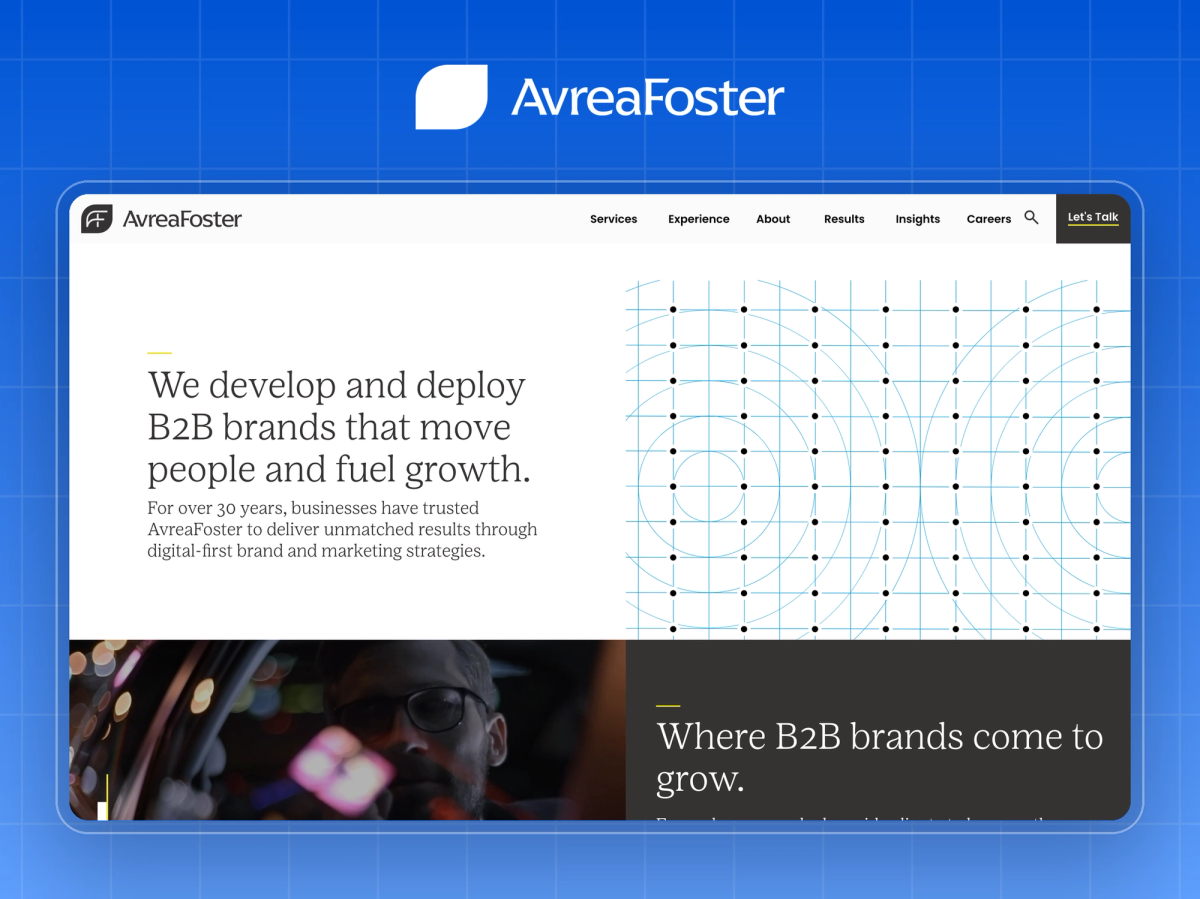
A Dallas-based B2B agency covering brand and website work together, with roots in traditional B2B marketing and a strategy-first sequence.
- Best for: Established B2B companies repositioning the brand and the website at the same time
- Strength: Genuine brand strategy capability rather than visual design applied over an existing identity, which matters when the positioning itself is the problem
- Limitation: Brand-led engagements run longer and cost more than a website-only project
6. Godfrey
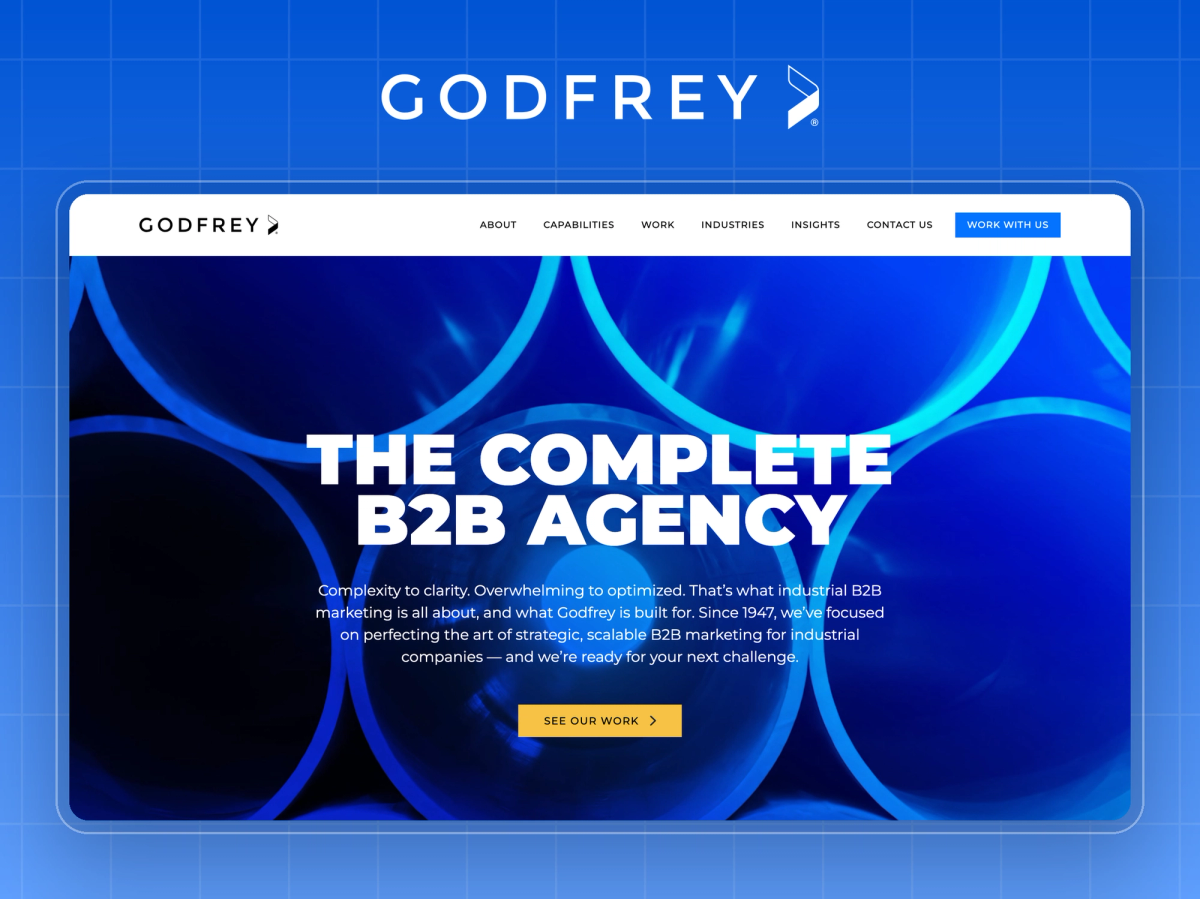
A specialist B2B agency with unusually deep experience in industrial, manufacturing and technical sectors, including categories most design agencies avoid.
- Best for: Manufacturing, industrial and engineering companies selling technically complex products
- Strength: Rare comfort with genuinely technical subject matter, including spec-heavy product catalogues and distributor structures that break normal site architecture
- Limitation: The industrial focus means a smaller pattern library for software and subscription products
7. Superside
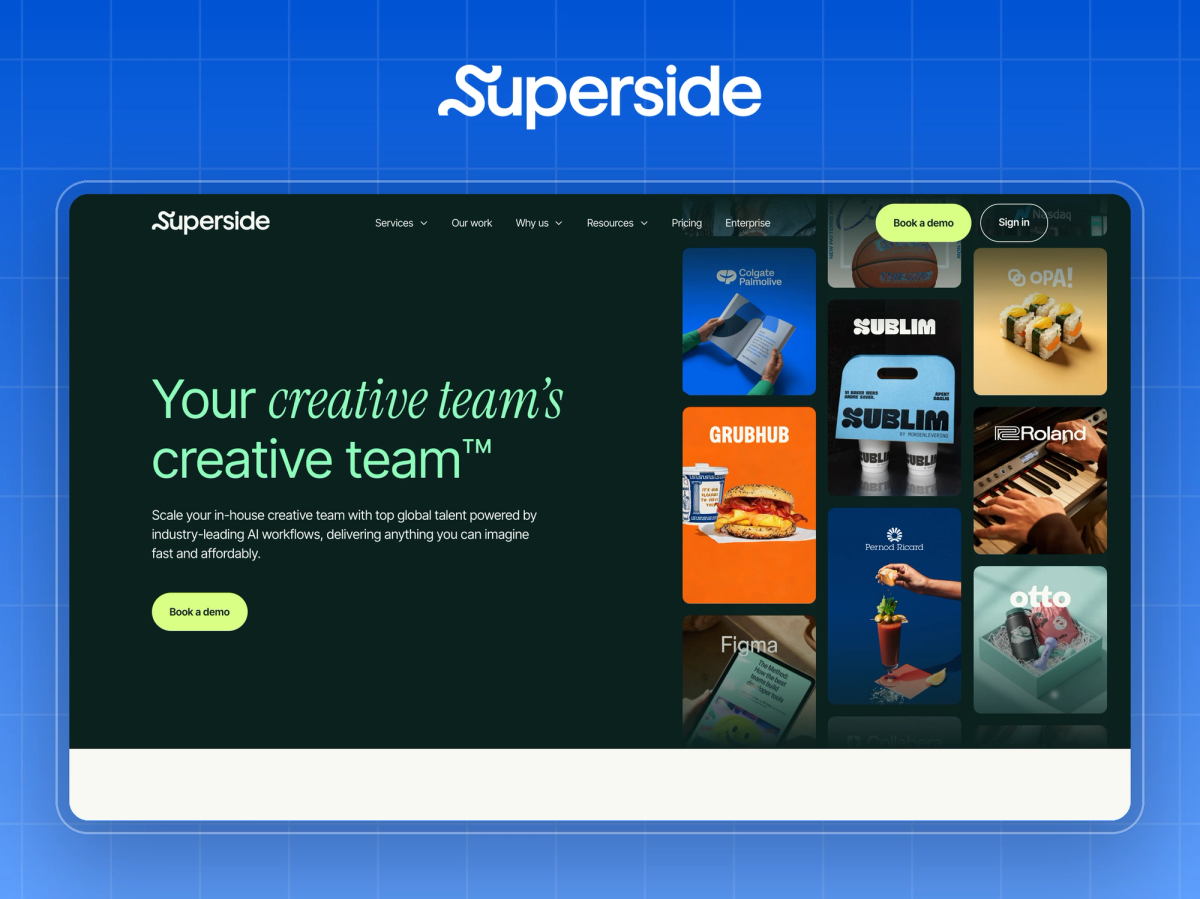
A subscription design service covering web design alongside a broader creative output, drawing on a large distributed talent pool rather than a fixed project team.
- Best for: In-house marketing teams with continuous design demand across web, ads and brand assets
- Strength: Subscription model gives predictable monthly cost and fast turnaround on discrete tasks, which suits teams shipping constantly
- Limitation: Built for volume throughput rather than a single deeply researched website rebuild, so strategy depth is not the strong suit
8. Revel Marketing
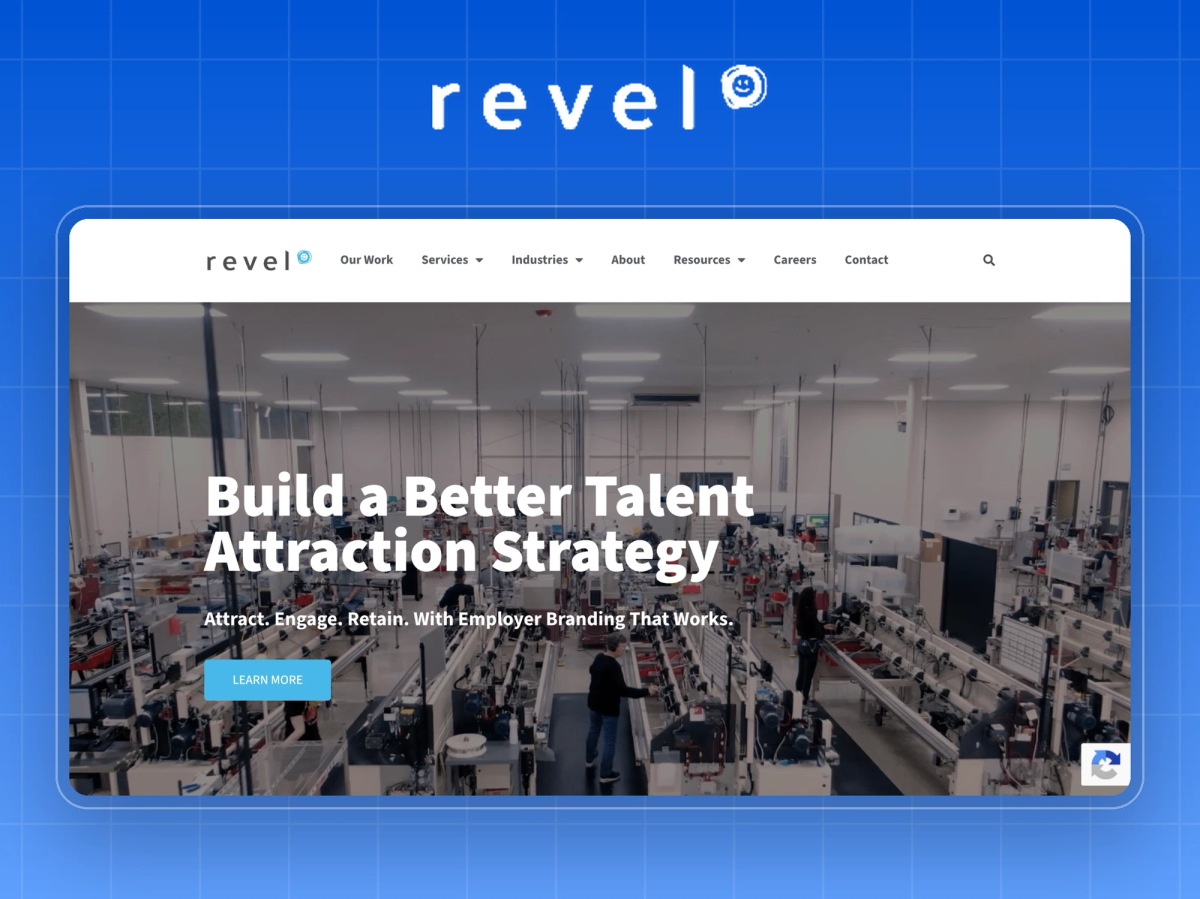
Combines B2B website design with development services, positioned for companies who need both under one contract instead of coordinating a designer and a separate build team.
- Best for: B2B companies who need custom development alongside the design work
- Strength: Design and development capability in the same team, which removes the handoff gap where most timelines slip
- Limitation: Broader marketing positioning means less specialisation in any single vertical
9. Everything Design
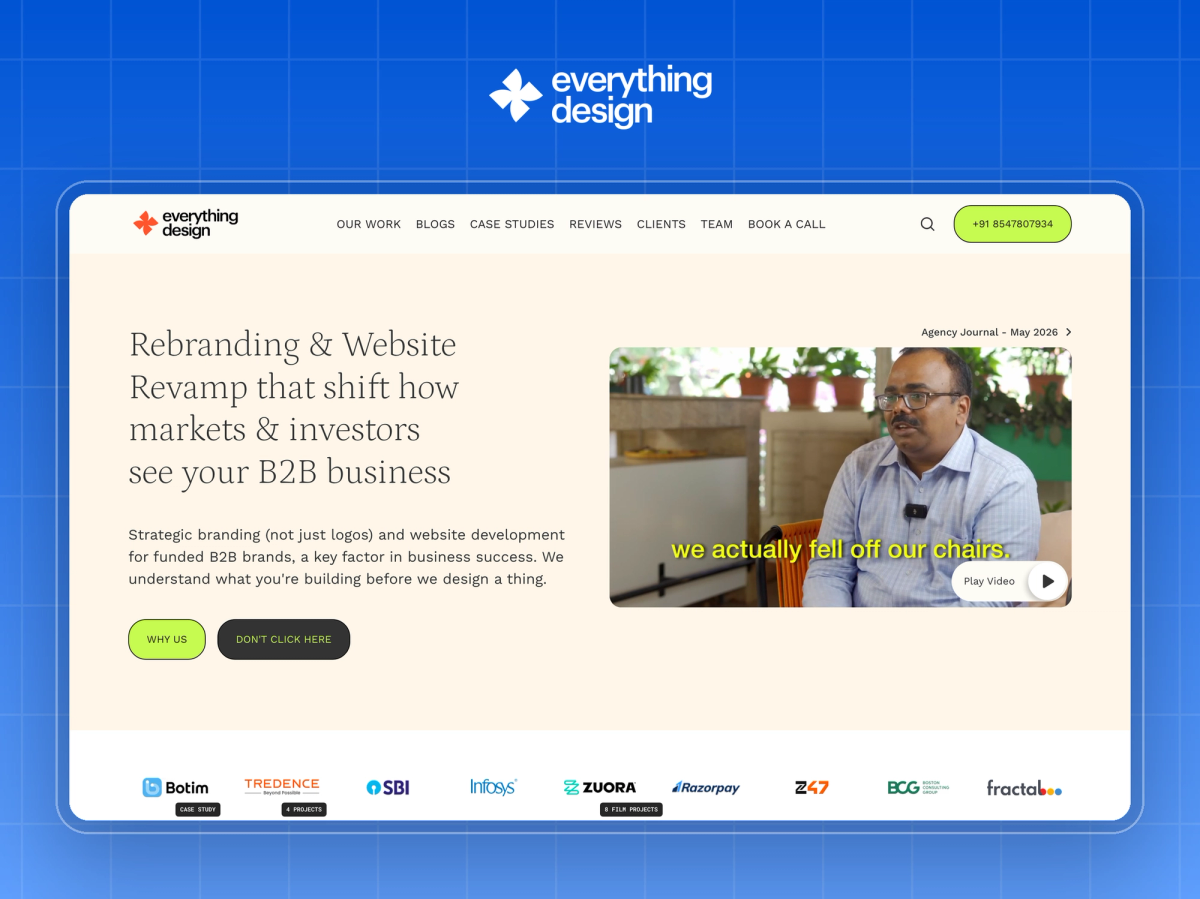
A B2B branding and website agency that treats identity and site as a single problem rather than two sequential projects with a gap in between.
- Best for: B2B companies whose brand and website both need work and who want one team accountable for both
- Strength: Integrated brand and web thinking, so the finished site is not good design fighting a mismatched identity
- Limitation: Combined scope means a longer timeline than a website-only engagement
10. Excited Agency
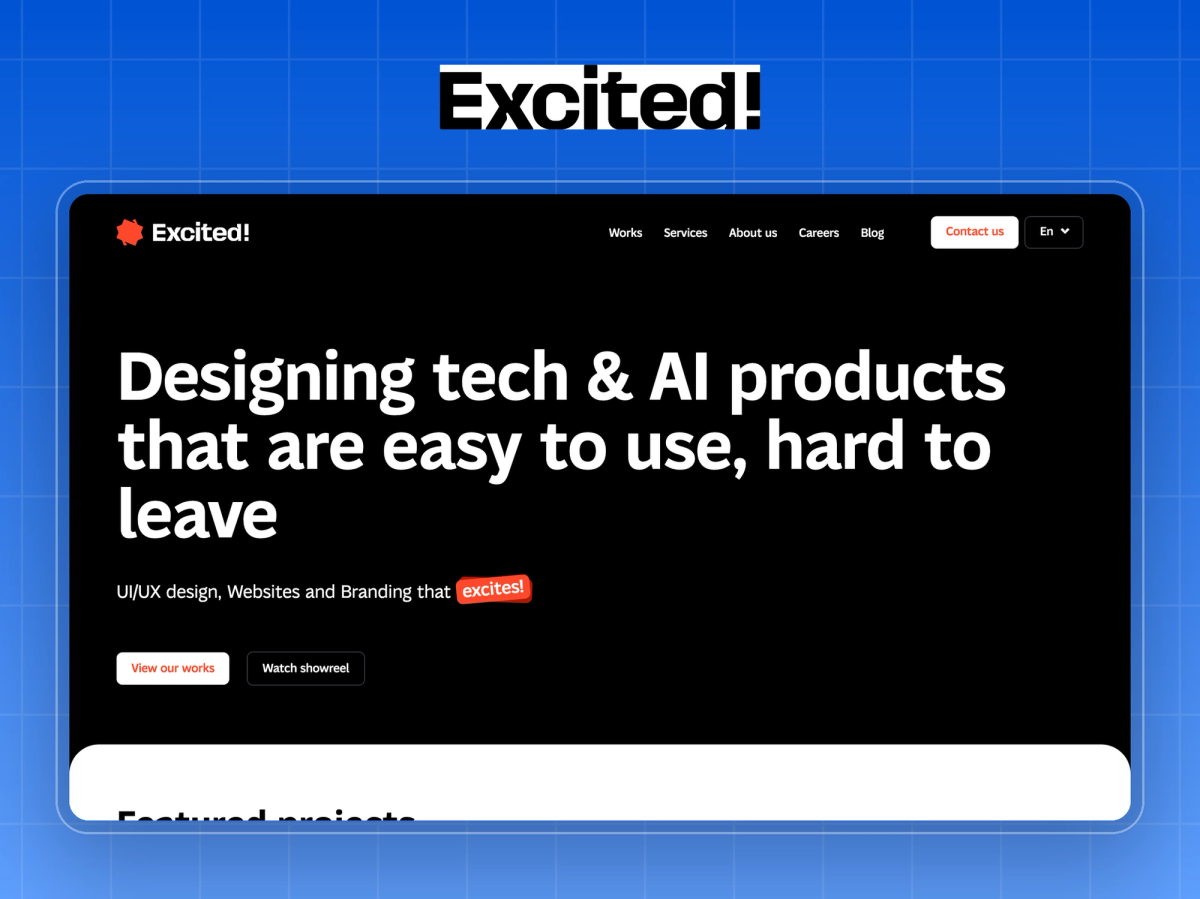
Focused on high-impact B2B website design with an emphasis on visual distinctiveness, aimed at categories where every competitor has converged on the same look.
- Best for: B2B companies in crowded categories who need to look meaningfully different
- Strength: Strong visual point of view, genuinely useful when differentiation is the actual business problem rather than a nice-to-have
- Limitation: Design-forward approach works best for companies who already have clear positioning to express
11. Miyagi
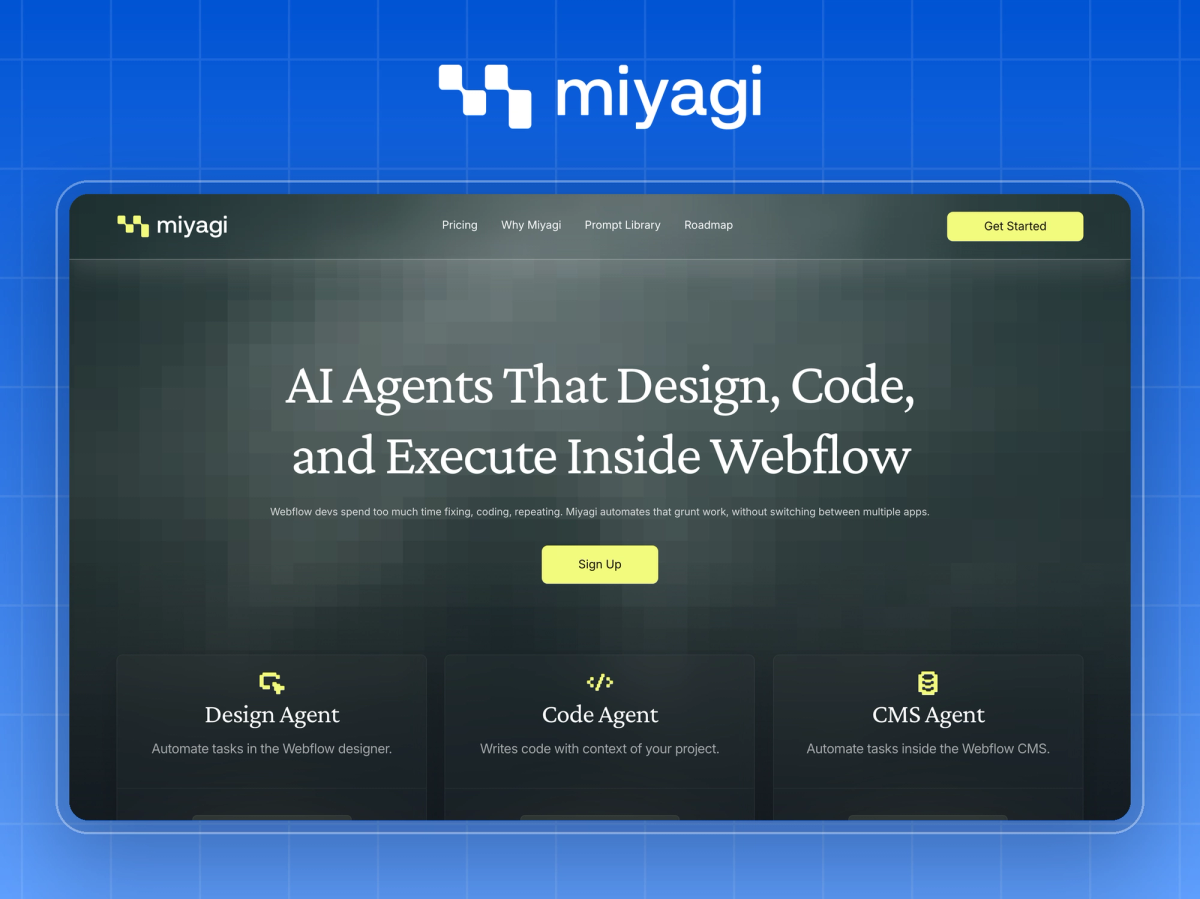
Works with SaaS and enterprise technology companies on B2B web design, positioned around making technical products understandable to mixed audiences.
- Best for: Technical SaaS products where the core challenge is explaining complexity without dumbing it down
- Strength: Comfort with technical products and developer-facing audiences, including documentation-adjacent content
- Limitation: Narrower sector range than a generalist B2B agency
12. Studio Simpati
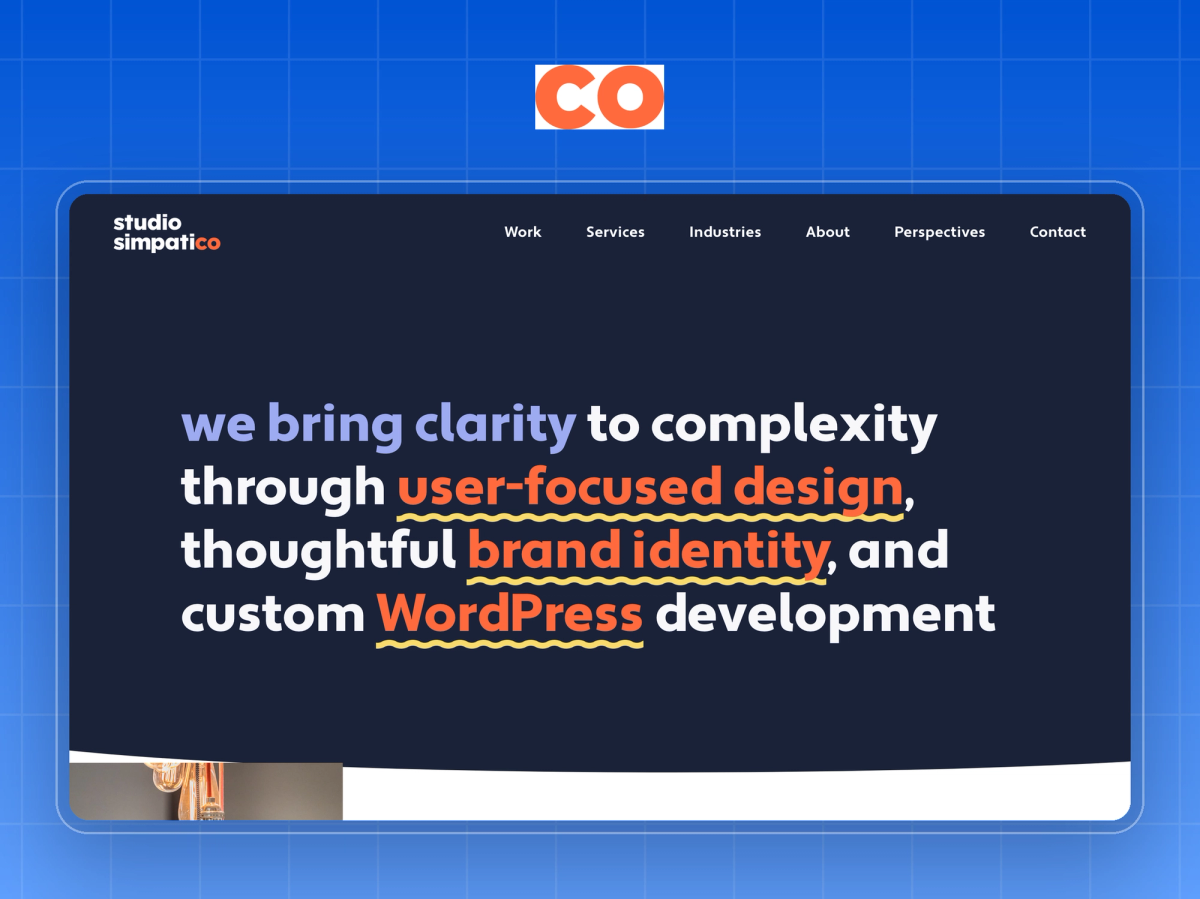
Positions around bringing clarity to complex B2B propositions, with a focus on message and structure before any visual design starts.
- Best for: B2B companies who know their website is unclear but cannot articulate why
- Strength: Message-first process, which catches positioning problems before they get designed around and baked in
- Limitation: Strategy-led sequencing means visual work starts later, which can feel slow if you expected mockups in week two
What a B2B Website Actually Costs in 2026
Price is the question every shortlist stalls on, so here is the honest range across the agencies above and the wider market.
| Engagement | Typical range | What you get |
|---|---|---|
| Template customisation | Under $5,000 | A theme, lightly adapted. No strategy, no research |
| Focused rebuild | $5,000 to $15,000 | New design and build on existing positioning, 5 to 15 pages |
| Full rebuild | $15,000 to $60,000 | Positioning, messaging, design, build, CMS, migration |
| Enterprise programme | $60,000+ | Multi-site, design system, localisation, integrations |
The number that surprises first-time buyers is the gap between a $4,000 site and a $20,000 one. The difference is almost never the visual design. It is the research, the messaging work, and the CMS architecture that lets your team run the site afterwards without filing a ticket for every copy change.
The second surprise is that the cheap option often costs more. A $4,000 site that produces no pipeline for eighteen months is more expensive than a $25,000 site that starts converting in month two, and most companies rebuild the cheap one anyway.
The PROOF Test: How to Shortlist in an Afternoon
Most teams spend three weeks comparing portfolios and still choose on gut feel. Portfolios are the least useful signal available, because every agency shows the same best five projects. Run this instead.
P: Pipeline evidence. Ask for conversion outcomes, not screenshots. A good answer sounds like "form fills went from 12 to 31 a month." A weak answer is "the client loved it."
R: Relevant sector work. Have they shipped for a product as complex as yours? Not necessarily the same industry, but the same explanation problem.
O: Ownership after handoff. Can your marketers publish a page without a developer? Ask to see the live CMS, not a recorded demo. This is where most B2B sites quietly die.
O: On-page performance. Ask for a Lighthouse score on a site they built and shipped. Anything under 70 on mobile means Core Web Vitals will drag your rankings from day one.
F: Fixed scope and price. A specific number against a specific deliverable. Hourly estimates against open scope are how a $20,000 project becomes $45,000 by month three.
Five questions. Any agency worth shortlisting answers all five on one call. At Windmark we run PROOF in reverse on ourselves before quoting, because the engagements that go badly are almost always the ones where one of these got fudged at the start.
Five Red Flags Worth Walking Away From
- No named team on the project. If nobody can tell you who is actually designing your site, the answer is usually whoever is free that week
- Portfolio with no live links. Screenshots of sites that no longer exist mean the client rebuilt, and you should ask why
- Discovery that skips your customers. An agency that never asks to speak to your buyers is designing from assumption
- "We'll handle SEO after launch." Site structure, URLs and page speed are SEO decisions made during the build. Bolting it on afterwards means rework
- A proposal with no timeline milestones. A single end date with nothing in between is how a four-week project becomes four months
What Happens After Launch
The part most evaluations skip is the eighteen months after handoff, which is where the return on the investment either happens or does not.
A well-built site gets updated weekly. A badly built one gets updated twice, then abandoned, because every change needs a developer who has moved on to other work.
The deciding factor is almost always CMS architecture: whether the collections were modelled around how your team actually publishes, or around what was fastest to build.
This is why platform choice matters more than it looks. Webflow's editor lets marketers publish without touching structure, which is the difference between a site that compounds and one that decays.
Our guide to building a B2B website on Webflow that converts covers the architecture decisions that belong before agency selection. The Webflow development service page covers how we approach the build itself.
Specialist or Generalist: Which Is Right for You
A generalist agency is the better choice more often than the B2B specialist industry likes to admit. If your product is straightforward, your category is uncrowded, and your buyer makes a fast decision, a strong generalist will do excellent work for meaningfully less money.
The specialist earns their premium in three situations: when the product is genuinely hard to explain, when the buying committee has four or more people in it, and when the sales cycle runs past 60 days.
In those cases the website is doing structured persuasion work across several readers at once, and pattern experience compounds fast.
How to Run the Evaluation Without Losing a Month
Three calls is enough. More than that and you are gathering reassurance, not information.
- Call one, scope. Describe the problem, not the solution. If you open with "we need a redesign," every agency will agree. Open with "sales keeps re-explaining our product" and watch who diagnoses versus who quotes.
- Call two, PROOF. Run the five questions above. Ask for a live CMS walkthrough on this call, not a follow-up.
- Call three, the plan. Ask for a written scope with milestone dates and a fixed price. Any agency that cannot produce this after two conversations will not produce it mid-project either.
Give each agency the same brief and the same budget range. Comparing three proposals written against three different briefs tells you nothing except who writes the best proposal.
Brand First or Website First
Several agencies above sell brand and website together. Whether you need that depends on one question: does your positioning survive contact with a prospect?
If sales can explain what you do in one sentence and prospects nod, your positioning is fine and you need a website. If three salespeople explain it three different ways, a new website will just make the confusion look better designed.
That is a brand problem first, and our B2B branding guide walks through diagnosing which one you actually have.
Most teams reading this already know the website is underperforming. The harder question is whether the fix is design, messaging, or structure, because those are three different engagements at three different prices.
If you want a straight answer on which one applies to you, book a call and we will tell you, including the times the answer is that you do not need a rebuild at all.