
 ChatGPT
 Claude
 Gemini
 Perplexity AI
Your website has to convince two people who want opposite things. A clinician wants the evidence, the mechanism, the data. A patient or a family member wants to know, in plain language, whether this will help and what happens next. Put both on one page and you usually end up serving neither.
That is the specific difficulty in healthcare web design, and it is why generalist agencies struggle here. A site that reads beautifully to a marketing team can fail a clinical reviewer in the first paragraph, or clear the clinical review and leave a worried patient more confused than when they arrived. Add accessibility requirements and compliance exposure, and the constraint stack is genuinely different from other sectors.
First, Which Kind of Healthcare Company Are You?
Most "best healthcare web design agency" lists fail because they mix two completely different businesses into one ranking. Sort yourself first, because it eliminates more than half the list immediately.
| Provider organisations | Healthtech companies | |
|---|---|---|
| Who you are | Practices, clinics, hospitals, dental, multi-location groups | Digital health, medical devices, clinical AI, care platforms |
| Who you sell to | Patients and families | Clinicians, health systems, payers, investors |
| Website's job | Book appointments, rank locally, build trust fast | Explain a complex product, earn clinical credibility, generate pipeline |
| Success metric | Appointment requests, local rankings, call volume | Demo requests, qualified pipeline, investor confidence |
| Compliance load | High: PHI intake, patient portals, tracking exposure | Moderate: usually no PHI on the public site |
| Typical spend | $3,000 to $25,000 | $20,000 to $75,000 |
If you book patients, you need an agency fluent in local SEO, appointment flows and HIPAA-aware forms. If you sell software or devices into healthcare, you need one that can make a clinically complex product understandable without flattening it.
Those are different skills. The agencies below are grouped so you can tell which is which at a glance.
Why Healthcare Web Design Is Harder Than It Looks
Three constraints shape every decision, and none of them apply in most other sectors.
Accessibility is a baseline, not a feature. WCAG 2.2 AA is the working standard for healthcare, and it constrains colour contrast, focus states, form labelling and motion from the first design decision. Retrofitting it after launch costs multiples of building it in.
Trust has to be earned above the fold. A visitor deciding whether to trust a treatment, a device or a care platform makes that call in seconds. Credentials, affiliations, evidence and plain-language explanation have to be visible without scrolling.
Tracking is a legal question. HHS has issued guidance on online tracking technologies on patient-facing pages, parts of which have been contested in court. The practical position is simple: nobody installs analytics or advertising pixels on authenticated patient pages without a legal review first. This is not legal advice, and you should get some.
A fourth, quieter constraint: healthcare content changes slowly and then all at once. Regulatory language, clinical claims and provider listings all need updating without a developer in the loop, which makes CMS architecture a bigger decision here than elsewhere.
How We Ranked These Agencies
Every agency below currently appears on page one for healthcare web design searches in the US. We separated them on which of the two markets they actually serve, sector depth, scope, and who they fit best.
One honest limitation is named for each. It is a fit boundary rather than a criticism. The wrong agency for a dental group may be exactly right for a clinical AI company.
Quick Comparison
| Agency | Serves | Strongest fit |
|---|---|---|
| Windmark | Healthtech | Clinically complex products needing design plus build |
| Healthcare Web Agency | Providers | Practices wanting design plus healthcare SEO |
| Orbit Media | Both | Health systems and content-heavy sites |
| Practis | Providers | Medical practices needing compliant patient sites |
| Atomic Health | Healthtech | Digital health brand and product identity |
| OHO Interactive | Providers | Hospitals and large health systems |
| Cardinal Digital Marketing | Providers | Multi-location provider groups |
| Kanopi | Providers | Large CMS-driven health and nonprofit sites |
| Empeek | Healthtech | Healthcare software needing engineering depth |
The 9 Best Healthcare Website Design Agencies in 2026
1. Windmark
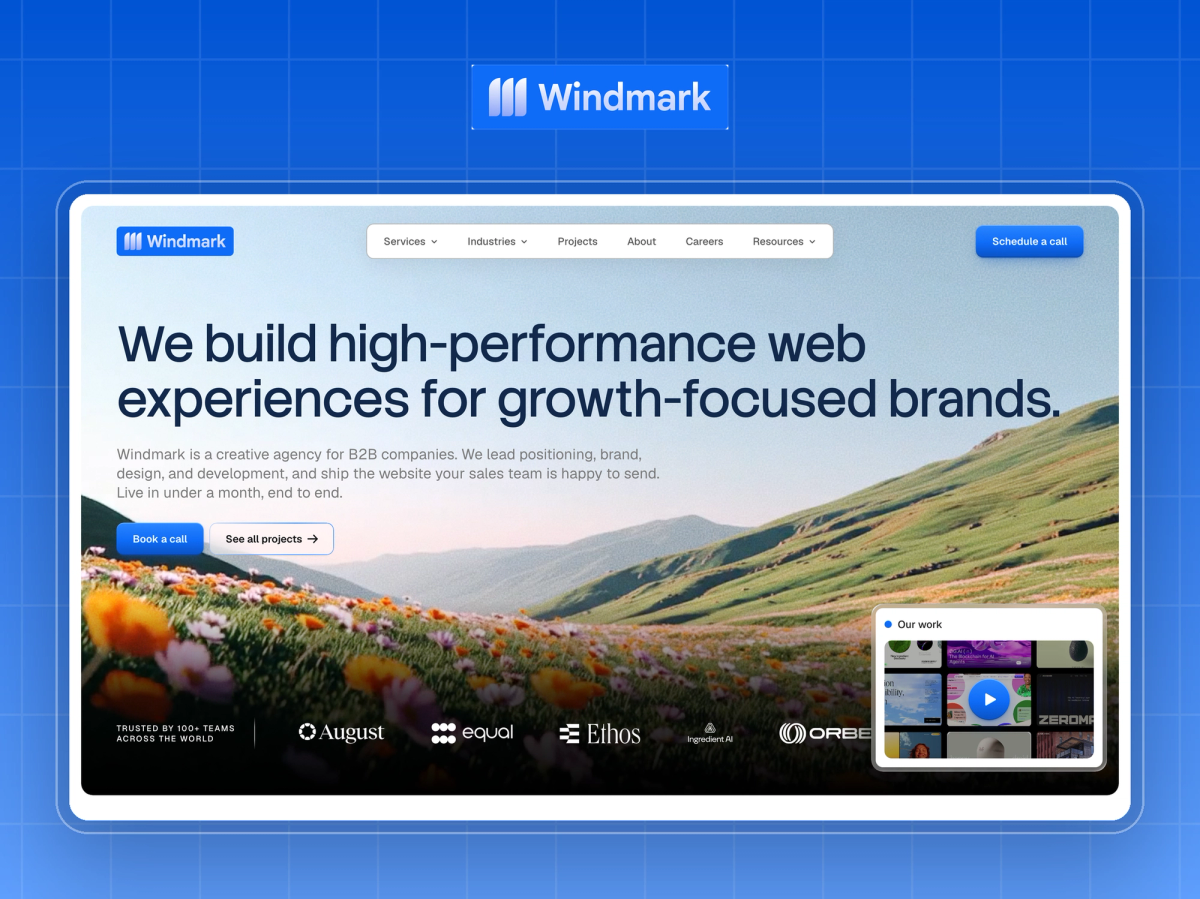
A design and Webflow development agency working across healthcare and healthtech, alongside AI, robotics, clean-tech and defence. The healthcare practice is built around one stated problem: writing for clinicians and for patients or families on the same screen, without picking a side.
- Best for: Healthtech, digital health and medical device companies whose product is clinically complex and currently explained badly
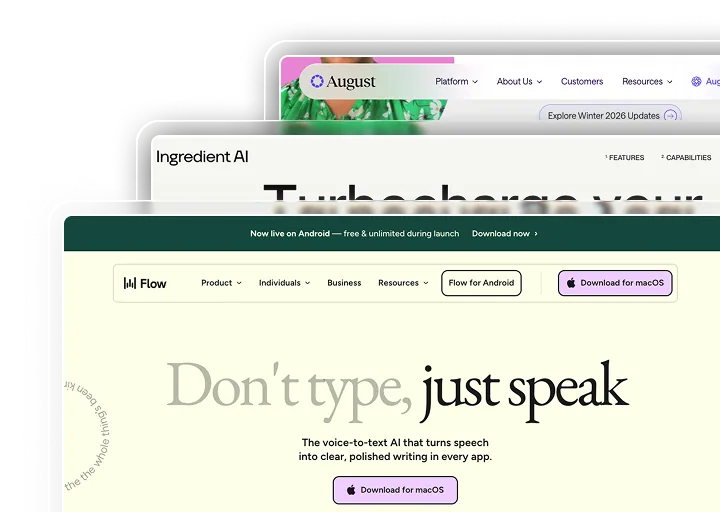
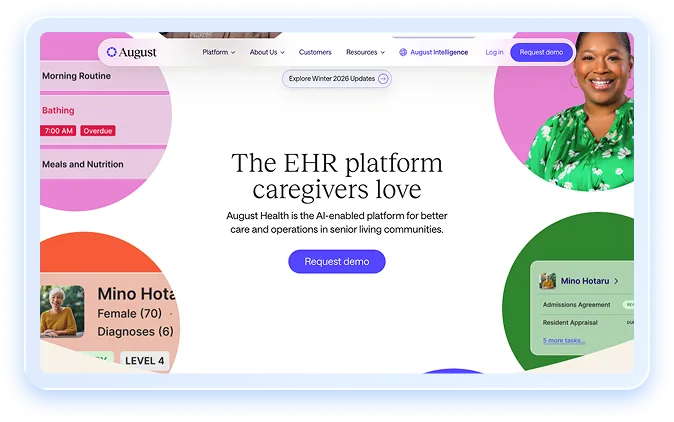
- Strength: Named healthcare work including August Health, a senior-living care infrastructure platform, Ingredient AI in supplement R&D, Orbem AI in MRI imaging, and Dawn in real-time emotional support. Sites ship in roughly four weeks, score 90+ on Lighthouse, and stay editable by the client's own marketers
- Limitation: Built for healthtech companies selling into healthcare, not for single-practice patient acquisition. A dental clinic needing local SEO and appointment booking is better served elsewhere on this list
The pattern across that work is animation-heavy sites that still load fast, which matters when the product is abstract and a static page cannot show how it actually works.
See the healthtech industry page, the healthcare industry page, or the full portfolio at thewindmark.com/projects/.
2. Healthcare Web Agency
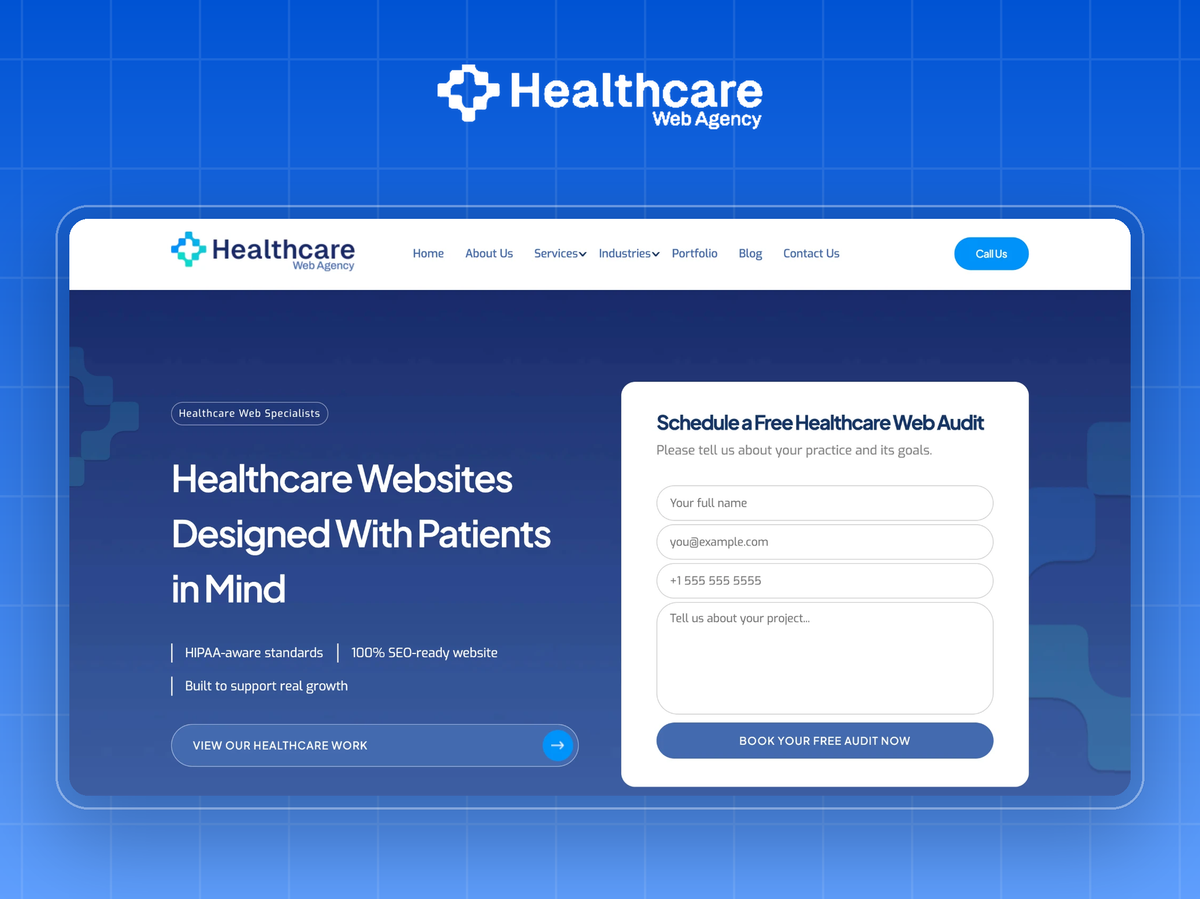
A healthcare-only agency covering website design alongside healthcare SEO, aimed squarely at provider organisations competing for local patients.
- Best for: Practices and provider groups who want design and search handled by the same team
- Strength: Exclusively healthcare, so the process already accounts for patient intake flows, provider directories and the local search patterns that drive appointment volume
- Limitation: Provider-focused, which means less depth for healthtech companies selling software into health systems
3. Orbit Media
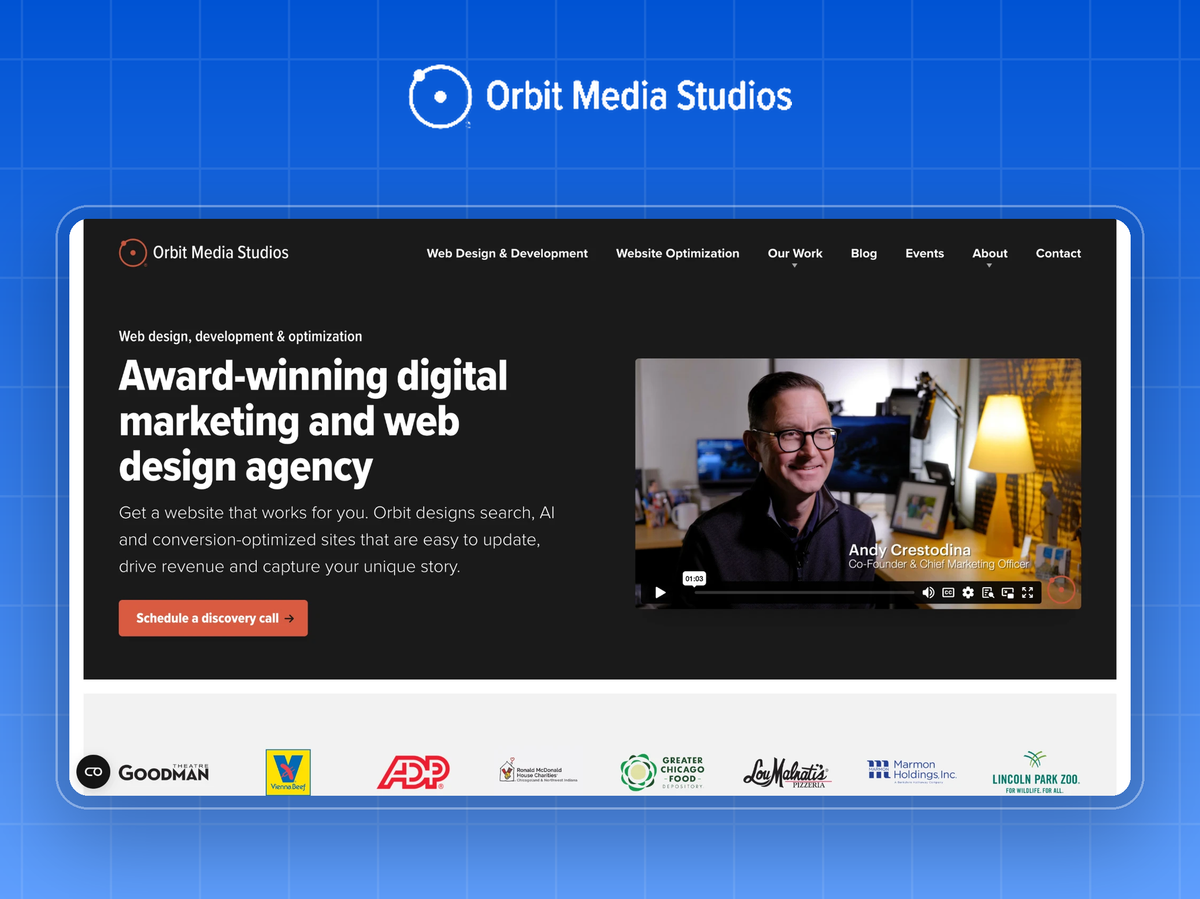
A long-established Chicago agency with a substantial healthcare practice, known for content-led websites and unusually rigorous analytics thinking.
- Best for: Health systems and healthcare organisations with large content libraries to restructure
- Strength: Strong content architecture and measurement discipline, which suits organisations whose site has grown to hundreds of pages without a governing structure
- Limitation: Generalist agency with a healthcare practice rather than a healthcare-only specialist, so regulatory fluency varies by team
4. Practis
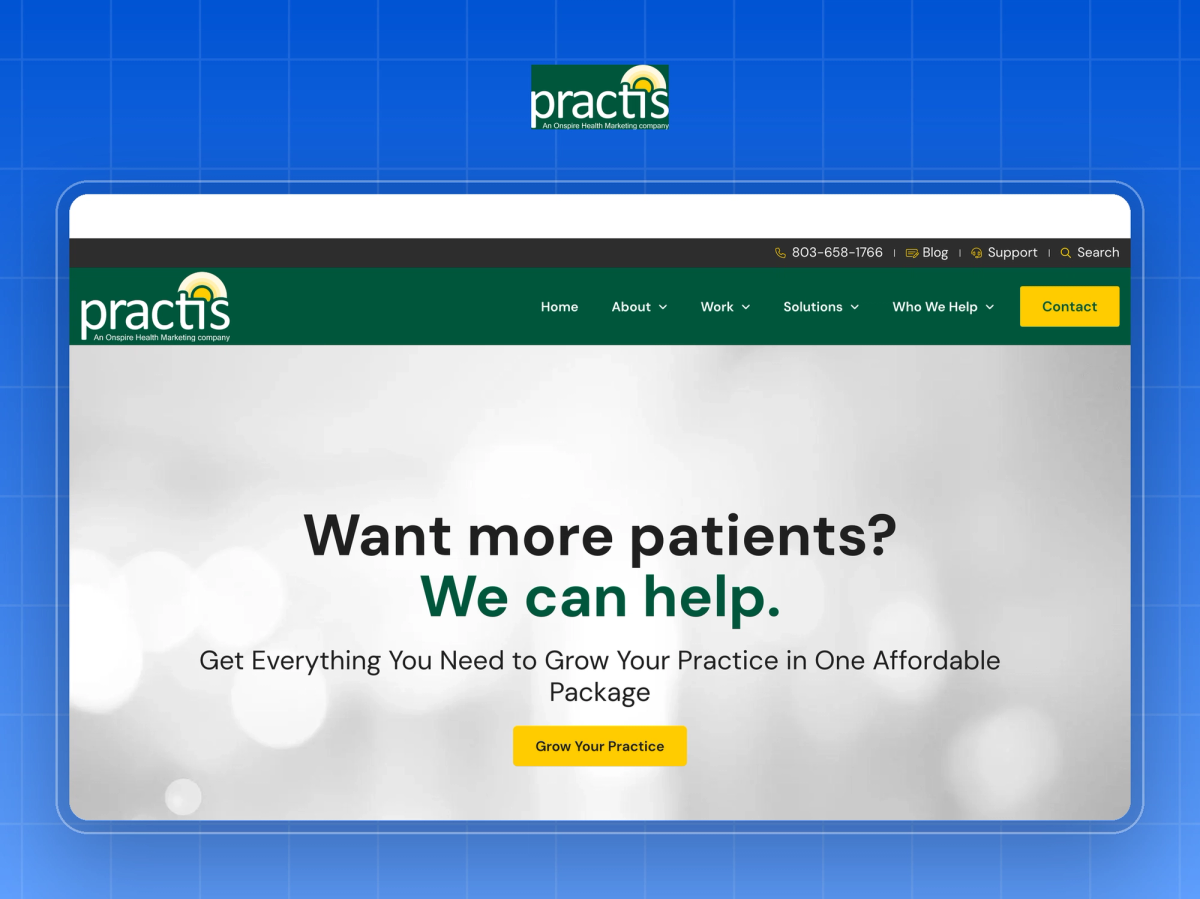
A medical website specialist focused on practices and provider organisations, with compliance and patient-generation built into the core offer.
- Best for: Medical and dental practices who need a compliant patient-facing site without assembling their own vendor stack
- Strength: Deep familiarity with practice websites, patient forms and the compliance constraints that surround them, including the parts most agencies discover late
- Limitation: Practice-oriented templates and process, so highly custom brand-led work is not the strength
5. Atomic Health
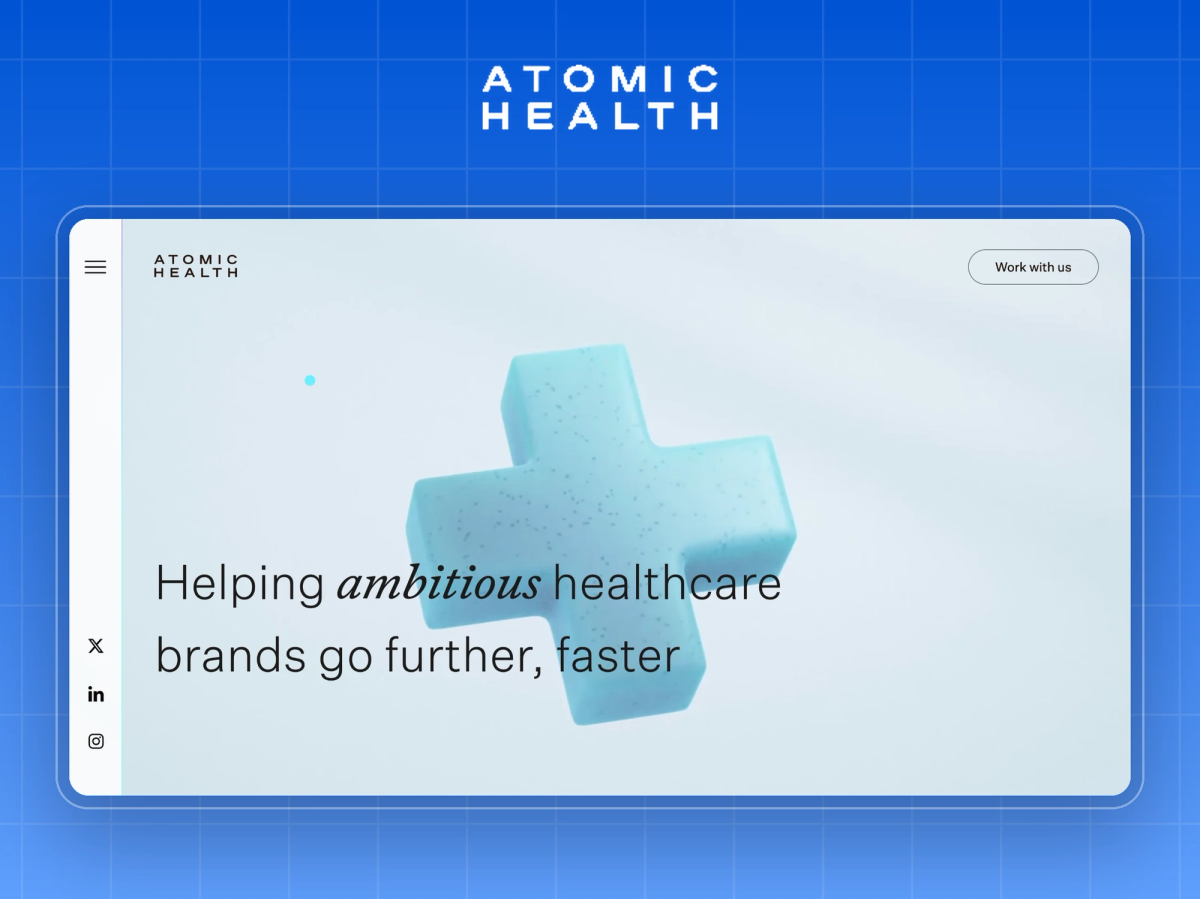
A healthcare branding and design agency working with digital health and healthcare technology companies on identity and digital product.
- Best for: Digital health companies whose brand and product experience need to feel like one thing
- Strength: Healthcare-specific brand thinking, useful when the category is new and the company has to explain a concept before it can sell a product
- Limitation: Brand-led scope means website build capability is less central than at a development-first agency
6. OHO Interactive
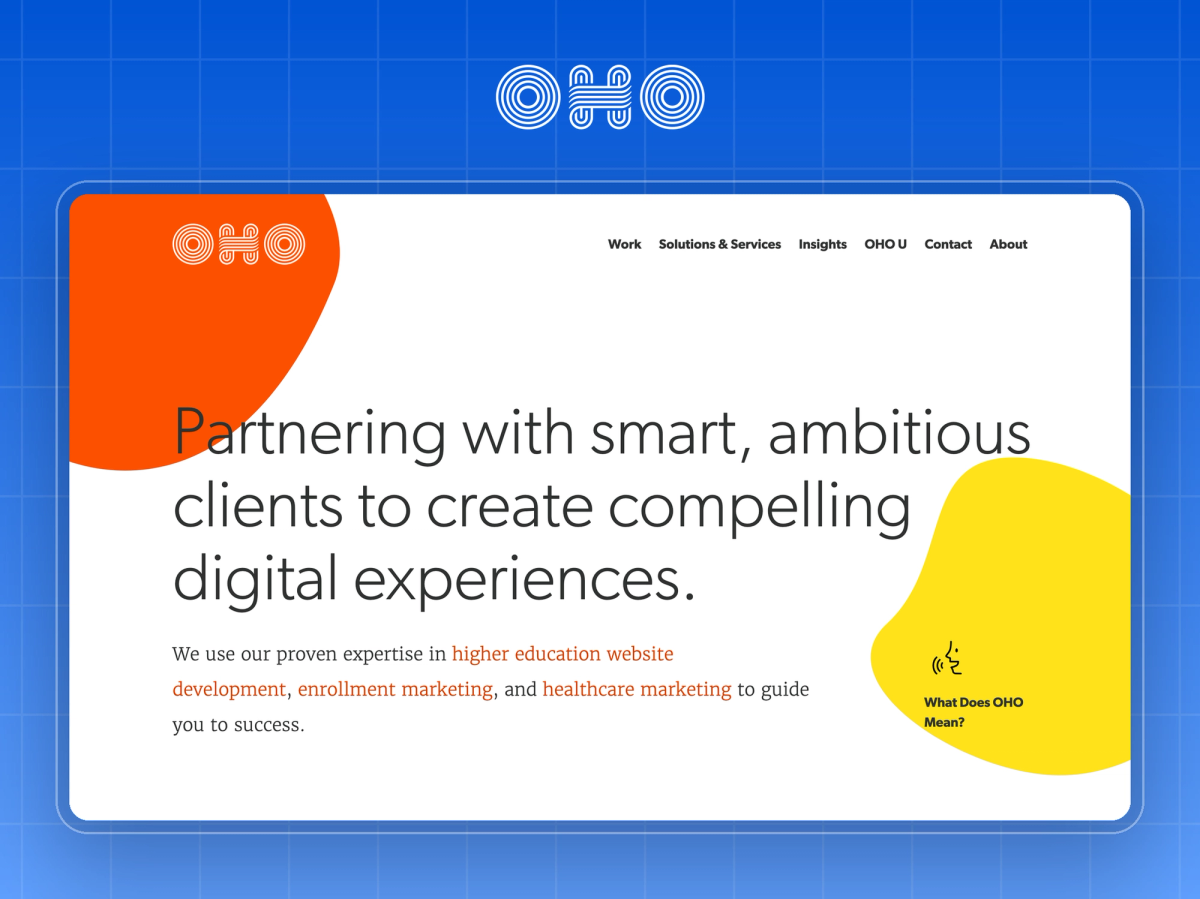
An agency with a strong healthcare and higher education practice, working with hospitals and health systems on large, complex websites.
- Best for: Hospitals and health systems with many stakeholders and a long approval chain
- Strength: Experience navigating institutional governance, which is often the real constraint on a health system redesign rather than the design itself
- Limitation: Enterprise-scale process and timelines, heavier than a growing healthtech company needs
7. Cardinal Digital Marketing
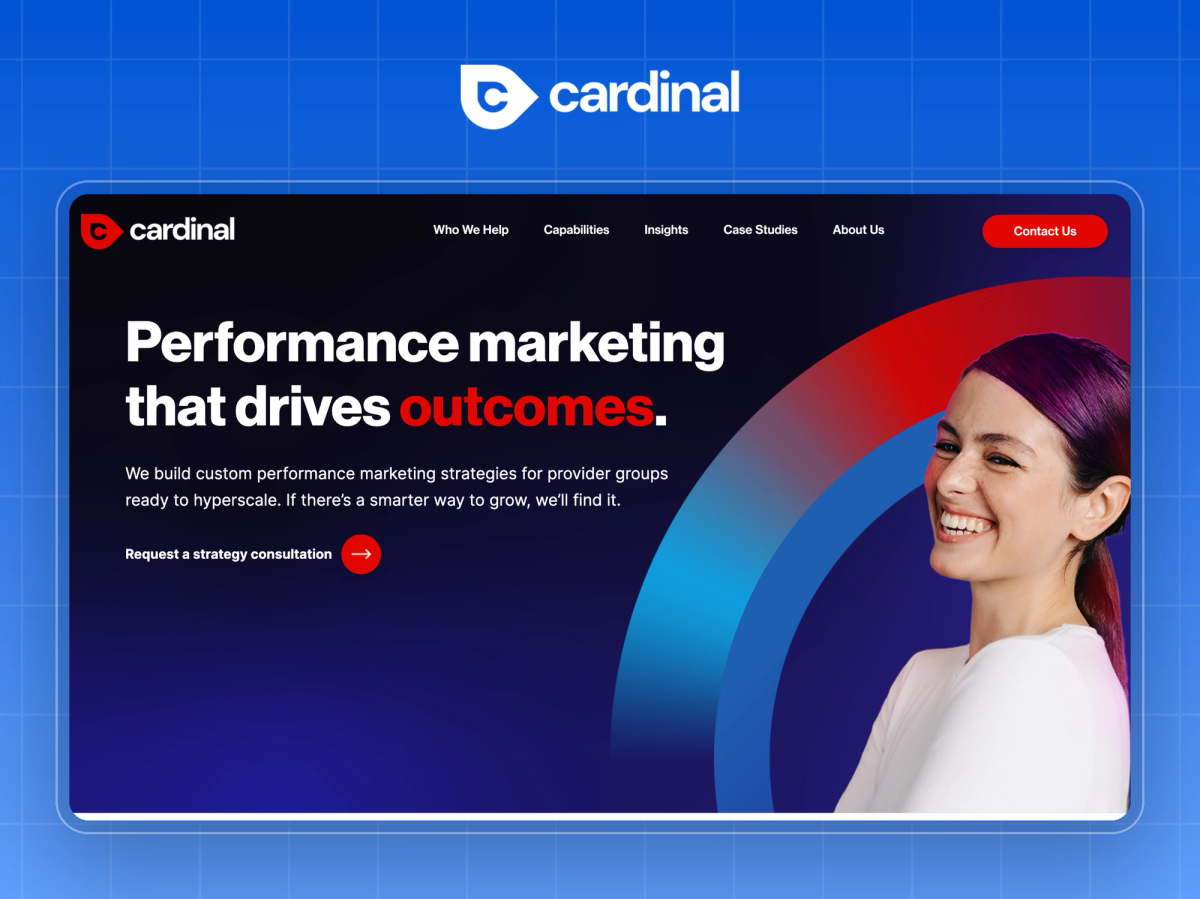
A healthcare digital agency combining website design with paid media and SEO, focused on patient acquisition at scale.
- Best for: Multi-location provider groups where patient volume is the single metric that matters
- Strength: Performance-led approach with strong multi-location search capability, including the location-page architecture that most agencies get wrong
- Limitation: Acquisition-first framing means less emphasis on brand and narrative than a healthtech company usually needs
8. Kanopi
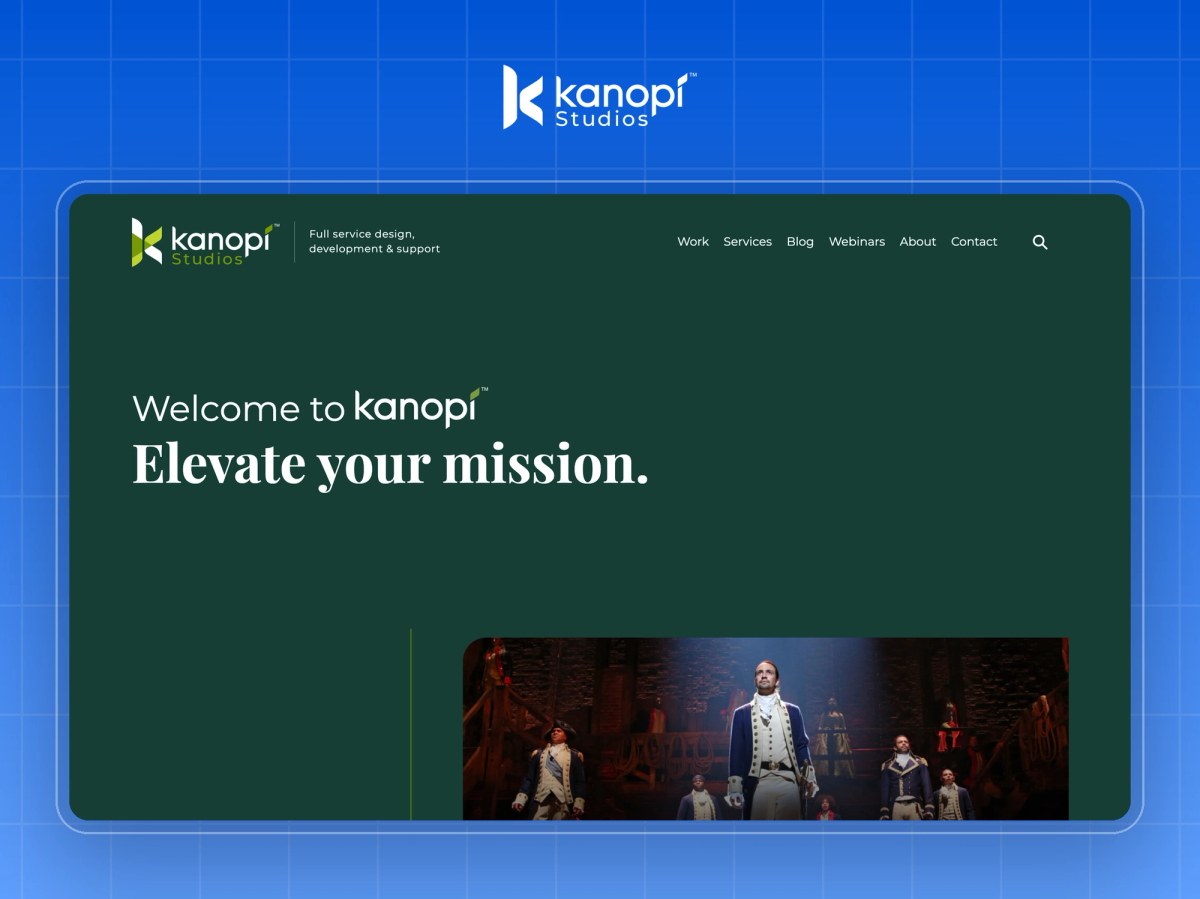
A web agency specialising in ongoing support for large CMS-driven sites, with significant healthcare and nonprofit experience.
- Best for: Healthcare organisations with a large existing site that needs continuous improvement rather than a full rebuild
- Strength: Continuous-improvement model and deep CMS expertise, which suits organisations that cannot take a site offline for a three-month redesign
- Limitation: The support-and-evolve model is less suited to companies wanting a decisive repositioning in one engagement
9. Empeek
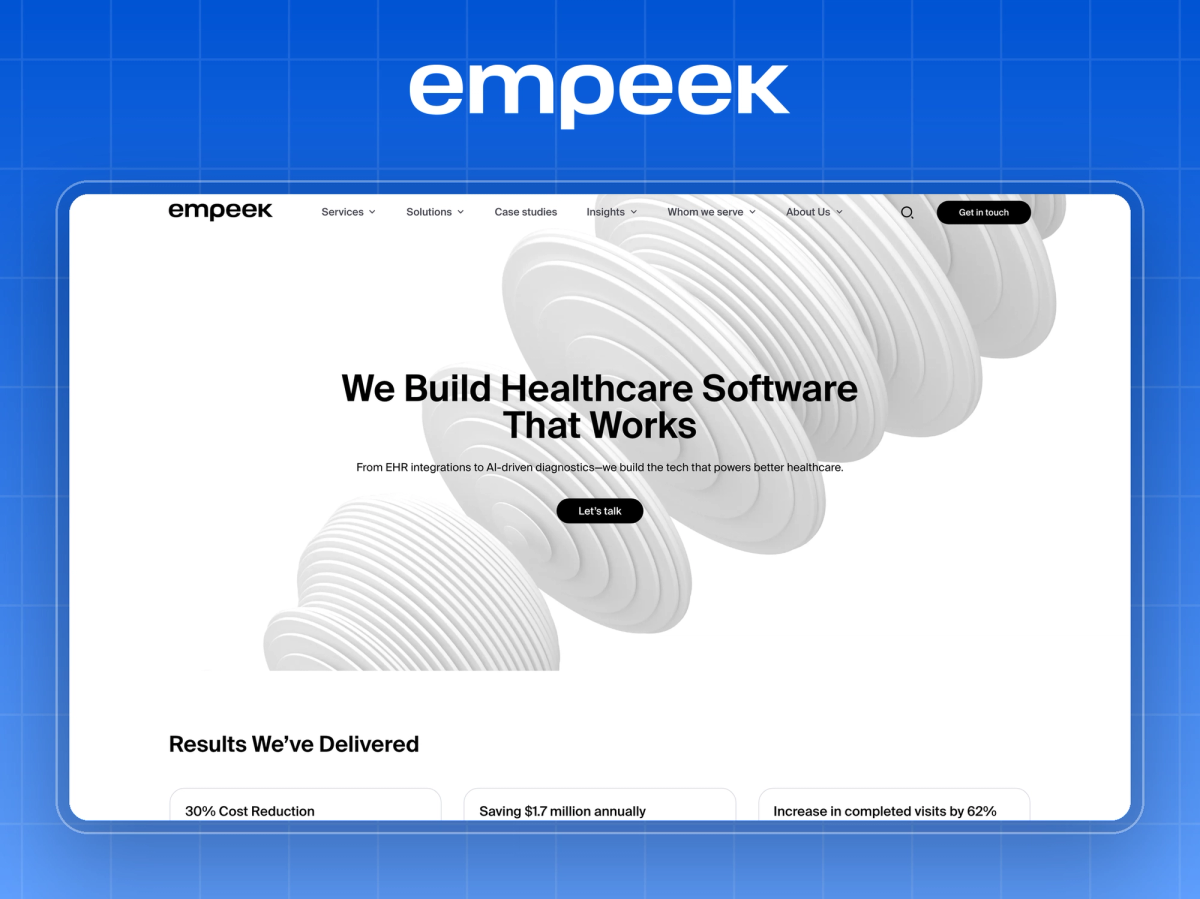
A healthcare software company covering engineering alongside website and product design, working with healthtech and medtech clients.
- Best for: Healthtech companies whose website has to integrate with clinical systems or a product login
- Strength: Genuine healthcare software engineering, so integrations with EHR systems and clinical workflows are within scope rather than out of it
- Limitation: Engineering-led, so brand and narrative work sits with a separate partner
What Healthcare Websites Cost in 2026
The ranges differ sharply by which market you are in, which is why single-figure estimates are useless here.
| Engagement | Typical range | What it covers |
|---|---|---|
| Practice template site | $3,000 to $8,000 | Theme, provider pages, contact forms, basic SEO |
| Custom practice site | $8,000 to $25,000 | Custom design, location pages, appointment flows |
| Healthtech rebuild | $20,000 to $50,000 | Positioning, design, build, CMS, clinical review cycles |
| Complex healthtech build | $50,000 to $75,000+ | Product explainer work, integrations, motion, multi-audience architecture |
| Health system redesign | $75,000+ | Governance, migration, accessibility audit, hundreds of pages |
Two line items get underestimated in every healthcare project. The first is clinical review: every claim on the site has to clear someone who is not a marketer, and that adds weeks, not days. Budget the calendar, not just the money.
The second is accessibility remediation. If the existing site has never been audited, assume findings. An audit before the rebuild costs less than discovering the same issues in QA with a launch date already announced.
The Two-Reader Test
Before you brief anyone, run every key page through this. It takes an hour and it surfaces the failure that healthcare sites make most often.
Step 1: Print the page. Literally, or as a PDF. Screens encourage skimming and you need to read it properly.
Step 2: Read it as a clinician. Where is the evidence? What is the mechanism? What is the claim you would challenge in a meeting? Mark every sentence that would not survive a colleague asking "based on what?"
Step 3: Read it as a worried patient or family member. What does this do for me? What happens next? Mark every sentence you would need to look up.
Step 4: Compare the marks. If the same paragraphs are marked in both passes, the page is serving neither reader. That is the most common finding and it is fixable.
Step 5: Decide the sequence, not the compromise. The fix is almost never a middle register that splits the difference. It is deciding which reader a page is for, writing it for them properly, and giving the other reader a clear route to the page written for them.
At Windmark this is the first thing we do on a healthcare engagement, because designing before it is resolved means designing a layout for copy that will change. It also frequently shows that the site does not need a rebuild, it needs one clear page per audience and a navigation that separates them.
Five Questions to Ask Before You Sign
- "Who on your team has shipped a site that went through clinical review?" The process, not the sector, is what breaks timelines
- "What accessibility standard do you build to, and how do you test it?" The answer should name WCAG 2.2 AA and a testing method, not say "we follow best practices"
- "How do you handle analytics on patient-facing pages?" An agency that has never considered this has not worked in regulated healthcare
- "Can our team publish a new provider page or update a claim without you?" Healthcare content changes on a regulator's timeline, not your agency's
- "Show me a healthcare site you built, live, on mobile." Load it while you are on the call and check the speed yourself
Any agency worth shortlisting answers all five without deflecting. Two of them will quietly eliminate most of a longlist.
Provider or Healthtech: Picking From This List
If you are a provider organisation, your shortlist is Healthcare Web Agency, Practis, Cardinal, OHO or Kanopi depending on size. The deciding variable is scale: a single practice and a fifty-location group need genuinely different architectures, and an agency built for one handles the other badly.
If you are a healthtech company, your shortlist is Windmark, Atomic Health or Empeek, with Orbit Media as the content-heavy option. The deciding variable is where your difficulty sits: explaining the product, building the brand, or integrating with clinical systems.
If you sit between the two, a care delivery company with both a patient audience and a health system sales motion, split the problem. Treat the patient-facing and buyer-facing sides as two projects sharing one design system, and brief accordingly.
Our approach to that is covered on the web design service page.
What Happens After Launch
Healthcare sites decay faster than most, because the content has more owners. Provider bios change, clinical claims get revised, a new indication gets approved, a location opens. Every one of those is a content update that should not need a developer.
The failure mode is specific and common: a beautiful site ships, the agency rolls off, and six months later the provider directory is out of date because updating it requires a ticket. Patients notice. So do clinicians evaluating you.
Two things prevent it. First, a CMS modelled around how your organisation actually publishes, with providers, locations and claims as structured collections rather than hand-built pages. Second, a documented review path, so a clinical claim update has a known route from author to legal to live.
Ask every agency on your shortlist to walk you through both, live, before you sign. The answer takes five minutes and predicts the next two years better than the portfolio does.
Most healthcare teams arrive at this decision already knowing the site is not working. The useful next step is usually not a shortlist, it is the two-reader test above, because the result tells you whether you have a copy problem, a structure problem or a design problem.
If you want a second pair of eyes on it, book a call and we will run through your key pages, including the outcomes where the answer is that a rebuild is not what you need.